by BAR executive editor Glen Ford
Will Bernie Sanders’ supporters “collapse from demoralization, or resolve to confront the corporate beast with ferocity” in Philadelphia and beyond? The real battle of 2016 is about the duopoly, which tells Blacks there is “no contradiction in being in the same party as the former president who put more Blacks in prison than any other,” and urges staunch unionists to support the clique that has exported their jobs. Sanders and Trump are mere players in the larger drama.
The Sandernista Journey: An Epic Confrontation with Corporate Power, or a Slow Fade
by BAR executive editor Glen Ford
“The U.S. is a political desert – a testament to the hegemony of Capital in this country, and to Capital’s carefully crafted electoral structure, the duopoly system.”
Hillary Clinton’s decisive victory in New York, we are told, has brought the Bernie Sanders campaign to its “moment of truth” – that he can’t win the Democratic presidential nomination. But, that mathematical truth has been evident from the very beginning. What makes this election season different is the crisis in the duopoly system, itself: the possibility that the U.S. corporate-controlled electoral arrangement might be shattered beyond repair by irresolvable fractures in both the Republican and Democratic camps, creating more space for a broad left politics in the United States. Malcolm X would frame it as whether the chickens will stay in the same party as the foxes and the wolves. It remains an open question.
The “moment of truth” for Bernie’s partisans will arrive, not when they accept the certainty of Clinton’s nomination, but at the point when a critical mass of them decide to become Sandernista insurgents and bolt the Democratic Party in search of a new political home.
On the Republican side, the fate of the duopoly hinges on whether the GOP’s corporate leaders will choose to coexist in the same party with Donald Trump, an unpredictable billionaire who cannot be counted on to support perpetual U.S. military occupation of the planet and race-to-the-bottom global trade deals. Trump’s legions just want their White Man’s America back, and don’t really give a damn about things like staying on the good side of the Saudi Arabian monarchy. The Donald’s landslide win in New York brings the establishment Republicans much closer to their own “moment of truth,” when they must decide whether to field a rival candidate in the general election or leave the fate of the Empire to Hillary Clinton, its sole reliable defender.
“Malcolm X would frame it as whether the chickens will stay in the same party as the foxes and the wolves. It remains an open question.”
It seems inevitable that Hillary Clinton’s corporate Democrats will profit most, in the short run, from the acute crisis in the GOP. Clinton will run a kind of “Americans united” campaign against Trump’s “politics of hate,” encouraging Black voters in the illusion that their perennial “politics of fear” (of the White Man’s Party) is actually a sophisticated example of “strategic voting” (the Black Misleadership Class’s euphemism for unquestioning loyalty to the Democratic Party). The end result will be a landslide for Clinton’s Democratic “big tent,” which will have been reconfigured to accommodate millions of “moderate” Republican refugees, leaving Blacks even less relevant and influential in the party than under Barack Obama, Hillary and Bill’s Black protégé.
However, even this limited scenario, which leaves out any significant and dramatic exodus of insurgent Sandernistas, does not alter the inevitability of a destabilized duopoly structure. As I have written before in these pages, duopolies are like binary star systems, circling a central gravitational point in the electoral universe. A change in the path or properties of one party has immediate effects on both, destabilizing their orbits. At the very least, they wobble – and often, much worse.
“The GOP establishment must decide whether to field a rival candidate in the general election or leave the fate of the Empire to Hillary Clinton, its sole reliable defender.”
The looming Republican fracture cannot help but set a dramatic example for Democrats despairing of any future for progressive politics under the militarized, corporate order personified by the widely despised Clintons. Although Bernie Sanders has always been on a trajectory to defeat at the convention in Philadelphia this summer, and has never wavered in his pledge to “sheep dog” his flock into Hillary’s holding pens, the Sandernista troops have kept going on the fumes of hope for change. We will now see whether they collapse from demoralization in the waning weeks of the campaign, or resolve to confront the corporate beast with ferocity in Philadelphia, and then, in large numbers, break with the monster afterwards, to become independent “Scandinavian-type social democrats” – regardless of what the senator from Vermont says and does.
Party-building is hard. If it were easy, as Bruce Dixon points out in this issue, the U.S. would not be dominated by two corporate parties, and most Americans would not have been fooled into thinking that electoral activity is the only kind of “politics” that exists. That’s why there is great educational value in the unfolding crisis of the duopoly system.
“The Sandernista troops have kept going on the fumes of hope for change.”
In the stunted U.S. political conversation, Black Americans see no contradiction in belonging to the same political party as the former president (and his soon-to-be president wife) who put more Blacks in prison than any other. Staunch unionists beat down their comrades for failing to support the corporate clique that has engineered the wholesale exporting of their jobs. Not only do Europeans provide vastly more political avenues than the U.S., but most developing countries, including large nominal democracies like India, Pakistan and Brazil, have far more parties of significant electoral weight to choose from. Comparatively speaking, the U.S. is a political desert – a testament to the hegemony of Capital in this country, and to Capital’s carefully crafted electoral structure, the duopoly system.
The 2016 election is all about the duopoly. Donald Trump and Bernie Sanders will only be remembered as historically noteworthy personalities if their candidacies contribute to the destabilization of the monopoly of two parties – one a White Man’s Party, the other more ethnically inclusive – both under corporate control.
This summer, the duopoly will put forward the nation’s two most unpopular politicians as its candidates for president – a howling testament to the bankruptcy of the system. Such a two-headed monstrosity – or three-headed, if the establishment GOP picks its own White Knight – will wind up shaking loose constituencies, left and right, like a destabilized star system flinging planets into the void.
Which is all to the good. America needs an electoral Apocalypse – Now!

 Ajamu Baraka argued that the Ukrainian crisis was a “manufactured crisis” primarily created by the miscalculations of policy-makers in the U.S. and Western Europe who were blinded by the prospect of…
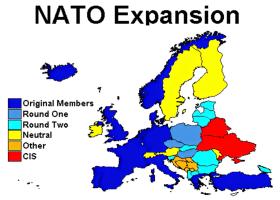 According to Dr. Gerald Horne, greed and shortsightedness convinced the U.S. that it could achieve the strategic objectives of undermining German economic power by controlling the European market,…
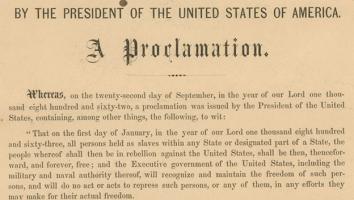 February is the designated month to honor presidents, but Black people should know better than to believe what they are told about any benevolence on the part of George Washington, Abraham…
 The president of Eritrea gives a wide ranging interview on the U.S. regime change effort against neighboring nation Ethiopia using the TPLF, and long-standing U.S. hostility towards his country.
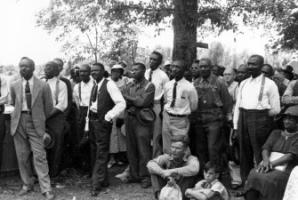 Southern farm workers joined in solidarity during the great depression.



