Dr. Fikrejesus Amahazion
The same imperial nations that colonized most of the rest of the world now try to sit in judgement of which countries should be “allowed” their independence. U.S. operatives argue that Western Sahara should not be granted self-rule, because it would become a “failed state,” like Eritrea. But Eritrea has made great social strides, despite relentless U.S. subversion, while the U.S. has fomented misery and terror in Iraq, Afghanistan and Somalia.
Just Say No to Another Misinformed Analysis
Dr. Fikrejesus Amahazion
“In completely neglecting to note the perspective of the people of Western Sahara, it reveals a residual attitude from 19th century racism and hegemonic, colonial times.”
In his recent article, “Just Say No to Another Failed State,” published by Foreign Policy, Lester Munson claims that the only solution to the long standing issue between Western Sahara and Morocco is autonomy for Western Sahara under Moroccan sovereignty. Problematically, however, the article lacks context and is overly simplistic, is strewn with inaccuracies and errors, and is heavily tinged with paternalistic overtones.
To begin, Munson, who served in the George W. Bush administration, is a former Staff Director of the Senate Foreign Relations Committee and current Vice President, International, at BGR Group, illustrates a poor grasp of basic economics within his introductory paragraphs discussing African economies. While Ethiopia does indeed have an impressive GDP growth rate (hovering at between 8% and 10%), the country can hardly be described as economically “thriving.” Recall that GDP growth rate denotes the change in GDP from one year to the next, as a percentage. Consequently, since the measure is presented as a percentage, countries with a relatively small GDP may post significant growth rates, even while their overall production remains miniscule. For example, in 2014/15, some of the world’s top projected GDP growth rates were by some of the world’s poorest and least developed countries, including South Sudan, Libya, Iraq, Laos, and Sierra Leone.
Further reflecting the tenuousness of Munson’s point is that Ethiopia remains one of most impoverished countries on the planet. In 2014, it ranked 185th in the world in terms of GDP per capita (UN 2014), while according to the UN and Oxford University’s Poverty and Human Development Initiative (OPHI), which measure multidimensional poverty, Ethiopia is the world’s second-poorest country. Ultimately, to be most effective and useful, reference to GDP growth rates requires proper contextualization. Solely focusing on GDP fails to account for the general welfare of a country, since things like environmental degradation, insecurity, inequality, and social cohesion are ignored (OECD n.d.).
“Countries with a relatively small GDP may post significant growth rates, even while their overall production remains miniscule.”
Effectively, Munson’s lackadaisical approach to such details and nuances raises considerable doubt about his understanding of broader, more complex topics.
Subsequently, Munson argues against Western Sahara’s independence based on the reasoning that Eritrea and South Sudan, two countries that have recently gained independence, are failed states. Setting aside the vast dissimilarities amongst the individual cases – which calls into question their comparability – Munson’s argument is specious for several reasons.
For South Sudan, he conveniently glosses over the significant role of the US in attaining the country’s independence, while also neglecting to mention the toxic influence of regional and international meddling. In highlighting Eritrea, Munson also overlooks fundamental points.
Eritrea is a stable country located within one of the world’s most politically and environmentally challenging regions. Furthermore, it has made commendable progress within social, health, and education sectors, achieving several of the United Nations’ Millennium Development Goals (MDGs). Notably, a number of regional and international organizations, including the African Development Bank (AfDB), the African Leaders Malaria Alliance (ALMA), the United Nations Development Programme (UNDP), and the World Health Organization (WHO) have noted that since Eritrea’s independence, life expectancy has increased, maternal, infant and child mortality rates have reduced dramatically, immunisation coverage has skyrocketed, malaria mortality and morbidity have plummeted, HIV prevalence has decreased considerably, and access to potable water and sanitation have significantly increased (Pose and Samuels 2011; UN 2015; WHO 2014). Importantly, the country also remains quite peaceful and free of sectarian violence or terrorism, and it is quite instructive that, as suggested by former US Assistant Secretary of State for African Affairs, Herman J. Cohen, while many countries across the region are currently struggling (and generally failing) to feed their people, Eritrea remains food secure.
“Eritrea remains quite peaceful and free of sectarian violence or terrorism.”
Of course, this is not to suggest that Eritrea is free of problems. The country is confronted by a myriad of significant issues and challenges. However, it seems ignorant, uninformed, unobjective, and hardly legitimate to traduce and pass judgment of Eritrea without adequately – or even minimally – exploring the country’s broader socio-political context. Specifically, Munson’s cursory labelling ignores how the country remains burdened by international sanctions – increasingly and widely recognized as illegitimate and unfounded – and an illegal military occupation by Ethiopia, which is politically, militarily, and economically supported by the US.
Rather than hasty claims, Munson would do well to divulge that many of Eritrea’s challenges are inextricably linked to these factors, as well as to the fact the country has been the target of an externally-driven strategy to isolate it, particularly through attempts at scuppering foreign agreements and economic deals. For example, according to a leaked US embassy cable in Addis Ababa sent by Chargé d’Affaires Vicki Huddleston (dated 1 November 2005), the strategy of the US-backed Ethiopian proxy was to “isolate Eritrea and wait for it to implode economically,” while a leaked 2009 cable sent by Chargé d’Affaires Roger Meece reveals that the “USG [US government] has worked to undercut support for Eritrea.” In essence, Munson evokes John Milton’s (1642) famous quote observing, “[t]hey who have put out the people’s eyes, reproach them of their blindness.”
While Munson pontificates about failed states, he steers well clear of mentioning states like Afghanistan, Iraq, Libya, or Somalia (amongst others), where misguided US interventions, invasions, and state-building projects have not only failed to deliver a modicum of security or develop functional states, but have often instead played a direct role in local or regional destabilization and the spread of terror.
“The strategy of the US-backed Ethiopian proxy was to ‘isolate Eritrea and wait for it to implode economically.’”
In Afghanistan, America’s 14-year project to defeat the Taliban and build a stable Afghanistan has proven disastrous, with the Taliban now controlling more of the country than at any time since US troops invaded in 2001. Moreover, Iraq has witnessed the death of over 1 million people, the growth of sectarianism, and the rise of ISIS, while Libya cannot even be categorized as a failed state, but a collection of disparate territories “governed” by warring militias and fanatical extremists, including ISIS. Even Somalia’s troubles are partly attributable to the US, which has supported a range of vicious warlords across the country. In 2006, under the pretext of promoting “stability” and “combating terror,” the US, through its regional proxy Ethiopia, illegally invaded Somalia. However, the brutal intervention and subsequent occupation actually only served to increase and spread terror and instability throughout the region, particularly through strengthening Al-Shabaab.
Although these points expose glaring holes in Munson’s assertions, the article is particularly troubling because in completely neglecting to note the perspective of the people of Western Sahara, it reveals a residual attitude from 19th century racism and hegemonic, colonial times. To borrow from Edward Said, it smacks of a bygone era, when the peoples of the empire were a subject race, dominated by the more powerful, the more developed, the more civilized, the higher, who know them and what is good for them, better than they could possibly know themselves. Munson paints the issue in Western Sahara as a relic of the Cold War, denying the agency of the region’s people, while completely failing to mention any of the current conditions which are vital to understanding the entire situation.
Independence may or may not be the best thing for Western Sahara; however, only the people of Western Sahara – and not Lester Munson – can be the ones to decide.
Dr. Fikrejesus Amahazion is an East African scholar and activist interested in human rights, development, and political economy. He can be reached at fikrejesus87@gmail.com.

 When the dust settles, as in all U.S. disasters, there will be a tale to tell of who mattered and who was sacrificed.
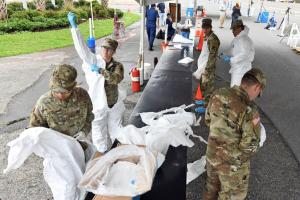 Colonized people, with a horrific historical connection to both science and medicine in this country, must examine science in service of the state.
 The penal system remains a source of diseases that spread among prisoners at rates far exceeding those in the communities from which they came.
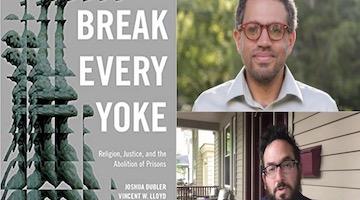 The necessary political demand is not that we make better, more humane prisons and jails, but that we abolish prisons and jails altogether.
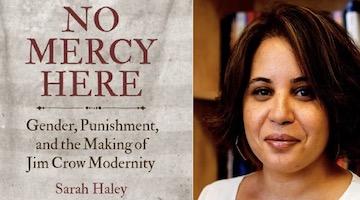 This is a book about the ideological construction of black women as “non-human” and exploitable for capitalist profit in the making of the New South.


