by BAR executive editor Glen Ford
One side wants the Democrats to sponsor a town hall meeting on racial justice, the other prefers that the Party hold a Black issues oriented debate. Both #BlackLivesMatter and Campaign Zero have earned semi-official status as Democratic Party affiliates. The question is: Who is taking care of the “movement”?
Garza vs. McKesson: The Great Debate Over How the Democratic Party Will Liberate Black People
by BAR executive editor Glen Ford
“Neither wants to confront Power (the Democratic Party and its candidates) with core demands – beyond the 'demand' for a debate or a town hall.”
Representatives of the two wings of Black Lives Matter last weekend jousted over the merits of holding Democratic Party-sponsored town halls on racial justice, versus a formal, televised debate on issues critical to Black people, also to be sponsored by the Democrats. The exchange took place on Melissa Harris-Perry’s program on MSNBC, which acts as the Democratic Party’s corporate cable outlet. A casual viewer might conclude that the incipient movement ignited by the murder of Michael Brown fourteen months ago, has been swallowed whole by the Democratic Party. Certainly, the #BlackLivesMatter network, co-founded by Alicia Garza and two of her comrades, and its offshoot, Campaign Zero, honchoed by charter school advocate DeRay McKesson and like-minded colleagues, have encamped deep in the bosom of the Democratic Party, where movements go to die.
Accordingly, the Garza-McKesson discourse was as circumscribed and stilted as what passes for debate within the Democratic and Republican duopoly. McKesson wanted to stick with the format offered by his Democratic National Committee partners, who last week gave their “blessing,” as the Washington Post reported, to a “town hall similar to those currently being planned by some state-level Democratic parties and some liberal groups including MoveOn.org.” Thus, Campaign Zero would move formally into the ranks of Democratic Party organizations and front groups. Garza’s #BlackLivesMatter network wants the Democrats to schedule a full-scale, seventh debate to “put action behind the words” of the DNC’s endorsement of Black Lives Matter, this summer.
“The #BlackLivesMatter network and its offshoot, Campaign Zero, have encamped deep in the bosom of the Democratic Party.”
Melissa Harris-Perry set the stage for the debate-about-a-debate by harkening back to the 1964 Democratic Party national convention in Atlantic City, when Fannie Lou Hamer and her Black-led Mississippi Freedom Democratic Party (MFDP) tried to unseat the lily-white state delegation. President Lyndon Johnson’s operatives on the Democratic National Committee offered to seat only two of the insurgent delegates – an insult bitterly rejected by the MFDP. Dr. Martin Luther King had urged the Freedom Democrats to “compromise” – a stance Harris-Perry endorsed in hindsight. After all, she noted, Johnson went on to win a landslide victory and then to secure passage of the 1965 Voting Rights Act, so...all’s well that ends well. Harris-Perry’s message seemed clear: #BlackLivesMatter should take the Democrats up on their town hall offer.
Harris-Perry’s elaborate buildup was an attempt to elevate the Garza-McKesson face-off to grand historical proportions, and an endorsement of their absorption into the Democratic Party enclosure, where she happily resides.
McKesson said the town hall format would provide “a forum that has real people asking real questions.... It would offer a chance for the candidates to help us to understand better what their positions are, instead of having a format that caters to sound bites,” like a debate.
Garza said her network wants “to see a debate. We want to see what the candidates proactively are coming up with.... We want to make sure that the Democratic National Committee is having serious conversations at every single level about how to address the crisis facing Black communities today...and, what we think that does not mean is resting it on the shoulders of Black folks to do that work for them.”
“McKesson made it clear that his role is to educate those who wield power.”
Again, just like Barack Obama and Hillary Clinton, there’s scarcely a dime’s bit of difference between McKesson and Garza’s essential positions. Neither wants to confront Power (the Democratic Party and its candidates) with core demands – beyond the “demand” for a debate or a town hall. Rather, they propose venues in which the candidates will reveal themselves, for better evaluation by voters and an eventual endorsement by the activists (who, under the town hall arrangement offered by the DNC will be treated as constituent Democratic organizations). McKesson made it clear, after his delegation’s last chat with Clinton, that his role is to educate those who wield power. “We want to make sure,” he said “that whoever the president is, has an informed platform about race, and Black people specifically, and criminal justice.”
McKesson is the courtier seeking the king’s ear.
Garza insists that the Democratic Party get to work churning out ways to halt racial and economic oppression, so that the burden of figuring out a path towards liberation doesn’t fall “on the shoulders of Black folks.”
But, of course, no one will free us, but us – certainly neither of the two big business parties. There’s a whole lot going on these days at #BlackLivesMatter and Campaign Zero – lots of individual upward mobility – but little of it has anything to do with a people’s movement. These two organizations are no longer in that line of work.

 Recently, readers have been discussing democratic socialists, American exceptionalism, and identity politics.
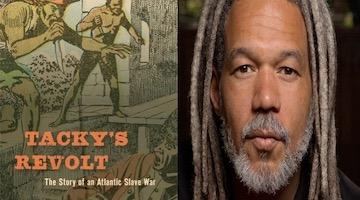 The Jamaican slave revolt of 1760-1761 was one war within an interlinked network of other wars.
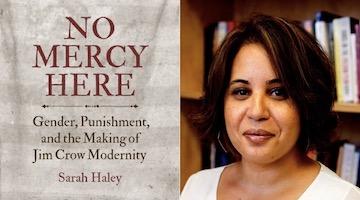 In white patriarchy-ruled South Carolina at the turn of the 20th century, manhood sometimes created temporary yet tenuous bonds between Black and white men.
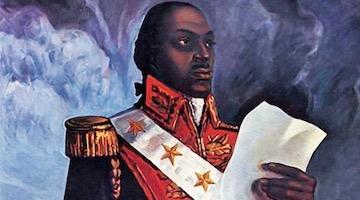 Toussaint stressed that freedom was something that had to be fought for and taken from below by the masses themselves.
  The eye-in-the-sky tells residents of the majority Black city that they are enemies of the state -- to be watched and, ultimately, crushed.


