by the Real News Network
VIDEO
APRIL STOGNER, HUNGER STRIKER: And we're going to do whatever is necessary to keep this school and have it an open enrollment school in our community.
JESSICA DESVARIEUX, PRODUCER, TRNN: That's why April Stogner says she has been on a hunger strike for almost three weeks. She along with 11 other parents and activists are on a hunger strike to reopen the doors of a local high school on the South Side of Chicago called Dyett High School. She traveled to Washington, DC on Wednesday to give Secretary of Education Arne Duncan a letter stating their desire to keep Dyett an open enrollment school for the Bronzeville neighborhood.
Chicago's mayor Rahm Emanuel closed Dyett in June, citing falling enrollment. With only 12 students enrolled last fall, hunger strikers say that this has been a part of a strategy to divest from public schools in lower income neighborhoods, making them less attractive to parents and eventually leading to the privatization of these schools in the form of charters.
JITU BROWN, HUNGER STRIKER: The disinvestment in Dyett High School was criminal. The programs and initiatives that the community, along with our principal Jacqueline Lemmon put in place, was systemically snatched from the school despite the fact there was no decrease in enrollment.
DESVARIEUX: When asked about the ongoing hunger strikes, Mayor Rahm Emanuel had this to say.
MAYOR RAHM EMANUEL: We're talking about the education of our children and getting it right. They don't get a do-over, so we've got to make this decision the right way. That's why while I understand they've decided to take that action, [shall] we say, the key is to feel the pressure of being right about the kids' education, not right about answering as it relates to their hunger strike.
DESVARIEUX: But on Thursday the saga for saving Dyett seemed to be coming to a conclusion. Chicago Public Schools announced that it will launch an open enrollment neighborhood arts-focused school at Dyett. It's a partial victory for protesting community members, since they wanted Dyett to remain an open enrollment public school. But the district's plan did not match any of the three community proposals for Dyett. Instead [CPC] acted unilaterally without considering the other proposals.
SPEAKER: This is not a victory at all. This is not what the community asked for. This is--CPS did not follow their own process.
DESVARIEUX: But how did Dyett get to this point in the first place? In 2008 Dyett seemed to be on the rise with the largest increase of college-bound students in Chicago. It also earned the ESPN Rise Up award, out-competing 400 other schools, earning the school a $4 million renovation of its athletic facilities.
But in 2012 the district announced that it would be closing the school.
BROWN: We realized that unfortunately they don't have our children's best interests at heart. And so we developed the plan not just for Dyett High School, but Dyett Local Leadership and Green Technology High School, as the hub of a sustainable community school village. As was stated before, we had over 3,000 petition signatures. We held six town hall meetings that attracted about 1,800 people. We had 578 people in Bronzeville mail letters to the mayor saying they wanted this school.
DESVARIEUX: Despite the community wanting this school Chicago Public Schools did not review their plan, even after applying pressure on the mayor throughout the week at town hall meetings.
At one public budget hearing on Wednesday, things got so heated that the mayor had to be escorted out of the meeting. Jitu Brown says the fight goes beyond just Dyett.
BROWN: We recognize that when we win Dyett High School that means that people can win community-driven reform in Uptown. People can win it in Pilsen. People can win it in Little Village. People can win it in Auburn Gresham. That communities, the people who should be engaged in the first place, will actually have an example of what community-driven school improvement looks like.
DESVARIEUX: Professor of educational policy studies at the University of Illinois, Chicago Pauline Lipman said in a previous Real News interview that she agrees that this fight is about more than just education.
PAULINE LIPMAN, UNIV. OF ILLINOIS, CHICAGO: This is not just about education. It's a much--part of a much bigger plan to remake this whole city into a gentrified city, a city for corporate headquarters, for financial institutions, for upper-middle class people, and to push out working class African-American and Latino families. And the Dyett situation is a really prime example of that. Dyett is located in beautiful Washington Park. A park that may be the site of the new Obama Library. This is prime real estate.
DESVARIEUX: Prime real estate, but April says she has no plans on going anywhere and will continue her hunger strike until the community gets its say on the direction of its neighborhood school.
STOGNER: At this point it's about equality and justice. I mean, it's racism. It's alive and well. And whether you want to call a spade a spade, that is what it is. So I have to do this for my babies, and for all the kids in my community.
DESVARIEUX: For the Real News Network, Jessica Desvarieux, Washington.
Jessica Desvarieux is a multimedia journalist who serves as the Capitol Hill correspondent for the Real News Network. Most recently, Jessica worked as a producer for the ABC Sunday morning program, This Week with Christianne Amanpour. Before moving to Washington DC, Jessica served as the Haiti corespondent for TIME Magazine and TIME.com. Previously, she was as an on-air reporter for New York tri-state cable outlet Regional News Network, where she worked before the 2010 earthquake struck her native country of Haiti. From March 2008 - September 2009, she lived in Egypt, where her work appeared in various media outlets like the Associated Press, Voice of America, and the International Herald Tribune - Daily News Egypt. She graduated from Northwestern University's Medill School of Journalism with a Master of Science degree in journalism. She is proficient in French, Spanish, Haitian Creole, and has a working knowledge of Egyptian Colloquial Arabic. Follow her @Jessica_Reports.

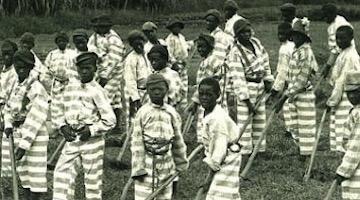 The ‘slavery clause’ made the passage of restrictions targeting Black people like the Black Codes possible as well as convict leasing of the late 19th century.
 Neither the Organization of African Unity nor the African Union have been able to realize the two most important principles of pan-Africanism: political unity and territorial sovereignty.
 The author examines postwar violence through the activism of Afro-Nicaraguan women and men from the Caribbean coast of the country.
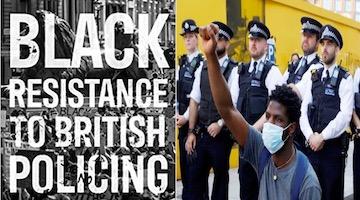 Historically, most of Britain’s policing hasn’t taken place on the British mainland – it has taken place in its colonies.
 King said the best anti-poverty program is a union, where you can fight for your own agenda — somebody doesn’t have to hand it to you.



