by BAR editor and senior columnist Margaret Kimberley
U.S. Secretary of Education Arne Duncan could not contain his gratitude to Hurricane Katrina, which killed or permanently displaced much of New Orleans’ Black residents. Other whites “wondered why they could not have been fortunate enough to have a black population swept out of town in a matter of days.” Katrina was welcomed by millions of whites as an opportunity for economic and ethnic “renewal” – a rationale that would justify genocide.
Freedom Rider: Katrina in the White Imagination
by BAR editor and senior columnist Margaret Kimberley
“New Orleans became the face of disaster capitalism and ethnic cleansing.”
On August 29, 2005, Hurricane Katrina struck New Orleans, Louisiana, and the entire Gulf coast. More than 1,800 people died and thousands more were permanently displaced. In the years since, that city regained only two-thirds of its pre-hurricane population. But this tragedy for multitudes was a gift to powerful people who wanted to turn New Orleans into Exhibit A for neo-liberalism.
A Chicago Tribune op-ed column originally titled, “In Chicago, wishing for a hurricane Katrina” began with these words. “Envy isn’t a rational response to the upcoming 10-year anniversary of Hurricane Katrina.” The author then proceeded to demonstrate that she did in fact fantasize about a Katrina like catastrophe for her city.
In 2005 the ruling elites were over overjoyed because nature gave them the chance to do what they could not get away with easily. Overnight, New Orleans lost a huge portion of its poor, black population. The state legislature used the crisis to arbitrarily declare public schools as “failing” and converted them into charters. They fired 7,500 public school employees who won decisions in lower courts but were undone when the U.S. Supreme Court declined to hear their case. In short, New Orleans became the face of disaster capitalism and ethnic cleansing.
While millions of people watched in horror as the levees broke and homes were flooded, some watched with glee and, as Kristen McQueary of the Tribune editorial board admits, with envy too. They wondered why they could not have been fortunate enough to have a black population swept out of town in a matter of days.
“People who couldn’t evacuate were blamed for their fate.”
McQueary veils her racism by expressing concern about deficit spending and pension costs. But she also gives herself away with these age old code words. She says nothing about sweetheart deals that stole public money, the tax cuts or other corporate welfare scams. It must be pointed out that the black misleaders aid and abet the crimes committed against that city’s population. When Walmart wanted a toe hold in a large northern city, black aldermen and women on the city council provided the votes. When Rahm Emanuel faced a serious challenge from Jesus “Chuy” Garcia, the misleaders threw in their lot with “mayor one percent.”
But these are the facts and they have little to do with McQueary’s sick vision for the future. After much criticism she reposted the column with a new title, “Chicago, New Orleans and rebirth” and omitted that she was “praying for a real storm.” If she were really honest she would have written, “We need a hurricane to wash the black people away” or words to that effect.
She is not alone in longing for post-apocalyptic disaster capital triumphs. In 2010 her fellow Chicagoan Arne Duncan said that the hurricane was “the best thing to happen to education in New Orleans.” As education secretary his goal has been to undo public education as we know it and expand the control of charter schools throughout the country. Parents have no rights in the charter school system but that is why they are desirable to people like Duncan and McQueary. There is no public input, no permanent employment. This dystopian hell is perfect in their eyes.
“Post-Katrina New Orleans has provided no ‘rebirth’ for black people.”
The racism directed at black New Orleans was present from the moment the storm came ashore. People who couldn’t evacuate were blamed for their fate. They were falsely accused of raping children in the Superdome shelter, and shooting at helicopters. The press called hungry black people looters while white people were given the benefit of the doubt and were said to have “found” food.
The theme hasn’t changed any in ten years. Black people are still seen as undeserving of anything other than being voiceless cogs in the system’s wheels. Post-Katrina New Orleans has provided no “rebirth” for black people and McQueary knows it. Not only did people lose their homes, but they were forced out of town and given no right to return. If they were employed and made it back to New Orleans their jobs may have been destroyed by the rising water too. Of course these are not calamities in McQueary’s twisted world view. She would love to see their fate replicated in Chicago.
In a strange way, we should be grateful when people like McQueary lose their filters and speak their minds. She is not alone in wanting to see big cities cleansed of their black populations and leaving those who remain without citizenship rights. It is an ugly dream but it is shared by millions of people.
The Chicago Tribune isn’t alone among major newspapers in extolling the virtues of post-Katrina life. The New York Times raved about that city’s food scene in a post on twitter. “Decade after Katrina, New Orleans is a better place to eat than it was before the storm.” Perhaps they should have said, “Everything tastes better when black people are gone.”
Margaret Kimberley's Freedom Rider column appears weekly in BAR, and is widely reprinted elsewhere. She maintains a frequently updated blog as well as at http://freedomrider.blogspot.com. Ms. Kimberley lives in New York City, and can be reached via e-Mail at Margaret.Kimberley(at)BlackAgendaReport.com.

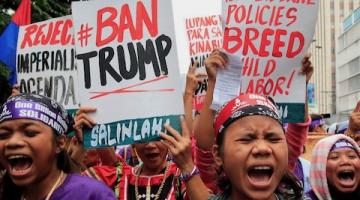 The struggle against systemic racism and the police state in the US is integral and linked to the struggle against US wars of aggression overseas.
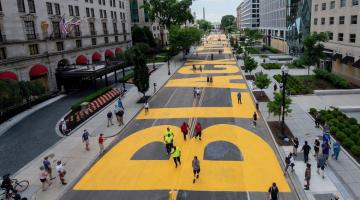 Community control of police and prison abolition have been completely removed from the conversations dictated by a mainstream and complacent narrative.
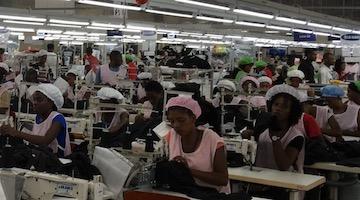 Global Displacements is an examination of the impact of the global organization of capitalist accumulation and exploitation on the life and labor of Haitian and Dominica
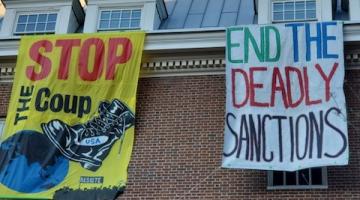 It was agreed that dropping the federal charges and seeking no jail time in return for pleading to a very low-level DC Code charge was an important victory.
 What has recently been condemned as corrupt and brutal policing is actually consistent with historical tradition of localized repression.


