by BAR editor and columnist Ajamu Baraka
The Black Lives Matter movement has another martyr, as it prepares for a national conference in Cleveland, this weekend. Sandra Bland’s murder in Texas shows, once again, that “defending one’s dignity in an encounter with the police is a crime that that can lead to a death sentence.” The emerging movement must be clear on the political nature of Bland’s death, and that only real power in the hands of the people can break the cycle of oppression.
The Assassination of Sandra Bland and the Struggle against State Repression
by BAR editor and columnist Ajamu Baraka
“Authentic justice and liberation will only come when there is authentic de-colonization and revolutionary power in the hands of self-determinate peoples' and oppressed classes and social groups.”
During the struggle in South Africa black activists who were captured by the state had a strange habit of jumping to their deaths from the windows of jails and courthouses whenever the authorities would turn their backs. In the U.S. the method of suicide black prisoners appear to choose is death by hanging – that is, when they are unable to pull a gun from an officer and shoot themselves in the chest while handcuffed behind their backs.
In Waller County, Texas, Sandra Bland, a young black woman from Illinois, an activist with Black Lives Matter, who was, according to friends and family, excited about her new job in Texas, is stopped for a minor traffic violation, beaten, jailed and found dead two days later in her cell. Her death is labeled a suicide by the Waller County Sheriff Glen Smith.
Because Sandra Bland was an activist who advised others about their rights and the proper way to handle a police encounter, no one is accepting the official explanation that she took her own life.
What does seem clear is that Sandra was a woman who understood her rights and was more than prepared to defend her dignity. However, for a black person in the U.S. defending one’s dignity in an encounter with the police is a crime that that can lead to a death sentence, or in the parlance of human rights, an extra-judicial execution by state agents.
While many are calling for something called justice for Sandra Bland, we would be doing Sandra and all those who have had their lives taken by the agents of repression a disservice if we didn’t place this case in its proper political and historical context.
“Sandra was a woman who understood her rights and was more than prepared to defend her dignity.”
A psycho-analytic analysis of the dynamics involved with Blands’ gender and blackness could easily conclude that Bland was perceived as an existential threat to the racist male cops who pulled her out of car. Being a conscious, “defiant” black woman she probably disrupted their psychological order and meaning of themselves by her presence and willingness to defend her dignity.
However, as interesting as the individualized analysis and expressions of the psychopathology of white supremacy might be, the murder of Sandra Bland has to be contextualized politically as part of the intensifying war being waged on black communities and peoples across the country.
And because the state is waging war against us and will be targeting our organizations, as an activist, organizer and popular educator, Sandra’s murder must be seen a political murder and receive sustain focus as such.
Coming right before the Black Lives Matter Movement gathering in Cleveland, Sandra’s murder dramatically drives home the ever present dangers of not just being black in a culture of normalize anti-blackness, but the vulnerabilities associated with being a black activist and especially a black woman activist.
Historically the tyranny of white power has always had its most dehumanized expressions in relationship to black women. The unrestrained and unlimited power of white supremacist domination converged on the captive bodies of black women during slavery and has symbolically and literally continued during the post-enslavement period of capitalist/colonialist subordination of black people in the U.S.
“The murder of Sandra Bland has to be contextualized politically as part of the intensifying war being waged on black communities and peoples across the country.”
However, from Harriet Tubman, Ida B. Wells, Claudia Jones, Fannie Lou Hammer through to Assata Shukur, Elaine Brown, Jaribu Hill and countless others, revolutionary black women held up the sky and provided the vision of liberation over the ages.
When the South African government began to target black women activists, the popular response was that now the racist government had “struck a rock.”
This week, under the leadership of black woman activists, much of the resistance movement to the escalating violence of the state will gather in Cleveland to engage in reflection and planning. Sandra Bland will be on the minds of those activists as well as Malissa Williams, who found herself at the receiving end of 137 bullets fired by members of the Cleveland police department that ripped apart the bodies of her and her companion Timothy Russell. And the activists will certainly highlight the case of 12 year old Tamir Rice who was shot point blank two seconds after police arrived on the scene where he had been playing with his toy gun in a park near his home.
Yet, the assassination of Sandra must be seen as a blow against the movement. That is why the BLM must struggle to develop absolute clarity related to the political, economic, social and military context that it/we face.
“We understand history and our responsibilities.”
The struggle in the U.S. must be placed in an anti-colonial context or we will find ourselves begging for the colonial state to violate the logic of its existence by pretending that it will end something called police brutality and state killings. The settler-state is serious about protecting white capitalist/colonialist power while we are still trapped in the language of liberal reformism demanding "justice" and accountability. Those demands are fine as transitional demands if we understand that those demands are just that – transitional. Authentic justice and liberation will only come when there is authentic de-colonization and revolutionary power in the hands of self-determinate peoples' and oppressed classes and social groups.
The martyrdom of Sandra Bland and all that came before her and who will follow – and there will be more – demands this level of clarity. We did not ask for this war. But we understand history and our responsibilities to our history of resistance and our radical vision that we can be more than we are today. Our enemies want us to think that they are invincible but we know their secrets and know that they can be defeated. All we have to do is to be willing to fight.
Ajamu Baraka is a human rights activist, organizer and geo-political analyst. Baraka is an Associate Fellow at the Institute for Policy Studies (IPS) in Washington, D.C. and editor and contributing columnist for the Black Agenda Report. He is a contributor to “Killing Trayvons: An Anthology of American Violence” (Counterpunch Books, 2014). He can be reached at www.AjamuBaraka.com

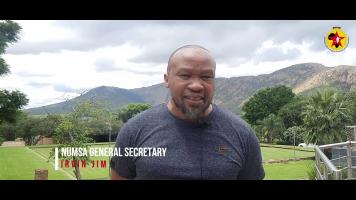 U.S. political prisoner Mumia Abu Jamal has supporters around the world. Irvin Jim, General Secretary of the National Union of Metalworkers of South Africa, discusses his support of Mumia’s fight for…
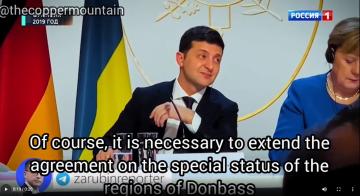 This issue of Black Agenda Report focuses on the U.S. role in the Ukraine crisis.
 The Ukraine project is a dangerous scam perpetrated on the people of this country. Yet no member of the Congressional Black Caucus has attempted to speak truthfully about this ongoing disaster.
 Remembering the 1989 US invasion of Panama as a racist attack on Black people.
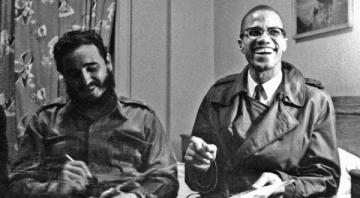 Malcolm X was a legendary revolutionary who is still loved by millions of people. The anniversary of his assassination is an opportunity to reflect on his impact.


