by BAR editor and senior columnist Margaret Kimberley
Gentrification – the displacement of Black and brown urban residents by more affluent whites – is a function of the same forces that emptied the cities of much of their white populations, generations ago: the movement of capital. Capital wants the cities back, and clears spaces for whites. “The system is stacked in favor of moneyed interests and white people.”
Freedom Rider: Gentrification and the Death of Black Communities
by BAR editor and senior columnist Margaret Kimberley
“The inhabitants are pushed aside to make way for transplants who may come from the suburbs, another state or even from another country.”
There is no city in this country where black people are safe from the current method of displacement known as gentrification. Washington, DC, once had a majority black population and was known as Chocolate City. Perhaps it is now the Café au Lait city as the black population has fallen below 50%. That dynamic gathers steam in New York and other cities and continues to push people out of their homes, deprive them of needed services and erode their quality of life.
The situation in New York City is illustrative of this phenomenon. According to census data the city’s black population dropped by 5% between 2000 and 2010. Brooklyn alone lost 50,000 black residents during that time while the white population grew by 37,000 people. The impact of money is the explanation for this reversal of fortune. The same sources of capital that took money out of the cities in decades past are now changing course. These market manipulations determine where black people can and cannot live and create a cascade of negative impacts.
East New York was always one of New York’s poorest neighborhoods with a median income of only $32,000. Its majority black population and location in far eastern Brooklyn near the border of Queens had deemed it undesirable. That designation is now forgotten as big money sets its sights on new places to conquer. Now an area once thought to be too far from Manhattan is touted as being a 30 minute commute via public transportation. This formerly sneered upon and forgotten part of town is now “hot” and its residents have been identified as displaceable.
“The same sources of capital that took money out of the cities in decades past are now changing course.”
The phrase “prime real estate” can mean anything the market manipulators want it to mean. As the many headed hydra keeps sprouting heads, any place can suddenly be declared “hot” or “hip.” The inhabitants are pushed aside to make way for transplants who may come from the suburbs, another state or even from another country.
Gentrification is inherently racist, and Brooklyn shows the rest of the country how the dirty deeds are done. A recent article in New York Magazine included an interview with Ephraim, a pseudonym for a Brooklyn landlord and developer. He candidly described how black people facing foreclosure give him deeds to their homes or how renters are enticed to move out of rent regulated apartments in exchange for small sums of money.
“If there’s a black tenant in the house—in every building we have, I put in white tenants. They want to know if black people are going to be living there. So sometimes we have ten apartments and everything is white, and then all of the sudden one tenant comes in with one black roommate, and they don’t like it.”
Much has been made about this story but the outrage misses some important points. The emphasis for advocates should not just be that illegal practices should be stopped. The most important thing to remember is that black people have little stake in a system that will always find a way to disadvantage them. There can be no use for tired nostrums about black people making bad choices or not using their paltry “buying power” to better effect. The system is stacked in favor of moneyed interests and white people, no matter how well black people strive to behave in ways they are told will protect them.
“A developer recently received a 95% tax abatement on a $100 million condominium in Manhattan.”
The lack of assets means that even when black people own real estate they often do so precariously. Job loss or any other setback can mean financial crisis and foreclosure. That is where Ephraim comes in and gets these distressed home owners to give him their deeds.
Individual effort is no match for the rule of money. Black people who had money to buy and develop properties were prevented from doing so by redlining which prevented mortgages, bank loans and even insurance from being utilized in black neighborhoods across the country. Urban areas had large black populations because white people fled. White people left to get away from black people and capital paved the road to the suburbs. The tide is now turning because there is once again money to be made in the cities. Perhaps in the future the 1% will make different choices and make new determinations about where black people will live.
The nexus of corruption is vast. Real estate developers call the shots and politicians follow. That is how rent regulations in New York were eviscerated beginning in the 1990s. Now a vacant apartment can be decontrolled and no longer subject to regulated pricing if the rent rises above $2,500. A welfare program for developers, known as 421a, provides tax abatements meant to incentivize construction of low and moderate income housing. Instead, a developer recently received a 95% tax abatement on a $100 million condominium in Manhattan.
“When everything gets gentrified, these jurors aren’t pro-plaintiff anymore.”
The demographic change generated by manipulations from the rich mean losses other than housing. Neighborhoods already considered “food deserts” are losing the few supermarkets they have if a developer buys those properties. Even defendants and plaintiffs in court cases pay a price. Juries in Brooklyn now have more white people with higher incomes which means they are more likely to decide in favor of the police or against plaintiffs in civil cases. One attorney explained it this way. “There’s an influx of money, and when everything gets gentrified, these jurors aren’t pro-plaintiff anymore.”
So black Brooklynites have fewer affordable places to live, to buy food or even to get the little bit of justice they once had. Gentrification is a destroyer and just one of the ways black people in this country are kept at the bottom. The fight against it must be fought on many fronts. The racism which gives white people a perceived right to be free of black people must be called out. The laws which give the wealthy advantages over everyone else must end. Politicians have to be called to account. If they aren’t, cities will become theme parks for the upper classes and everyone else will be pushed to the outskirts and to jail, the ultimate form of displacement.
Gentrification is just one of the ways in which capitalism manifests itself and it must be thought of in that way. If it isn’t, black people will be fooled into short sighted thinking and ineffective tactics. We can start with a new adage. As long as money wins, black people will lose.
Margaret Kimberley's Freedom Rider column appears weekly in BAR, and is widely reprinted elsewhere. She maintains a frequently updated blog as well as at http://freedomrider.blogspot.com. Ms. Kimberley lives in New York City, and can be reached via e-Mail at Margaret.Kimberley(at)BlackAgendaReport.com.
-->

 The prison system links corporate interests, the military industrial complex, and policing into a web of oppression impacting more than 2 million people in this country. The Mapping Project reports…
 To move from 59 infant deaths out of every 1,000 live births to no infant deaths in the matter of a few decades is an extraordinary feat.
 The western capitalist axis of domination is responsible for most of the world's crises. The crisis of legitimacy extends from the UK to Japan, and U.S. imperialism is involved in every new…
 Drunken Count Ghouliani took the fifth the 6th—low Barr last days of Pompeo… (For Amiri)
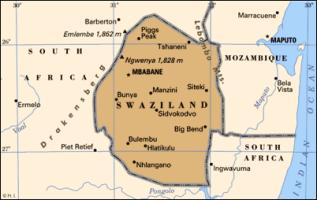 June 29 was observed as a day of commemoration in Swaziland to honor the dozens of people killed by the forces of King Mswati III during the unprecedented anti-monarchist uprising of 2021


