by BAR executive editor Glen Ford
When police murder Black people on the streets of U.S. cities, they do not think they are behaving like “rogue” cops or “bad apples.” Rather, most of them believe – and are encouraged in believing – that they are protecting and serving their communities. The central question task of the Black Lives Matter mobilization must become empowering the Black community to protect and police itself – with the understanding that this cannot occur without an insurgency.
Black People Must Police Themselves
by BAR executive editor Glen Ford
“Black community control means Black people policing themselves.”
Every police murder of a Black person delivers a lesson on the true nature of the Black condition in the United States. In Tulsa, Oklahoma, Eric Harris was shot to death by 73 year-old Robert Bates, a reserve sheriff’s deputy who claims he got his pistol mixed up with his taser gun while helping to subdue the unarmed Black man. Bates is a wealthy white insurance broker who was chairman of the county sheriff’s 2012 reelection campaign and has donated expensive equipment and vehicles to the department. He’s now free on $25,000 bond on manslaughter charges.
As far as the white corporate media are concerned, this is a story about an old man who shouldn’t have been allowed to play cop, a tale of political favoritism or, at worst, good-old-boy-ism gone tragically awry. The real story, however, is about the mission of the police in Tulsa: who they serve and protect, and who they kill at will.
Mr. Bates’ advanced age is a diversion from the core facts. He is one of at least 128 reserve volunteers empowered to act as sworn officers of the Tulsa County department. Other reservists were stationed nearby when 44 year-old Eric Harris was arrested for alleged involvement in an illegal gun sale. The reserve force’s mission is essentially unchanged from the night of June 1, 1921, when hordes of deputized whites launched a murderous assault on the Black section of Tulsa, killing hundreds, leveling the Greenwood neighborhood by arson and artillery fire, and driving thousands out of the state in penniless exile. One white volunteer made aeronautical history when he dropped incendiaries on Greenwood from an airplane – the first bombing raid on an American city. (Mayor Wilson Goode’s police would do the same thing to a Philadelphia Black neighborhood, in 1985.)
In white Tulsa, Bates and his fellow reserve deputies are viewed as civic-minded citizens who sacrifice their time and money in defense of their community. Although he was supporting full-time officers when he shot Harris, Bates was authorized to confront citizens and make arrests on his own volition. He and the rest of Tulsa County’s permanent “posse” are the home guard, a part-time militia, ever ready to confront those elements that represent dangers to the community – like Eric Harris and everybody that resembles him. Bates and his affluent buddies are the embodiment of white community control of – and patronage towards – the police. They are both protectors, and those who are to be protected. From their perspective, there is no line of separation between Mr. Bates’ community and the police. However, Eric Harris and his community are not part of that social compact. They are the Other, the people in need of occupation and incarceration.
Community control of the police is not an issue in Tulsa County, Oklahoma. The issue is: which community will exercise control, Eric Harris’, or Robert Bates’?
“The cops ‘just can’t control themselves’ – including the Black cop.”
In North Charleston, South Carolina, attention has deservedly focused on the Black cop who was teamed with Michael Slager, the jailed white officer that shot unarmed father of four Walter Scott repeatedly in the back. Officer Clarence Habersham claims he tried to give emergency assistance to the mortally wounded Scott, but the video of the killing and its aftermath does not back him up. Habersham is one of five North Charleston cops being sued in federal court for bashing in the face of Black resident Sheldon Williams, during an arrest. Williams’ lawyer, Edward Bell, said the police department has a “cowboy culture” and the cops “just can’t control themselves” – including the Black cop.
Habersham ought to be indicted, too, as even “King Rat” Al Sharpton has suggested. If the last half century has taught us anything, it is that the presence of Blacks on police forces, even in relatively large numbers, does not alter the mission of the department. Philadelphia’s police force is 35 percent Black and overseen by a Black commissioner, a Black mayor, and a Black chief prosecutor, but that hasn’t stopped the cops from shooting an average of one citizen a week for the last eight years. Hiring Black officers is not criminal justice “reform” – it is simply diversification of the tools of oppression, integrating the army of occupation.
“The presence of Blacks on police forces, even in relatively large numbers, does not alter the mission of the department.”
The Black Lives Matter organization in Charleston is agitating for a citizen’s police review board, a response to predatory policing that has been near-uniformly ineffective since at least 1958, when Philadelphia established an oversight board. Newark, New Jersey, which has had a Black city administration since 1970, is testing the waters for its own civilian complaint review board, complete with subpoena powers. Mayor Ras Baraka, who is the son of the late poet and activist Amiri Baraka and has himself led mass protests against police brutality, hopes to populate the board with community representatives and insulate it as much as possible from veto by the police commissioner, the city council, and the state legislature. Local Black activists support the project, which they believe, at minimum, might make some cops think twice before they maim or kill. Additionally, street-based activists hope the existence of such a panel, armed with investigative powers, could create opportunities to draw new lines of struggle against the power of the police and those rich people the cops actually serve and protect.
Maybe, but – as will be discussed in depth at the Black Is Back Coalition national conference on Black Community Control of Police, in St. Louis, Missouri, this weekend – review boards must not be allowed to become substitutes for direct, grassroots mobilization. Review boards are not the equivalent of Black community control – they are simply attempts to discipline police crimes, after-the-fact. Review boards do not control the mission of the police, which in the United States is a counter-insurgency mission to contain, control and terrorize the Black community, with mass Black incarceration as a foundational principle. Black community control of police means Black people policing themselves – a capacity that can only be achieved by becoming insurgent.
In the final analysis, there is no other resolution, no other way to make Black lives matter, except for Black people to take policing matters into their own hands.
-->

 In this week’s segment, we discuss student protests by Black and brown youth in France against austerity measures and race-based inequality in the education system. But we begin with a discussion of…
 Brazil's incumbent president Lula da Silva finished second behind Flavio Bolsonaro in the first round of the presidential election. Because neither man received at least 51% of the vote, a run-off…
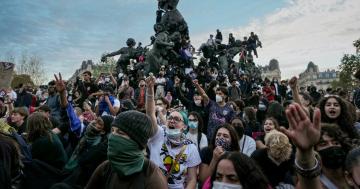 Students in France are engaging in mass protests. Hundreds of them have been arrested and injured by police, and many schools are closed. Annick Metefia joins us from Paris. She is a member of the…
 Ajamu Baraka of the Black Alliance for Peace joins Dimitri Lascaris on BettBeat Media for a conversation about something Western publics have not yet come to terms with — the fact that resistance to…
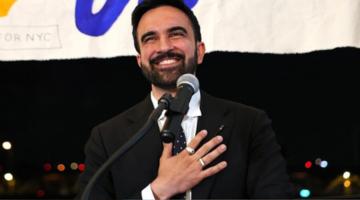 Progressive candidates rarely remain so after winning public office. Zohran Mamdani is no exception, but his capitulation to New York zionists angered his supporters, and the people he hoped to…


