by Bill Quigley
The American state provides every imaginable support and subsidy for the capitalist class, but balks at mandating wages sufficient to provide a decent life for workers. “No corporations rely on the mythical ‘free market,’ so why should workers?
Top Ten Arguments for Raising the Minimum Wage
by Bill Quigley
You know the minimum wage is too low when….WALMART announces it will raise its minimum wage to $10 an hour by February next year.
One. Seven Nobel Laureates in Economics endorse the higher minimum wage to $10.10 by 2016, saying it does not lead to lower fewer jobs.
Two. Job losses from raising the minimum wage are negligible. Minimum wage has already been raised 23 times. Every time it was raised it was opposed by some few who said “it is going to lose jobs and wreck the economy” which is factually untrue as study after study has proven.
Three. It is a myth that small business owners can't afford to pay their workers more, and therefore don't support an increase in the minimum wage. In fact, a June 2014 survey found that more than 3 out of 5 small business owners support increasing the minimum wage to $10.10.
Four. The value of the minimum wage has fallen dramatically. Since the minimum wage was last raised in 2009, the price of apples went up 16%, bacon 67%, cheddar cheese 21%, coffee 27%, ground beef 39%, and milk 21%. The minimum wage went up 0%. Plus, in the 1960s the minimum wage was essentially half the average wage. If that was still the case it would be $12.50 an hour.
Five. Saying we have a “free market” that will take care of workers is a myth. No corporations rely on the mythical “free market,” why should workers? Corporations lobby like crazy all the time in Washington DC and before every state and local government for direct and indirect public assistance. All levels of government provide widespread corporate welfare so why not provide some help to low wage workers? Examples? The Wall Street bailout cost over $200 billion. Fifty billionaires received taxpayer funded farm subsidies in past 2 decades. Corporate jet subsidy is $3 billion a year. Special tax breaks for hedge fund managers allow them to pay only 15% tax rate, while the people they invest for pay twice that much and their secretaries pay a higher percentage. The home mortgage deduction is $70 billion a year, with 77% going to people with incomes of over $100,000 per year. Giving workers more money is small potatoes compared with what corporations and the rich are receiving all the time.
“Corporate jet subsidy is $3 billion a year.”
Six. In fact, one way to look at this is that low minimum wage laws are government subsidies to low wage businesses. What do working people do if they do not have enough to eat or get sick or need housing? They turn to government for public benefits. For example in the fast food industry alone research by the University of Illinois and UC Berkeley documents that taxpayers pay about $243 billion each year in indirect subsidies to the fast food industry because they pay wages so low that taxpayers must put up $243 billion to pay for public benefits for their workers.
Seven. There is widespread religious support for living wages. Catholic support for living wages has been taught since 1891. In 1940, US Catholic Bishops stated: “The first claims of labor, WHICH TAKES PRIORITY OVER ANY CLAIMS OF THE OWNERS TO PROFITS, respects the right to a living wage.” Protestant churches have been on the record supporting living wages since 1908. Religious support for living wages has a long history and has been recently been reaffirmed by the Episcopal Church, the Jewish Council of Public Affairs, the Presbyterian Church, the Unitarian Universalist Association and the United Methodist Church.
Eight. Worker productivity has gone up much faster than wages. Using the 1968 minimum wage as benchmark, if the minimum wage grew at same rate as worker productivity it would have reached $21.72 per hour.
Nine. It is a myth that the minimum wage is only for teens and entry level workers. Raising the minimum wage to $10 would impact over 15 million workers. 4.7 million working moms would get a raise if we raise it to $10.10. As would 2.6 million working dads for a total of 7 million parents.
Ten. There is widespread bipartisan support for raising the minimum wage. In a 2015 poll, 75% of Americans, including 53% of Republicans, support raising the minimum wage to $12.50 by 2020.
Bonus point. You know the minimum wage is too low when….WALMART announces it will raise its minimum wage to $10 an hour by February next year.
As President Franklin Roosevelt said in 1933: “No business which depends for existence on paying less than living wages to its workers has any right to continue in this country.”
Bill Quigley teaches law at Loyola University New Orleans. Quigley77@gmail.com.

 “Bombing Somali civilians is one of AFRICOM’s main projects,” writes Mohamed Haji Ingiriis, a young Somali historian.
 The worldview animating Haitian masses today is leading to a social context ungovernable within the framework of prevailing economic neo-liberalism.
 This book challenges the myth that 1994 was the turning point in South Africa -- because the liberation process is unfinished.
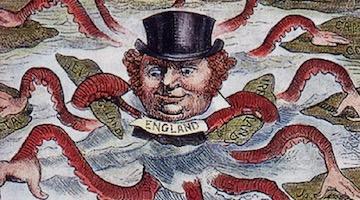 The craven fear of truth in imperial zones, bordering on psychopathic dread, has sustained systemic racism and hegemonic power domestically and globally.
 The not-yet-triumphant Sudan popular uprising was both sophisticated and thorough; it tried to learn from past mistakes and internalize lessons from revolutions of the first wave and elsewhere.



