The Complexities of Black Community Control of Police
by BAR executive editor Glen Ford
“The U.S. legal and electoral system does not deliver justice to Black people no matter the coloration in city hall.”
A key activist in the early Sixties grassroots movement to overthrow American apartheid recently asked if the current Black Lives Matter campaign will be able to sustain itself. In the near term, the answer is almost certainly, yes. The momentum of the mobilization will be propelled forward by the dogged determination of a new generation of activists, building on the skills and experience of previously vetted organizers and the quickening, soul-wrenching drumbeat of police murder and repression. However, the nascent movement’s momentum will soon – very soon – propel it to a “Where do we go from here?” historical moment, when activists must choose whether to challenge the foundations of the system that made Black lives immaterial in the first place, or be sucked into the morass of patchwork reforms that enfeeble the movement while failing to alter relationships of power.
In his article in last week’s BAR, Bruce Dixon called such attempts to smooth out the most glaring “defects” in the system “proceduralism” – schemes that do not question “the fundamental role of police in enforcing the established order, or the role of prisons and jails in society.” The Black Misleadership Class are master practitioners of such tail-chasing “reforms,” which are purposely crafted for their acceptability to a least some sections of the ruling classes. A typical example is the Obama administration’s offer to pay for police body cameras, which are already in place at departments around the nation but were characterized by Al Sharpton and other Black Democratic Party operatives as substantive concessions to protesters. Such gimmicks allow fakers attached to the movement to claim easy “victories” and then urge the crowds to go back home and wait while the administration’s vague promises of change wind their way through the bureaucratic, legislative and judicial processes.
“The Black Misleadership Class are master practitioners of such tail-chasing ‘reforms,’ which are purposely crafted for their acceptability to a least some sections of the ruling classes.”
These are cheap tricks and, for the most part, the current crop of grassroots leaders haven’t fallen for them. However, the question of Black community control of police – a fundamental and near-universal demand that grew out of the movement of the Sixties – presents a much more complex and daunting scenario. Nothing could be more democratic than the notion that the people most affected by the criminal justice system should have the decisive voice in how the system operates. But, such notions clash with the principles of bourgeois electoral democracy, in which majorities rule, and with the cold reality of elections under capitalism, in which money has the decisive voice. Those who oppose demands for community control of police can claim that the community already exercises control, through its elected officials. This argument has no basis in practice, since the American electoral system privileges the rich, but it is rooted in U.S. law.
Community control of police has always been understood to mean local BLACK people’s control of police within the bounds of their communities. The necessity for Black community police oversight is based on historical and current realities and modern principles of self-determination – in other words, on the proven fact that white-dominated governing structures cannot be trusted to hire, supervise and discipline the cops that patrol Black communities; that Blacks have the right to police themselves, and not to be subject to the coercive power of hostile forces. (These same self-determinationist principles can be applied to the totality of the criminal justice system, at all stages of the process, from neighborhood surveillance, through arrest, sentencing and incarceration.) Thus, the principles undergirding Black community control of police are in stark conflict with the narrow vision of democracy upon which U.S. law is based.
“Nothing could be more democratic than the notion that the people most affected by the criminal justice system should have the decisive voice in how the system operates.”
The contradiction between embedded U.S. legal principles and self-determinationist necessity becomes even more acute when the jurisdiction in question is majority Black. Theoretically, the Black majority rules itself in “chocolate cities,” subject to the laws promulgated by the larger, surrounding society. George Washington and Thomas Jefferson’s notion of democracy – now rendered technically “race neutral” – decrees that Black community control of police is currently the state of affairs in Atlanta, Detroit, New Orleans, Cleveland and Newark, New Jersey. Yet, police murder Black people in all these cities with regularity, and Black-run city administrations have never failed to contribute their full quota of Black bodies to the American prison gulag. The U.S. legal and electoral system does not deliver justice to Black people no matter the coloration in city hall.
Newark Mayor Ras Baraka, son of the late activist-poet Amiri Baraka, has submitted a draft plan for a Civilian Complaint Review Board that would have the power to investigate police wrongdoing, subpoena witnesses and recommend disciplinary actions, but could not, on its own, punish cops. The board would be made up of an inspector general appointed by the mayor, three city council members, and five members chosen by designated community organizations, including the NAACP and the People’s Organization for Progress (POP), a grassroots outfit that has fought police brutality for more than three decades, chaired by Larry Hamm. Mayor Baraka’s executive order is to take effect later this month, after 30 days of community feedback, although the board is not expected to begin reviewing cases before late this year.
“Does the existence of the board make it easier or more difficult to organize for fundamental change?”
Larry Hamm believes Baraka’s draft is among the most advanced “community control” proposals in the country, despite the fact that it allows the police director to veto board recommendations. Hamm expects that police unions will lobby the New Jersey state legislature to create further immunities from punishment for cops, and that Governor Chris Christie, a GOP presidential hopeful, will inflame the issue. This is to be expected. What POP and other activists must decide, is whether the board actually enhances the power of the people over the cops – resulting in some degree of relief from police oppression – or, instead, provides a veneer of legitimacy to a substantially unchanged status quo.
Most importantly, does the existence of the board make it easier or more difficult to organize for fundamental change – the kind of change that Power has no intention of allowing to occur? This is the critical question, because real community control of police – that is, the establishment of self-determining communities free from the boot of hostile forces – can only be achieved when a mass movement makes the community otherwise ungovernable. Community control must be credible in the streets before it is recognized by the oppressor, or by his Black allies. In the final analysis, it must be seized.
Will the Black Lives Matter movement sustain itself, and ultimately, succeed? It can, but only by making Washington and Jefferson’s rules irrelevant.
BAR executive editor Glen Ford can be contacted at Glen.Ford@BlackAgendaReport.com.

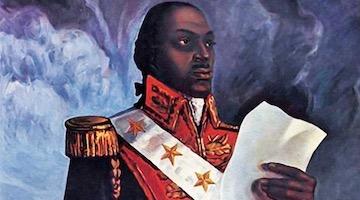 Toussaint stressed that freedom was something that had to be fought for and taken from below by the masses themselves.
 The eye-in-the-sky tells residents of the majority Black city that they are enemies of the state -- to be watched and, ultimately, crushed.
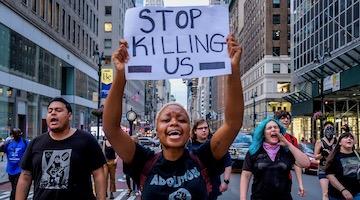 The summary execution of my brothers, sisters, women, men and children is so commonplace that it becomes numbing ‘white’ noise in the minds of an entire continent.
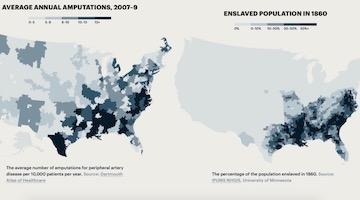 Black patients lose limbs at a rate triple that of others, despite the fact that diabetic amputations are, by some measures, the most preventable surgery in the country.
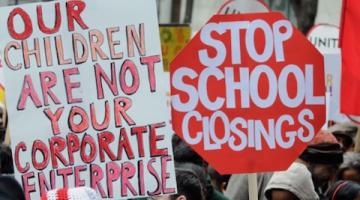 As bad as the Obama/Duncan era was for public education, the current administration is even more hostile.



