by Mark P. Fancher
Euro-American imperialism is now prepared to use raw military force to once again dominate the African continent – with Washington and Paris taking the lead. “In recent years, threats to western economic hegemony in Africa by China, new African self-determination initiatives, terrorism and other developments have prompted western governments to return to Africa with their armies.”
-->
Arrogant Western Military Coordination and the New/Old Threat to Africa
by Mark P. Fancher
“There is a growing willingness of the western countries to publicly declare (without apologies) their plans to expand and coordinate their military presence in Africa.”
Students of African history are well-acquainted with an infamous conference in Berlin where, in late 1884 into 1885, representatives of European countries essentially carved a map of Africa into jigsaw puzzle pieces. The French, British, Belgian, Portuguese and other European participants laid claim to various puzzle-piece regions that they went on to colonize and exploit for decades until the second half of the 20th Century when African independence movements appeared to have driven Europe from the continent.
Sometimes overlooked by the uninformed or casual observer is the fact that the presumed withdrawal of European states did not mark the end of Europe’s domination of Africa. These countries arguably never left because they continued to operate through private corporate proxies and “neo-colonial” African heads of state. In 1965, Kwame Nkrumah, Ghana’s President, explained:
“Africa is still [for the most part] an uncharted continent economically, and the withdrawal of the colonial rulers from political control is interpreted as a signal for the descent of the international monopolies upon the continent’s natural resources. This is the new scramble for Africa, under the guise of aid, and with the consent and even welcome of young, inexperienced States. It can be even more deadly for Africa than the first carve-up, as it is supported by more concentrated interests, wielding vastly greater power and influence over governments and international organizations.”
For several decades the corporate domination of Africa was both effective and lucrative. European and North American economies enjoyed the benefits of colonialism without the stigma associated with the old, direct rule colonial model. However, in recent years, threats to western economic hegemony in Africa by China, new African self-determination initiatives, terrorism and other developments prompted western governments to return to Africa with their armies. These cautious, low-key military operations have been vigorously opposed in many quarters, but they have not become enough of a political or diplomatic liability to dissuade continuing expansion and entrenchment of a western military presence.
While the United States’ military intervention through its “Africa Command” (AFRICOM) has attracted considerable attention, other western countries have also been militarily active in Africa. France in particular has been heavily engaged in African military operations. Its troops have been on the ground in Mali, the Central African Republic, Chad, Cote d’Ivoire, Libya and elsewhere.
“France in particular has been heavily engaged in African military operations.”
This level of military engagement by western countries has created circumstances that are in some ways comparable to the dynamics that led to the 1884 Berlin Conference. Then, European countries recognized that by operating independently in Africa they were at times working at cross purposes. They saw value in a coordinated approach to the exploitation of a continent. Now, there appears to be a growing recognition that the various foreign military operations in Africa will benefit from more formal coordination.
Last year, General David Rodriguez, AFRICOM’s commander, told Congress:
“The increasing convergence of U.S. security interests in Africa with those of African partners, European allies, and the broader international community provides opportunities to significantly enhance multilateral cooperation as we work toward long-term stability and security.” He also said: “We are actively increasing regional cooperation with African and European partners, including information-sharing and combined training, exercises, and operations.”
Just last month, the AFP news agency reported that Spain is “…starting negotiations with Washington to host a permanent U.S. Marines intervention force for deployment on missions to Africa.” This operation has been in place since 2013 on a temporary basis with a force of 800 Marines and air support. Citing a Spanish newspaper, the news agency said: “…the new agreement could increase the strength of the contingent to 3,000 personnel if needed.”
There are obvious threats to African self-determination from a “Pan-European” strategy, but there can also be collateral consequences. One of them is the continuing prospect of a more extreme member of the western alliance causing countries with a more measured approach to take more radical actions than they would otherwise. For example, France reportedly interpreted UN Security Council Resolution 1973 to allow more aggressive action against the Gadhafi government in Libya than either the U.S. or the U.K. In situations of that kind, when countries are locked into a more formal alliance, more moderate forces can be pulled into actions they might otherwise avoid.
Africans globally should note with concern that, notwithstanding the universal condemnation of colonialism, there is a growing willingness of the western countries to publicly declare (without apologies) their plans to expand and coordinate their military presence in Africa. Ultimately such imperialist arrogance will prove to be the system’s Achilles heel. But for now it leaves observers breathless with exasperation. It should instead bring home the fact that if imperialists are committed to becoming more organized and effective than they already are, then Africans and those concerned about Africa don’t stand a chance unless they do the same.
Mark P. Fancher is an attorney who writes frequently about the U.S. military presence in Africa. He can be contacted at mfancher@comcast.net.
y

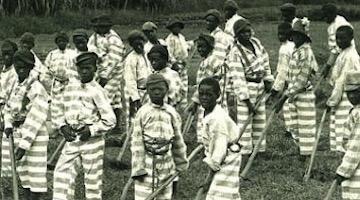 The ‘slavery clause’ made the passage of restrictions targeting Black people like the Black Codes possible as well as convict leasing of the late 19th century.
 Neither the Organization of African Unity nor the African Union have been able to realize the two most important principles of pan-Africanism: political unity and territorial sovereignty.
 The author examines postwar violence through the activism of Afro-Nicaraguan women and men from the Caribbean coast of the country.
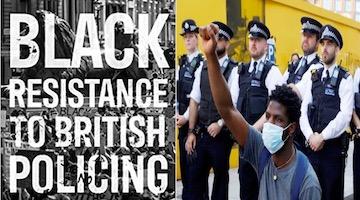 Historically, most of Britain’s policing hasn’t taken place on the British mainland – it has taken place in its colonies.
 King said the best anti-poverty program is a union, where you can fight for your own agenda — somebody doesn’t have to hand it to you.



