The Police and the Massacre of Afro-Brazilian Youth
by Brian Mier
Originally published Friday December 12 by the Center For Economic and Policy Research.
Theresa Jessouroun’s new documentary, “A Queima Roupa” (“Point Blank”) tells the story of the past 20 years of massacres committed by the Rio de Janeiro military police. These chacinas are frequently committed in retribution for a killed police officer and traditionally involve coming into a poor neighborhood and killing random, Afro-Brazilian youth. In the film, Ivan Custódio, a former police officer and member of the “Cavalos Corredores” death squad that orchestrated the notorious chacina in Vigário Geral, tells how police hide most of the bodies, and claims to have killed more than 300 people. The film focuses on Rio de Janeiro, but could have been made anywhere in Brazil. Last month in the city of Belém, after an officer was killed, off-duty cops announced their massacre on Facebook and proceeded to go into a slum and kill an estimated 35 people. As usual, most of the victims were Afro-Brazilian teenagers who had no criminal record and were killed to create a climate of terror in their neighborhood.
As solidarity protests spread around the world over racially motivated police violence in Ferguson and New York, it is important to note that this problem is not limited to the United States (or Mexico). In 2012, approximately 23,100 Afro-Brazilian males between the ages of 15 and 29 were murdered in Brazil, according to Amnesty International. A large number of these were executions, perpetrated by death squads, militias or vigilantes, three groups that are primarily made up of off duty or former police officers. A 2009 study by economist Daniel Cerqueira [PDF] found that Afro-Brazilians are twice as likely as whites to suffer violence from the police. The ratio of police officers to citizens killed by police this year was 21:1, and the National Public Security Forum estimates that 2,212 people were killed by the police in 2013, but some experts believe the actual numbers may dwarf these estimates.
Alexandre Ciconello, the researcher responsible for Amnesty International Brazil’s “Jovem Negro Vivo” campaign against what many call the genocide of young, Afro-Brazilian males, says, “We don’t know how many people the police kill in Brazil. All we have are estimates. Some states don’t report on the issue or provide very poor information. Some states include homicides committed by police outside of working hours, and others don’t. When you look at a state like Rio de Janeiro, which doesn’t calculate murders committed by off-duty police, this becomes a problem because of the militias.”
Militias are organized crime factions typically run by of off-duty and former police officers [PDF] who make money by extorting small businesses, selling pirate cable TV and cooking gas, and administering a parallel justice system in poor neighborhoods that typically metes out severe punishments such as beatings for perpetrators of domestic violence and summary execution for recreational drug use and rape. According to estimates, militias control 45 percent of the favelas in Rio de Janeiro. The recent arrest of Military Police Special Forces Commander Coronel Antonio Fontenelle and 22 other policemen for running a militia in Rio during their days off highlights the level of involvement between the military police and death squad activities.
In a recent interview about her documentary, Jessouroun made it clear that there are no indications that the problem of systematic violence committed against Afro-Brazilian youth will disappear unless structural changes are made. There are two problems, resulting from the failure to fully transition from military dictatorship to democracy, which activists and progressive lawmakers have been trying to resolve for years, against fierce opposition from conservatives.
The first issue is that military police regulate themselves in a separate court and prison system and are not regulated by the rule of law which applies to the rest of the nation. One of the official goals of the Workers Party (PT) for the past two decades has been to dissolve the military police. Like many of its goals, such as agrarian, political and urban reform, the results to date have been meager and critics question the government’s commitment. Shortly after this year’s elections, the PT leadership met with President Dilma Rousseff to officially remind her to work toward this and other party objectives. Last year, PT Senator Lindberg Farias introduced a bill, PEC 51, to dissolve the military police, but it hasn’t come up for a vote yet due to fierce opposition, some of which comes from within the PT’s governing coalition.
The second issue is that that internal investigations are not required for citizens whom police claim were killed while resisting arrest. In 2012, Paulo Teixeira, a PT congressman from São Paulo, introduced bill 4471/12 to require cases of people killed resisting arrest to be investigated as homicides. It is coming up for vote in the lower house this month, and there is a good chance that it will pass. If not, it will be harder next month, when the most conservative congress in decades takes office, with a strengthened “Bullet Caucus" made up of former military officers and policemen and its allies in the Evangelical Caucus.
Social movements and civil society activists who fight police violence are doing everything they can to ensure that these measures are passed into law. If this happens, it will be an important step in the right direction. If not, Rio de Janeiro State University violence researcher Dr. Ignacio Cano’s recent comment that in Brazil “Ferguson happens every day” will remain as pertinent as ever.
Brian Mier is a geographer, writer and member of the Brazilian National Urban Reform Form executive secretariat who has lived in Brazil for 19 years.
Hear his interview on the subject below done by our friends at This Is Hell Radio

 Drunken Count Ghouliani took the fifth the 6th—low Barr last days of Pompeo… (For Amiri)
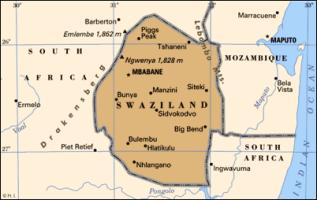 June 29 was observed as a day of commemoration in Swaziland to honor the dozens of people killed by the forces of King Mswati III during the unprecedented anti-monarchist uprising of 2021
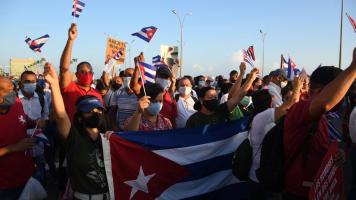 Black Alliance for Peace condemns U.S. sanctions on Cuba and supports self-determination and sovereignty for that nation.
 U.S. involvement in Cuban protests on July 11, 2021, Black community in Atlantic City, NJ fights for justice, and Democrats' political pressure and voter intimidation remove Green Party from North…
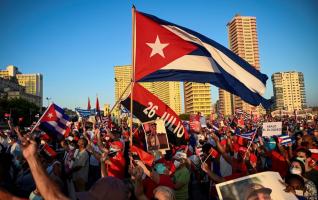 The U.S. played a role in orchestrating what were described as anti-government protests in Cuba on July 11, 2021. Isaac Saney is a history professor and Cuba specialist at Dalhousie University in…


