Sacramento’s Black Mayor and the Minimum Wage
by Seth Sandronsky
“Economic justice is the bedrock of social justice.”
Citizens in Oakland and San Francisco, and the red states of Alaska, Arkansas, Nebraska and South Dakota, voted to increase the minimum wage on Nov. 4. But wait. Sacramento Mayor Kevin Johnson, a second-term Democrat who takes mega-dollars from the Walton Family Foundation to reform the city’s public schools through charter conversions with at-will teachers in low-income neighborhoods, has a better idea.
Hint: voting to raise the minimum wage is out of the picture in California’s capital city. According to an unsigned editorial in The Sacramento Bee, Mayor Johnson “plans to empanel a task force after the first of the year to study the issue” Yes, the dreaded task-force approach to democracy, defined as voting in elections.
Recall Mayor Johnson, Sacramento’s first African-American to serve California’s capital city in such a capacity, is a retired NBA All-Star point guard, whose recent achievement is to helm the U.S. Conference of Mayors. In this post, he chose New York City Mayor Bill de Blasio, a fellow Democrat, to chair a national task force, dubbed “Cities of Opportunity,” to cut rampant social inequality. Thus we see a pattern of task-force formation as part of Mayor Johnson’s political toolbox, nationally and locally.
So far, so legitimate? We turn to Mayor Johnson’s deeds and words. Do they add up to qualify him as a progressive politician? In my view, the answer is a resounding negative. If his record on citizens of Sacramento using their votes on economic matters is progressive, I suggest we need to redefine the term. For instance, Mayor Johnson played no small role in the city’s political leadership successfully delivering a $258 million public subsidy to build an arena for the NBA Sacramento Kings without voters’ approval.
This taxpayer gift of a brand spanking new arena to a pro sports franchise that billionaire Vivek Ranadivé owns is, in effect, a government-guided battering ram to in part expand gentrification of neighborhoods near the new NBA arena. The prospect of a billion Indians watching NBA games is no chump change for owners of pro hoops teams such as Ranadivé, either.
“Without livable employment, the establishment dooms populations, disproportionately black and brown in the U.S. political system, to economic marginality.”
At and away from Sacramento, real estate interests cheer when property values rise and push low-income people to disappear. Some term this process as progress. It is worth noting that Marcos Breton, a “news columnist” for The Sacramento Bee, praises Mayor Johnson’s public policy efforts to have taxpayers foot the bill for the new arena as a “solid investment.”
Back to the politics, electoral and otherwise, of raising the minimum wage. First, it is vital to note this “Fight for $15” is gaining strength in no small measure now due to the active street demonstrations, i.e., die-ins, sit-ins, etc., of anti-police brutality protesters across the U.S. and abroad. This is historic. Why? Economic justice is the bedrock of social justice. Look no further than the black jobless rate, regularly twice that of white workers. Without livable employment, the establishment dooms populations, disproportionately black and brown in the U.S. political system, to economic marginality. Social peace ends when and where such government-market sanctioned human disposability begins.
One way to convey more clarity on the case for higher hourly pay is to consider a contextual benchmark. Let us look, briefly, at productivity growth. That metric is the output, or amount of goods and services per hour, that workers create on the job.
“If the minimum wage had continued to move with average productivity after 1968, it would have reached $21.72 per hour in 2012,” according to John Schmitt, a senior economist at the Center for Economic and Policy Research, based in Washington, D.C. (The Minimum Wage Is Too Damn Low, Issue Brief, March 2012). In contrast, the unsigned Sacramento Bee editorial of November 28 asserts, “The blanket $15 an hour being pushed by some labor leaders is too arbitrary.”
In the real world, the minimum wage has flat-lined. Why is this so? The answer is a weakening of unions representing private-sector workers with collective bargaining agreements. The rate of private-sector workers in unions was 16.8 percent in 1983 and is 6.7 percent now.
Union-free private-sector workers, employed at-will by employers who can and do fire employees with no just cause, legally, are the majority of the labor force in Sacramento, California and nationwide. Organizing at work to become union members is a steep task.
That leaves voting to raise pay, given the steep odds of forming a union to sign a contract with an employer for a collective bargaining agreement. Mayor Johnson is bidding to get in front of the parade for a higher minimum wage and dampen the sentiment to raise hourly pay for those on the bottom of the compensation ladder. Let the voters of Sacramento and other U.S. cities decide the fate of the minimum wage where they live and work. There is nothing “arbitrary” about such a process.
Seth Sandronsky is a Sacramento journalist and member of the freelancers unit of the Pacific Media Workers Guild. Email sethsandronsky@gmail.co.

 This week we hear about right wing forces in San Francisco who worked with the Black democratic mayor to criminalize poverty. But first Dr. Gerald Horne discusses Gaza and Ukraine, the contradictions…
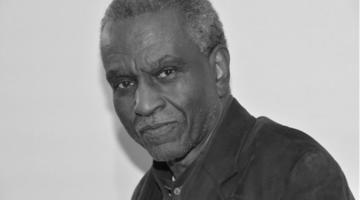 Dr. Gerald Horne joins us to discuss US/Israeli policy driving the war crimes and genocide in Gaza. We also discuss the U.S. proxy war in Ukraine and other international issues.
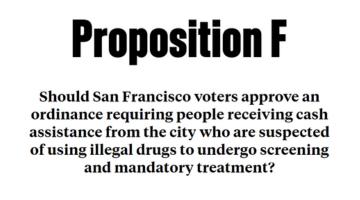 Jemma Decristo joins us to discuss the passage of Proposition F in San Francisco and the criminalization of poverty and drug use.
 Haiti has been the "laboratory of neo-colonialism" since at least 1915. At the moment, Haitians are again revolting and striving to shake off the yoke of European and American oppressors. Listen to…
 The TikTok social media platform is an indicator of U.S. imperialist angst and an incentive for greed. First China was a political target and now Zionists are on the attack in an effort to suppress…


