Boston’s War of Gentrification and Homelessness is an Extension of War on the World
by Danny Haiphong
“The 2008 capitalist crisis astronomically increased the city's homeless population.”
Boston's liberal political class lamented over the defeat of the Democratic Party in the recent mid-term elections. Yet, there was little buzz among poor and working class people in the city about the election results. This is partly because two of Boston's largest issues, gentrification and homelessness, have worsened regardless of which party holds power in the state legislature. Boston's machine politics are supposed to be a thing of the past, but the foundation of the city continues to be its service to corporate interests. Just as the entire US capitalist system is implementing policies like gentrification in response to a permanent crisis in the Wall Street profits, the ruling elite of Boston is conducting a relentless assault on poor and working class people for the same purpose.
The attack on the poor is most visible in the experience of Boston's homeless population. About seven weeks ago, the City of Boston made the executive decision to close the largest shelter in the area due to concerns over a faulty bridge that connects Boston to an island region in the neighboring city of Quincy. 500 to 700 shelter occupants were thrown onto the streets at 4 AM and ordered to leave their belongings behind. Ever since, the city has disallowed shelter residents to pick up their belongings. City officials have also avoided the question of why the bridge was allowed to fall apart over the years or if the crisis is really as bad as the local political class makes it out be. The only thing guaranteed to the homeless of Boston during this period was an additional overflow of existing shelters and the conversion of a fitness center to mitigate overflow.
Boston's ruling class maintains that despite these inadequate responses, local officials are doing all they can to address the shelter shortage. Yet the ruling class will be the last to admit that homelessness is becoming a staple of working class life in Boston. The 2008 capitalist crisis astronomically increased the city's homeless population. From 2007-2014, statewide numbers show that homelessness has risen forty percent. In 2013 alone, there was a thirteen percent spike in homelessness in the state of MA. In Boston specifically, homelessness increased four percent in 2013.
“The foundation of the city continues to be its service to corporate interests.”
The reasons for the spike in homelessness are plentiful but originate from the same source: the capitalist class. Wall Street banks tanked the housing market and were given the green light by the Federal government to continue speculative practices. Development corporations and banks have used the opportunity to create a sub-prime crisis for renters. Furthermore, wages and incomes have steadily declined in the Obama era and there has been no Federal minimum wage increase or comprehensive jobs program to address working class misery. Austerity and privatization of existing public housing resources have created long wait lists for affordable housing, making the closing of Long Island Shelter a particularly large insult piled onto a long list of injuries for the growing numbers of working class people facing homelessness.
Gentrification is related to these developments and largely responsible for the increases in homelessness occurring in cities around the US. Boston is no different. In the last year data was collected on gentrification in Boston, 2007, the Cleveland Federal Reserve office found that over a quarter of all Boston residents live in former low-income neighborhoods and 61 percent of all low-price property tracts are going to corporate developers. Despite a vacuum in data in Boston since 2007, the connection between the rise in gentrification and homelessness is clear. Working class and poor people, especially Boston's Black residents, are being forced outside of Boston. This is also occurring in the surrounding cities of Somerville, Cambridge, and Malden.
The capitalist class in the US describes gentrification as "revitalization." Local officials treat gentrification as a clean-up project and willingly sign off on the displacement of poor, mostly Black residents to appease corporate investment and solicit donations from their corporate backers. In Detroit, Governor Snyder has "brown-washed" gentrification by bringing in politically useful, and often times significantly wealthy, immigrant populations to replace Black working class residents in an 85 percent Black city. In Boston, the closing of the Long Island Shelter has put pressure on the validity of gentrification's narrative for large sections of the working class. Boston's morbid official response has opened up an opportunity to change the political narrative in the city and organize independently of the power structure.
rica:
“Wall Street banks tanked the housing market and were given the green light by the Federal government to continue speculative practices.”
Activists, organizers, and the homeless are attempting to seize the opportunity by coming together to formulate a response to the city's oppressive conditions for the homeless. The Boston Homeless Solidarity Committee has taken on the task of organizing residents living the city's shelters and streets. The organization has come up with a list of demands, some of which include the reopening of the Long Island Shelter and the creation of public housing for those who are homeless or at risk of homelessness. Additionally, and most importantly, the organization demands that the homeless in Boston have the power to determine the policies that affect their lives every day. Boston Homeless Solidarity Committee's efforts are part and parcel of a growing movement to address the criminalization the nation's most oppressed section of the working class, US imperialism's own wretched of the earth.
Homelessness is an undeclared war on the working class within the broader war imperialism is waging on oppressed people everywhere. The state of Missouri's declaration of a state of emergency in preparation for the non-indictment of Darren Wilson is related to the fact that 22 states have made it illegal to feed the homeless. The former is a response to the potential of rebellion and the latter creates the conditions where emparica:thy and solidarity, essential elements of rebellion, are deemed criminal. Meanwhile, Barack Obama and Washington continue their war of aggression on the people of the world uninterrupted. Billions of dollars have been set in motion to prepare for more escalation in Iraq and the Middle East. Additionally, the Obama Administration’s overall imperial policy is escalating tensions with China and Russia, the results of which are quickly developing into a new World War scenario.
War on the world is a permanent feature of US imperialism. Imperialist war is waged on the political and economic fronts, but it is the militarization of everything that glaringly shows its current weakness. Without an ever-expanding military presence around the world, US imperialism would lose much of what remains of its global hegemony. And without the prison-state, surveillance state, and the militarization of the police in the US, the rule of Empire would fall like a house of cards. War is the only aspect of imperialism set to "grow" in the foreseeable future of capitalism, whether that is the war on the homeless or the war on Ukraine, Iraq, Syria, Eritrea, and wherever US imperialism extends its tentacles. If the left is going to strike decisive victories against imperialist rule, war and empire must be a central focus of any movement that fights homelessness and gentrification in the United States.
Danny Haiphong is an organizer, writer, and case manager in the Greater Boston area. You can contact Danny at: wakeupriseup1990@gmail.com.

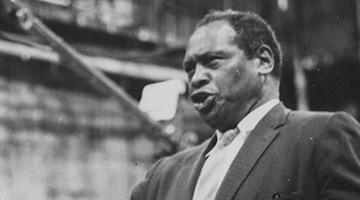 Brilliant and amazingly multitalented, Robeson was once among the most popular men in the U.S;, but became a non-person under relentless red-baiting.
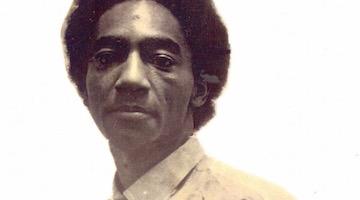 Ruchell Magee is the longest-held political prisoner in the United States and the world.
 Even as many more people around the world have access to education, schooling everywhere remains intertwined with systems of oppression, including racism and capitalism.
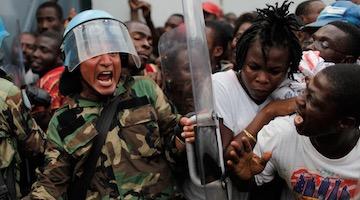 For fifteen years Latin American nations collaborated in the military occupation of Haiti, but have yet to apologize for their crimes.
 Insiders say Dataminr’s “algorithmic” Twitter search involves human staffers perpetuating confirmation biases, searching specific neighborhoods, streets, and even housing complexes for crime.



