Beyond Midterms: Moment of Opportunity for the Left, Not Disappointment
by Danny Haiphong
“The corporate consensus in Washington has created a dead-end political environment rife with imperialist contradictions.”
A few weeks before the Democratic Party lost big in the midterm elections, President Barack Obama spent his short time on the campaign trail targeting Black America. At an event in Maryland, Obama reached into the archives and pulled out "Cousin Pookie." This reference to Black America, one that Obama has used before to vilify his most supportive constituency, evokes white supremacy by reviving the image of the lazy Black person "sitting on a couch." Obama's "Pookie" card was a desperate attempt to save the Democratic Party from mid-term loss. His hatred for the Black community has been crucial to his success in Washington. He no doubt hoped white supremacy could work for the rest of the Democratic Party as well as it works for him.
However, Obama's anti-blackness didn’t save the Democratic Party. And contrary to the dominant narrative in the US, the left should not be disappointed. The 99 percent's faith in Washington is dwindling for good reason. After all, there is zero hope for progressive change, let alone revolutionary transformation, within the channels of Washington. People in the US are becoming more and more disillusioned with, or well adjusted to, the imperialist corporate consensus of the Democratic and Republican Parties.
The corporate consensus in Washington has created a dead-end political environment rife with imperialist contradictions. The people are not yet ready to pull the plug on imperialism, but at the same time expect nothing from it. Oppressed people expect that both parties will privatize their education and public sector, gentrify their neighborhoods, extract super-profits from low-wages, spend trillions of their surplus value on imperialist war and bank bailouts, and continue to expand the militarized and racist prison-state meant to contain and kill them. Oppressed and working class people are much more familiar with Washington as an adversary to their interests and an instrument of their oppression than anything else, even if the so-called left that represents them fails to say so.
Although low voter turnout indicated an elevated popular consciousness of Washington's role as enforcer of human suffering, Black Americans, Latino Americans and progressive people who made it to the polls remained loyal to the Democratic Party. Such support is misleading and does not indicate that the Democratic Party is the legitimate representative of oppressed people's interests. The oppressed have been misled into accepting the "lesser of two evils" argument. The Age of Obama has brought this misleading narrative to its highest degree of political power.
“The dwindling legitimacy of the Democratic Party is a clear signal that US imperialism is running out of options to legitimize its rule.”
The Obama Administration provided the ruling class with a symbolic "Black" hope and an onslaught of new brands for the increasingly right wing liberal class to exploit. This class relentlessly framed their corporate party as the "lesser-evil" and gave lip service to the needs of the people with no intention of fulfilling them. The Democratic Party directed oppressed people's energy toward the haunting spectacle of right-wing rhetoric from the Republican Party. It never mentioned that its rightward political direction gave the Republican Party no choice but to move further right if it was to maintain the illusion of difference between the parties.
The ascendancy of the Republican Party into the House and Senate is a recipe for liberal desperation. The left can expect that the liberal imperialists will intensify their ideological war on radical and revolutionary political struggle. While the liberal imperialists are putting in time to trap the oppressed into dead-end political narratives, radicals and revolutionaries must work to fill the political vacuum created by mad-dog imperialism. The dwindling legitimacy of the Democratic Party is a clear signal that US imperialism is running out of options to legitimize its rule.
The midterm results have opened up a real opportunity to raise important questions about the nature of this fascist, imperialist system and what we can do to build a new socialist alternative. These questions should dig at the roots of the US political system as they relate to moments like the midterm elections.
What are the primary reasons for the Democratic Party's downfall? Who and what do the Democratic and Republican parties in Washington represent? Who has power in this country? How do we take power and in what form?
Each of these questions lead us closer to the conclusion that only a social revolution can bring about the end of imperialist rule. But there are formidable obstacles in our midst. Liberal imperialists have the support of the ruling class's thought-control media and military machinery. The liberation of the oppressed will depend on our determined spirit to build a genuine socialist (i.e. people’s) movement. This movement must develop organization and provide direction to working class people if it is to properly respond to the critical questions of our time and ignite the eternal flame of revolution.
“Vanguard leadership builds real collective leadership by learning from, and contributing to, the power of oppressed people.”
In George Jackson's revolutionary text Blood in My Eye (a book I refer to often), the father of the prison movement articulates that a revolution cannot be led from the rear. Revolutions are stuff made of vanguard leadership. Vanguard leadership runs contrary to the way capitalism dominates oppressed people. Instead of exploiting Black America and the working class as a whole, vanguard leadership builds real collective leadership by learning from, and contributing to, the power of oppressed people. It means creating a politics of liberation that is in the interests of the exploited classes.
Furthermore, a socialist system in the US is possible if the left builds the necessary independent institutions of material and ideological survival. These institutions must serve as the vehicle from which the exploited classes can express and fight for self-determination and liberation on their own terms. At present, US imperialism possesses no such institutions. However, the history of political struggle in the US is filled with attempts to build a revolution from below, from the early communist parties of the 20th century to the Black Panther Party.
These efforts encountered pitfalls, challenges, and severe repression along with certain measures of success that cannot be understated. A new revolutionary left must learn the lessons of past efforts and commit to the advancement of the interests of the oppressed in the here and now. And at present, the oppressed and working classes are dispossessed of power by the imperialist order. The votes of the 99 percent hold little material value. No one voted in the 1,500 troops being sent to Iraq last week to destabilize the Middle East. There was no vote called on the continuation of the embargo of Cuba despite the global condemnation it yearly receives. Not one person in the US voted for the largest prison state on the planet or the trillions of dollars spent on Wall Street and the military industrial complex. Poverty, exploitation, and white supremacy are not democratically elected into being. They are brutally enforced without consent.
From this assessment, it is clear that the midterm elections in 2014 were more deceptive than helpful for the prospects of oppressed people. However, the demise of the Democratic Party is an opportunity to change the dominant narrative that continues to chain the oppressed to imperialism and its Democratic Party managers in Washington. The most important lesson of midterm elections is that the left should not narrowly fight the Republican Party alone, no matter how strong the temptation may be. The real task ahead is to build a new system entirely.
Danny Haiphong is an activist and case manager in the Greater Boston area. You can contact Danny at: wakeupriseup1990@gmail.com.

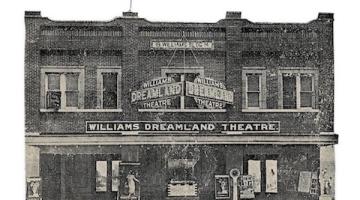 In 1921 thousands of whites attacked the Black population of Tulsa, Oklahoma with machine guns, airplanes, fire and pure hatred, killing at least 300.
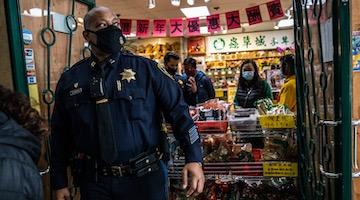 More policing rarely results in justice for anyone, and only puts Black, Indigenous, and other communities of color (BIPOC), including Asian people, at risk for more violence.
 “Bombing Somali civilians is one of AFRICOM’s main projects,” writes Mohamed Haji Ingiriis, a young Somali historian.
 The worldview animating Haitian masses today is leading to a social context ungovernable within the framework of prevailing economic neo-liberalism.
 This book challenges the myth that 1994 was the turning point in South Africa -- because the liberation process is unfinished.


