Eritrea: Doing Mining Right in Africa
by Thomas C. Mountain
“Any country starting a mining industry has to face up to whether mining is a blessing or a curse.”
The small east African country of Eritrea has started a mining industry and is doing it right. To start with Eritrea is receiving 40% of the profits generated by its first gold/copper mine.
Compare this to Tanzania where Anglo-American mining company operates one of the worlds largest gold mines and pays a whopping 4% royalty to the government.
Thanks to Wikileaks we know that the USA forced sanctions against Eritrea through the UN Security Council in 2009, not to punish Eritrea for allegedly supporting “terrorism” (i.e. Al Shabab in Somalia) but in an attempt to sabotage the start of Eritrea’s mining industry.
40% vs. 4%? Small wonder that Eritrea’s deal threatens western interests, for if the rest of Africa takes note and begins to follow suit in the deals cut allowing exploitation of the continent’s resources Pax Americana and its vassals are facing a serious problem.
Mining is a dirty, dangerous industry which inevitably scars the land and leaves behind massive amounts of cyanide and acid polluted slurry. Any country starting a mining industry has to face up to whether mining is a blessing or a curse.
Unfortunately small, war and climate change ravaged countries like Eritrea badly need foreign currency to pay for medicines, fuel, machinery and to help pay for building the infrastructure colonialism failed to provide.
When Eritrea won its independence on the battle field in 1991 there was no national electric grid. Most of the people had no access to clean drinking water, medical care or education for their children. While major advances have been made in providing these basic human rights to Eritrea's people much, much more needs to be done and developing the mining industry is an immediate answer.
Still, once Eritrea's first mine runs out of ore it faces a major problem in dealing with the mines “tailings pond,” actually a massive reservoir of cyanide and acid polluted water, the by-product of the process used to extract the gold and base metals from the ore. We are talking about hundreds of thousands of barrels of “slurry,” toxic and very, very difficult to treat.
In most of Africa, in the rest of the world really, the multinational mining barons just walk away from this problem, taking their super profits with them. This is not going to happen in Eritrea.
First of all the “tailings pond” has to be built right. A densely compacted base of gravel is laid down, similar to a heavy duty road bed and then covered with not one, but two layers of acid resistant rubber.
Once the mine has exhausted the ore bearing rock the best solution presently available is to cap the “tailings pond” with a layer of rock and absorbent earth which acts like a sponge, soaking up rainwater during the rainy season which later evaporates under the scorching east African sun.
This prevents the water from reaching the toxic slurry and prevents it from overflowing and seeping out into the ground water. Bore holes down slope are monitored to test if any of the slurry is leaking and can be used to pump back into the capped “tailings pond” any leakage, god forbid.
“There have been a series of stories claiming that Eritrea uses “slave labor” to build its mines.”
Compare this to the all to common practice of abandoning the tailings ponds, leaving them to burst their banks during major floods and polluting the surrounding lands and waterways with toxic slurry for many, many decades to come.
Eritrea is doing mining right, yet is being condemned by reports in the western media that can only be termed malicious. To start with there have been a series of stories claiming that Eritrea uses “slave labor” to build its mines.
A closer reading reveals that what is actually going on is that members of Eritrea's national service program are helping construct the mines.
In Eritrea everyone is required to complete their national service obligation. Most of the country's school teachers are in the national service program along with many of our nurses, medical technicians as well as our troops at the front defending the country from Ethiopian invasion. To say that being a member of the national service program is tantamount to “slave labor” is to say that most of our teachers are “slave labor”?
Still, this matter obviously needed more investigation and over the last few years I tracked down half a dozen national service members who have helped build Eritrea's first mine, the Bisha gold and copper mine. First of all, they all verified their work at Bisha by showing me photos on their mobile phones of them actually working at Bisha.
All of them, while not being happy with the very small salaries paid national service members, were proud of the work they had done helping build Eritrea's first mine. They knew that the foreign currency the mine would bring in was badly needed and that their contributions would really help the country.
When I asked them if they ever considered themselves to be “slave labor” they were rather insulted. In contrast, none of the reports claiming the use of slave labor in Eritrea's mining industry could provide any proof that those persons they interviewed ever worked at the Bisha gold mine let alone were actually anything other than national service members. Today the Chinese are constructing a new mine, the Zara Gold mine, and members of the Eritrean national service program are participating. I know one of them, Tseggai Asmerom, who is a surveyor at the site and in the national service program. Tseggai says the work is hard, the sun is hot but he actually enjoys it and is proud of his contribution. Of course he wishes his salary was larger, but that is another story.
Like I have said, Eritrea is doing mining right and the rest of Africa would be well served to take notice. As for those outside maligning our new industry, it would serve your readers well if you would do your homework first and report reality on the ground here for a change.
Thomas C. Mountain has been living and writing from Eritrea since 2006. He can be reached at thomascmountain at g mail dot com.

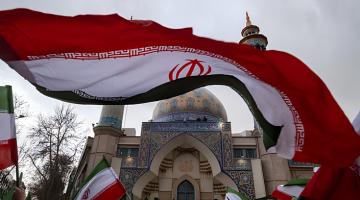 A People(s)-Centered Human Rights framework rejects the liberal abstraction that makes a false symmetry between Iranian authoritarianism and U.S. imperialism, which obscures the fact that one is a…
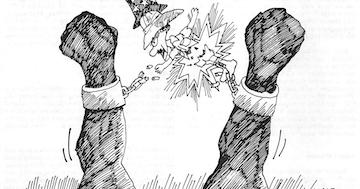 “In the period since 1969, one can detect the same old close ties between right-wing U.S. academics, think tanks, foundations, and the U.S. Government…”
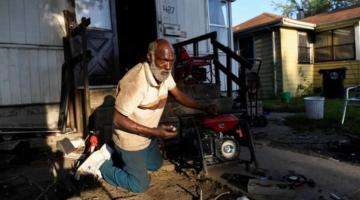 White supremacy works through institutions, and FEMA's formula for allocating disaster relief shows us how the state decides which neighborhoods are prioritized and which are left to suffer. Those in…
 The IMF and World Bank are not subjects the corporate media cover in any real sense. Instead, their role is treated as unquestionably immutable and beneficial.
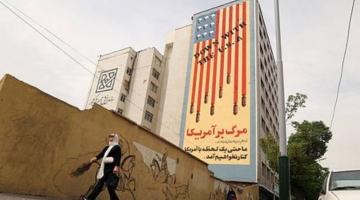 The Anti-Imperialist Scholars Collective (AISC) wrote this response to the open letter To Iran's political prisoners, 'trapped between two blades of a scissors' which appeared in The…


