by BAR executive editor Glen Ford
The African American Left’s failure to formulate a Black Agenda has made it “largely irrelevant during the greatest crisis of capitalism since at least the Great Depression, and the worst economic and social crisis for African Americans since the death of Reconstruction.” The default Black Agenda is Obamaism, which is corporatism, and the death of Black politics. “If all that matters is Obama, then there is no need for a Black political agenda – except four more years of Obama.”
The Need for a Black Agenda
by BAR executive editor Glen Ford
“Obama’s Black agenda is for Black people to disappear as an independent polity: that they have no agenda.”
Malcolm X, whose assassination is commemorated this week, warned us that, "If we don't stand for something, we may fall for anything." Forty-seven years later, most Black politicians and mainline African American organizations are willing to stand for nothing beyond the re-election of the First Black President. For the second presidential season in a row, in deathly fear of embarrassing (or somehow tainting) Barack Obama, traditional and elected Black leadership have made no demands of the Democratic standard bearer, thus giving the world the impression that there is no African American agenda worth putting forward.
Certainly, the Black misleadership class behaves as if African Americans have nothing important to say about issues of war and peace, including deepening U.S. military penetration of Africa, and nothing substantial to propose on the domestic economic front – not even that old standby from decades past, “a Marshal Plan for the cities.” If organized Black America can afford to abstain from putting forward an agenda for two presidential contests in a row, then it is logical to conclude that its agenda wasn’t very compelling, anyway.
In fact, for more than a decade, what passes for Black leadership has been steadily corporatized. An identifiable corporate bloc emerged within the Congressional Black Caucus in 2002, with the ouster of Cynthia McKinney (Georgia) and Earl Hilliard (Alabama). By 2005, the CBC was hopelessly fractured, with 15 members voting with Republicans on at least one of three critical measures: bankruptcy, repeal of the estate tax, and energy. With no semblance of a progressive consensus, the Black Caucus lost its ability “to act as a body on behalf of its national Black constituency.” During the same period, corporate money completed its conquest of traditional organizations such as the NAACP.
“The Black misleadership class behaves as if African Americans have nothing important to say about issues of war and peace.”
Surveys continued to show that, on issues of social and economic justice and peace, African Americans remained the most consistently progressive bloc in the U.S. However, the essentially leftist character of the African American polity found little expression in the increasingly corporatized Black “mainstream” discourse of the first decade of the 21st century. Corporate media celebrated the (generously financed) ascension of business-friendly “New Black” politicians like Newark’s Cory Booker, and the long-awaited extinction of “civil-rights”-type politicos. The environment had already been prepared for Barack Obama’s national debut, at the 2004 Democratic convention, where he eclipsed the party’s previous “New Black” favorite, Tennessee Congressman Harold Ford, Jr. Obama’s declaration that “there is no Black America…only the United States of America” was meant to signal the end of Black politics. African Americans cheered, right along with those who wished them to go away as an independent polity – but for very different reasons.
Corporate tentacles had also altered Black internal modes of political communication. Reverends Jesse Jackson, Sr. and Al Sharpton, long before the latter got his own slot on MSNBC, had become media entities that spoke mainly through their radio shows on corporate outlets, joined by the likes of Michael Baisden and veteran Tom Joyner. For millions of Black radio listeners, these celebrities’ personal games of positioning within the Democratic Party became the “real” world of politics.
“Obama’s declaration that “there is no Black America…only the United States of America” was meant to signal the end of Black politics.”
Once Barack Obama’s 2008 candidacy was deemed “viable” – tellingly, after his victory among the nearly lily-white primary voters of Iowa – the Black rallying cry became Everything for Obama! Instantaneously, Black politics and Obama’s fortunes became one – quite predictably rendering extraneous the actual conditions and concerns of African Americans. If all that matters is Obama, then there is no need for a Black political agenda – except four more years of Obama.
Obamites routinely say that his African American critics want the president to adopt a Black agenda of his own. That’s nonsense. Obama has been a thoroughly corporate politician since at least 2003, when his name first showed up on the membership list of the Democratic Leadership Council, which was then the party’s corporate annex. As president, he has performed Herculean tasks on behalf of the Lords of Capital and, to the extent that Blacks tolerate those policies, he has neutralized what was potentially the most implacable domestic foe of corporate hegemony. Obama’s Black agenda is for Black people to disappear as an independent polity: that they have no agenda. He is undoubtedly pleased.
As discussed above, the corporate conquest of Black politicians and traditional organizations was well advanced before Barack Obama was ushered onto the national stage – although there remains a leftist Black popular consensus on core issues. Disastrously, with the notable exception of the Black Is Back Coalition, the African American Left has disintegrated as an active opposition to Obama’s corporatism. In this vacuum, the Black Left has been largely irrelevant during the greatest crisis of capitalism since at least the Great Depression, and the worst economic and social crisis for African Americans since the death of Reconstruction.
Since it is the Black Left that has always most clearly articulated the yearnings and objective conditions of Black America – which is, at root, a leftist political culture – the absence of a Black Left-formulated agenda is an historical catastrophe.
We’ve got to fix that, and quickly. In the process, we will discover who the Black Left really are at this stage in our people’s journey.
BAR executive editor Glen Ford can be contacted at Glen.Ford@BlackAgendaReport.com.

 In this series, we ask acclaimed authors to answer five questions about their book. This week’s featured author is Colin Kaepernick.
 The climate movement has been captured by a professional managerial class that prefers charity galas and virtue signaling to building power.
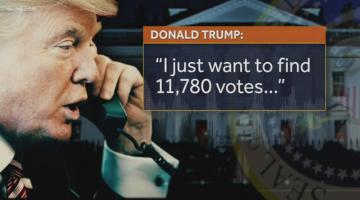 "Find me another 11,780 votes?" is the latest from BAR's Poet-in-Residence.
 The Yemeni attack involved dozens of ballistic missiles and drones, targeting sites from which Saudi warplanes took off to strike Yemen.
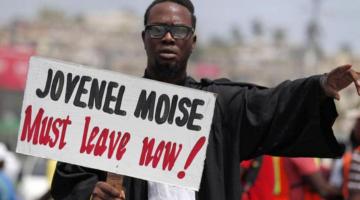 Responsibility for Haiti's deteriorating conditions does not rest on the Haitian masses. A population does not rise up spontaneously but depends on political movements and organizations to build it.


