by BAR executive editor Glen Ford
The U.S., now number one in oil and gas, is preparing to destroy Russia’s economy. “Washington will move to crush, or at least seriously disrupt, Russia under its ‘sanctions as war by other means’ machine, by targeting its energy exports, while simultaneously boosting the foreign markets for U.S. natural gas.”
U.S. Prepares to Gas Russia Into Submission
by BAR executive editor Glen Ford
>
“Washington’s strategy is to permanently ratchet up tensions to ‘new cold war’ levels to justify sanctions against Russian energy exports.”
The massive – and desperate – American offensive against world order is entering a new phase, as the U.S. prepares to resume its historical status as global energy superpower. The Obama administration’s brazen implantation of a rabidly anti-Russian, fascist-led regime in Ukraine places U.S. proxies astride pipelines that carry much of Siberia’s gas to Europe and beyond. Seventy-six percent of Russia’s natural gas exports are bound for Europe, the bulk of it to Germany, Italy, France and the United Kingdom. Russia’s weight in the world is largely derived, not from its economically burdensome nuclear arsenal, but as an energy giant. The U.S.-engineered coup in Kiev sets the stage for a protracted assault on Russia’s energy trade, which accounts for more than half of Moscow’s federal expenditures. Without its huge oil and gas exports, Russia deflates like a leaky dirigible.
Even the Americans were not so stupid as to believe that their neo-Nazi friends in Kiev could somehow pry Russia from its naval base in Crimea. Such was never the plan. Rather, Moscow’s response to the overthrow of Ukraine’s elected government was predictable, as was that of the Russian-speaking Crimean majority. Washington’s strategy is to permanently ratchet up tensions to “new cold war” levels to justify sanctions against Russian energy exports while exploiting America’s own natural gas “surplus” as an enhanced weapon of global hegemony.
“The U.S.-engineered coup in Kiev sets the stage for a protracted assault on Russia’s energy trade.”
Thanks to shale fracking, the United States recently surpassed Russia as the world’s number one exporter of natural gas, and will next year become the top oil producer. As the New York Times reported on March 5, “The administration’s strategy is to move aggressively to deploy the advantages of its new resources to undercut Russian natural gas sales to Ukraine and Europe.” That’s not the half of it. When Moscow stood up to U.S.-backed jihadists in Syria, the Obama administration understood that the U.S.-Russia button could not be “reset” to Washington’s satisfaction under current conditions. An assertive Russia, increasingly coordinated with China, must be taken out of international contention. Washington will move to crush, or at least seriously disrupt, Russia under its “sanctions as war by other means” machine, by targeting its energy exports, while simultaneously boosting the foreign markets for U.S. natural gas.
The U.S. government tells its people that it spends more on weaponry than the rest of the world’s nations, combined, in order to, among other things, maintain the free flow of energy throughout the planet. But, that didn’t stop Washington from attempting to cripple Venezuela’s oil production in 2003, or from preventing Iran, once the world’s fourth largest exporter, from marketing more than a fraction of her production under the current U.S. sanctions regime. U.S. rulers have never been guardians of free oil flow. Rather, American policy is designed to ensure that U.S.-based corporations and financiers dominate the global energy trade, and that the dollar remains central to energy transactions, regardless of where the oil and gas comes from.
Russia also plays a key role as the energy giant among the BRIC bloc, which is the most likely venue for hatching alternatives to dollar hegemony. Venezuela, which barters oil with some of its Latin American partners and uses the proceeds of its dollar-denominated exports to build structures of resistance to U.S. imperialism, must also be forced back into line, or taken out of the game.
“U.S. rulers have never been guardians of free oil flow.”
Ever since the Arab oil embargo of 1973, U.S. presidents have trumpeted the quest for “energy self-sufficiency” as a national security imperative, requiring subsidies for domestic energy production. Richard Nixon proclaimed: “In the last third of this century, our independence will depend on maintaining and achieving self-sufficiency in energy.” In truth, oil producers enjoyed bounteous subsidies when the U.S. was indisputably the oil production king of the world, from 1925, when U.S. oil fields accounted form more than 70 percent of total global production, to the early 70s. Citizens assumed self-sufficiency meant drilling for domestic development. “Self-sufficiency” – and jobs – is what makes fracking “worth it” in the eyes of many Americans. Now that the aquifers of much of the country have been fouled by shale-frackers intent on cornering gas markets around the globe, the script must be flipped, so that the surplus can be exported. As George Washington University law professor Richard Pierce told Al Jazeera, last year, "The US is now 100 percent independent in natural gas and within the next half a dozen years [North America] will be independent in oil. It will become a global supplier, rather than a demander, in a hurry."
Room must be made for this global supplier in an energy-glutted world. Russia’s gas sales to Europe need to be “undercut,” as the Times puts it. Sanctions can reshape the global markets to the advantage of the new energy superpower – war by other means. Corporate media mask the historical moment with juvenile jibes at Putin, as Washington prepares to subdue the planet with gushing oil and burning water.

 The history and significance of Black August, presidential elections and politics in Kenya, and reflections on the anniversary of the Sandinista Revolution.
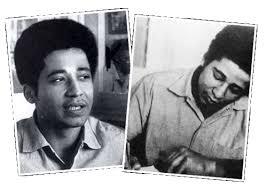 Kalonji Changa is co-founder of Black Power Media and founder of FTP Movement. He joins us from Atlanta to talk about Black August, which has been a fixture of the liberation movement for 43 years.
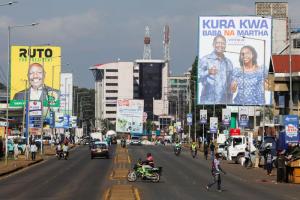 Irene Asuwa joins us from Nairobi, Kenya. She is co-convener of Ecological Justice and supports outreach at Ukombozi Library. We discuss the recent presidential election in that country.
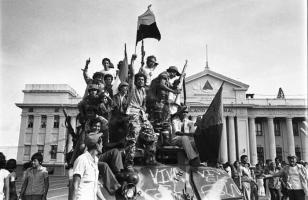 In a recent webinar hosted by the United National Antiwar Coalition (UNAC), Margaret Kimberley discussed what she witnessed during the commemoration events for the 43rd anniversary of the Sandinista…
 Why would Black people laud the FBI or criticize protection against self-incrimination? The FBI search of Donald Trump's home has reawakened Trump Derangement Syndrome.


