by Pascal Robert
The white colonialists have never forgiven Haitians for the revolution of 1804, the first successful revolt against white supremacy. “The slander and degradation against us about our poverty, alleged political incompetence, and poor educational infrastructure is tied to the persistent desire of our historical enemies to wipe our revolution from our minds and the rest of the world’s.”
What Should it Mean to be Haitian in 2014
by Pascal Robert
“My decision to destroy the authority of the blacks in Saint Domingue (Haiti) is not so much based on considerations of commerce and money, as on the need to block forever the march of the blacks in the world.” – Napoleon Bonaparte
These words by Napoleon Bonaparte prior to his embarking to crush the revolution sparked by African slaves in what he then considered his French Colony, now known as Haiti, are of significant importance for several reasons. The most telling importance is that what Napoleon is sharing, as a man who is considered to this day as one of the greatest military minds in the history of Western Civilization, is that the his ultimate motivation was purely White Supremacy. The Haitians had already decimated a huge British military expedition, killing over 10,000 British soldiers in less than two months, and repelled incursions by the Spanish Crown. Napoleon was determined to keep over 500,000 Black people in bone crushing bondage in order to keep the lie of justified White domination over the affairs of the world alive.
The importance of Haiti in choking the life out of that lie forevermore has not ceased. What Haitian people must understand is that our existence and history as a people is rooted in being a painful and uncomfortable reminder to the Western world that on January 1, 1804, White Supremacy died a humiliating death, if at least for one day.
In 2014 our identity as Haitians should be grounded in knowing that the slander and degradation against us about our poverty, alleged political incompetence, and poor educational infrastructure is tied to the persistent desire of our historical enemies to wipe our revolution from our minds and the rest of the world’s. Every Haitian child that goes unfed, woman that goes uncared for, or school that goes unbuilt results from the persistent need to delegitimize our history, undermine our sovereignty, and destabilize our governments. The loss Haiti caused to the Imperial masters of the world has not ceased their undying need to punish us for our daring to be free. We cannot believe that merely because our revolution seems so removed from history that they have forgotten.
Western powers will always chide us and say we Haitians need to “take accountability.” Yet when have they taken accountability for the treachery and perfidy they’ve sponsored within our governments? What accountability have they taken for the countless destabilization efforts over time? The accountability we must take is for not neutralizing the cowards and traitors who have denied us our completing the job that was started in 1804.
“On January 1, 1804, White Supremacy died a humiliating death, if at least for one day.”
To further humiliate us, some of our enemies may ask: Why are you in America, France, Canada and not back in Haiti if you care for it so much? To further remind such voices that we know our worth we should tell them that the reason the greatest of these nations, The United States, exists is because our ancestors mercilessly destroyed Napoleon’s army so thoroughly that, in economic desperation, he had to sell much of the land west of the Mississippi to Thomas Jefferson for less than 10 cents an acre. That sale doubled the size of this nation and allowed its westward expansion.
To be Haitian in 2014 is to know the world will try to write our obituary as a nation every January, the month that marks both our independence and the great earthquake of 2010. However, we cannot be distracted. An earthquake in time can be forgotten, but Haiti’s independence can never be.
To further mock us, scurrilous publications written by our enemies take the glorious day of our anniversary to stigmatize Haiti for the tragic consequences of the West’s global choke hold: child poverty and servitude. Such strategic attempts on their part remind us how dedicated the enemies of Haitian liberty are to blotting out our victory. Throughout the world even lions of economic development like India still have child servitude rates that eclipse our own. It is doubtful that their independence day will be used for such mockery.
One of the ironies of being Haitian in 2014 is to know that while they always start off conversations about our country by saying how poor we are, contracts for billions of dollars of natural resources are being signed while luxury hotels and whole Islands are being turned into multi-million dollar tourist destinations. Of course, almost none of this will go to benefit our people. Robbing the poor is still quite in fashion.
While Western media always ramble on about how horrid and destitute life is in Haiti, narcissistic do-gooder White Savior types flock to our country to live in the lap of luxury – and then publish articles about how guilty they feel. We wish these same people could have lived in the time of our founder, Jean Jacques Dessalines, so they could know how he would greet them.
Therefore, our identity as Haitians in 2014 should be a continuation of what it has always been. For, in truth, to be Haitian is to be a combatant against White Supremacy. It is our birthright and obligation. We can never again abdicate that responsibility because of external oppression or collusion from within.
L’Union Fait La Force

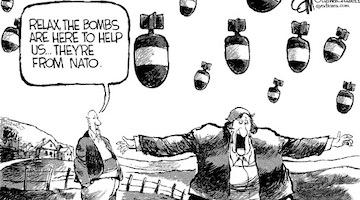 This week the U.S. state’s propaganda and the Black elite were on your minds.
 Senior care puts care workers into racialized, gendered, and age hierarchies, making it difficult for them to achieve social and economic mobility.
 I am hoping my call will provoke/inspire us to practice forms of life and liveliness differently.
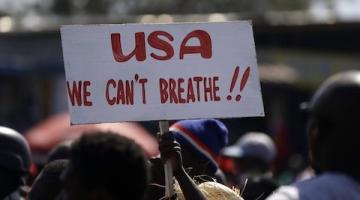 While Biden is telling Haitians “Don’t come over,” Haiti and its allies have been saying “U.S. Out of Haiti.”
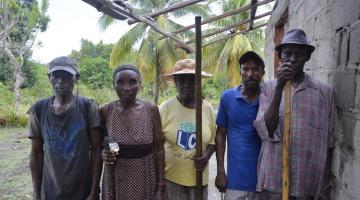 The author unpacks the tired trope of “poor rich Haiti,” highlighting the role of foreign capital and local elites in the destruction of life in the countryside.



