by Norman (Otis) Richmond aka Jalali
Once upon a time, Africans from across the Diaspora and their allies united in a movement to abolish apartheid in South Africa. Toronto was a focal point of this movement.
Toronto And The Cultural Boycott Of South Africa
by Norman (Otis) Richmond aka Jalali
This article previously appeared in Pride News, of Toronto, Canada.
“The city’s African community immediately came out and supported the South African liberation movement.”
The elimination of apartheid was on the agenda of the United Nations from its inception. On June 22, 1946, the Indian government requested that the discriminatory treatment of Indians in the Union of South Africa be included on the agenda of the very first session of the General Assembly.
On March 21, 1960, 69 unarmed protesters were shot dead by the South African police in Sharpeville. This event was called the Sharpeville massacre. Africa, Africans and oppressed people worldwide condemned the South African government. The June 16, 1976 Soweto uprising was the straw that broke the camel’s back. A series of protests led by high school students in South Africa was the spark of this historic event. Students from numerous Sowetan schools began to protest in the streets of Soweto in response to the introduction of Afrikaans as the medium of instruction in local schools. No one knows the number of protesters that died that day.
Musicians supported the South Africans, not the apartheid regime. Max Roach, Aminata Moseka (Abbey Lincoln) and Oscar Brown Jr., collaborated on the ground breaking album, “We Insist: Freedom Now Suite.” South Africa’s apartheid government banned this album along with “Uhuru Afrika” by Randy Weston and Lena Horne’s song, “Now.” The prohibition had made international headlines and was reported in the September 1964 issue of Downbeat magazine.
The African community in Toronto immediately came out and supported the South African liberation movement. Jean Daniels, Danny Braithwaite and others formed organizations and put out information about the deplorable conditions in South Africa for the Black majority.
“Roberta Flack turned down $2.5 million to perform in Sun City.”
The Toronto-based Biko Rodney Malcolm Coalition (BRMC) took the baton from Daniels and Braithwaite. Many of the founding members of the BRMC knew Daniels and Braithwaite personally. The BRMC’s name came from South Africa’s, Stephen “Bantu” Biko, Guyana’s Walter Rodney and colonized Afro-America’s El-Hajj Malik El Shabazz (Malcolm X). The BRMC was formed in March 1983. A coalition including Toronto’s BRMC, the Albany, New York’s Capital District Coalition against Apartheid and Racism and the New York City and Los Angeles Chapters’ of the Patrice Lumumba Coalition formed an alliance to promote the cultural boycott of South Africa.
The alliance of these three groups began in 1984 at the United Nation’s organized meeting, The North American Regional Conference against Apartheid, organized by the Special Committee against Apartheid. Norman (Otis) Richmond aka Jalali, Vera Michelson, Elombe Brath and Ron Wilkins put this alliance together during this UN meeting.
These groups coordinated demonstrations against artists who had violated the UN sanctioned cultural boycott of South Africa. Ray Charles, Frank Sinatra and Millie Jackson were high on the list. In October of 1980, Ray Charles performed in apartheid South Africa. Before he went to South Africa, Ray received several requests to reconsider playing along with the apartheid regime. Southern Africa liberation groups – and the Organization of African Unity (OAU) were among those asking Ray not to collaborate with the Afrikaners.
In Toronto the BRMC also took the position that they would publicly give awards to artists who refused lucrative offers to entertain in racist South Africa. The idea to award artists was inspired by Roberta Flack when the BRMC heard that she had turned down $2.5 million to perform in Sun City, Bophuthatswana. Sun City was a resort which was located in the Bantustan of Bophuthatswana. The apartheid regime attempted to promote Sun City, as an “independent” African nation. The South African government forcibly had its black population relocated people to Sun City.
The BRMC presented Flack, Dan Hill, Ann Morifee, Four The Moment, Phyllis Hyman, Roy Ayers, Holly Near, Sweet Honey in the Rock, Randy Weston, the Commodores, Kool and the Gang, Gladys Knight and the Pips, Third World, the Mighty Sparrow, Eddie Grant, UB40, and Steel Pulse. Five recipients of the BRMC award, Gil Scott-Heron, Linton Kwesi Johnson, Bobby Womack, David Ruffin and Eddie Kendricks performed on the Steven Van Zandt-led 1985 album, Sun City by Artists United Against Apartheid.
The Black Music Association Toronto (BMA/TC) also played a role in the cultural boycott. Milton Blake refused to play music by anyone that had violated the boycott on his Musical Triangle show on CKLN-FM 88.1. The BMA/TC organized a demonstration in front of the South African consulate in Toronto. Artists like Salome Bey, Bruce Cockburn, Messenjah, Muhtadi and others supported the boycott. Jayson aka John Perez’s song “Free South Africa” was recorded after this demonstration. Al Hamilton’s African-Canadian weekly Contrast was supportive of the boycott. Hamilton turned down advertising money form O’Keefe Centre (now the Sony Centre for the Performing Arts) because Millie Jackson played in South Africa.
The BRMC followed teachings of the great Paul Robeson who always maintained, “The artist must elect to fight for freedom or slavery. I have made my choice I had no alternative.”

 This week the debate about the Green Party’s presidential campaign was on readers’ minds. We share your letters for “
 Nine years after his death, residents in the chaos-wracked country's capital have grown to miss the longtime leader as the frustrations of daily life mount.
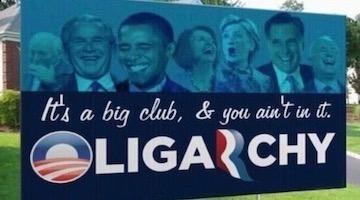 A public attack that characterizes the Green Party as a of spoiler for the Democrats amounts to a defense of the Democrats policies on never-ending war and austerity.
 US presidents range from very bad to less bad, but none were “good” for Black people – including the first Black one.
 A Leni Riefenstahl film Written by Dr. Goebbels Produced by the DNC— Set in summer in Milwaukee: “Return of the $electable Dead.” A


