by Benjamin Woods
The “Left” resurgence in the U.S. is less than it’s cracked up to be. Not so long ago, luminaries like Bill de Blasio and Elizabeth Warren would have been, at best, referred to as liberals.” If you’re not pushing for redistribution of land and wealth and nationalization of the “commanding heights” of the economy, you’re not the real Left.
Who and What is “The Left”?
by Benjamin Woods
The central, unifying factor of the “The Left” should be anti-capitalism.”
The January 1 edition of the Washington Post published an Op-Ed titled “The Resurgent Progressives.” The writer, E.J. Dionne, claims “the emergence of a Democratic left will be one of the major stories of 2014.” The author bemoans the rightward shift in American politics and admits the US “needs a real Left.” But do progressive local referendums, the ascendancy of individuals like Sen. Elizabeth Warren and New York City mayor Bill De Blasio represent the “the real Left.” Hmm, I don’t think so. Once upon a time these figures would have been, at best, referred to as liberals, even moderates by some.
Although the terms Left and Right are regularly applied in the white corporate media, they are rarely defined. Throughout most of the twentieth century, particularly the Cold War, “the Left” meant some form of socialism, communism, or anarchism. We should return to this definition. The central, unifying factor of the “The Left” should be anti-capitalism. Speaking only of income inequality just…doesn't…quite…cut it. “The Left” must question private ownership itself and demand a complete redistribution of land and wealth including, but not limited to, the nationalization of banks, factories, and communications systems etc.
As previously stated, this was once the criteria. For example, Howard Zinn claims that one hundred years ago in 1914 the Socialist Party USA had over 1200 office-holders in the US. Twenty years later, during the era of the popular front, Robert Cohen in When the Old Left was Young writes that in 1936 half of all college students in this country participated in a one day strike and rally to protest fascism and war. At the height of the anti-war movement in 1970, over 10,000 people gathered in Philadelphia for the Revolutionary People's Convention to write a new US constitution. The keynote speaker was Black revolutionary, Huey Newton. These are examples of a truly insurgent Left.
“US social reform movements from abolitionism to labor have been sabotaged by racism/white supremacy.”
None of these remarks are meant to belittle the accomplishments, impact, and possibilities of the liberal policies that have been enacted. A case in point, eighteen states have legalized gay marriage, Washington and Colorado legalized marijuana and, like other municipalities, Washington DC has raised its minimum wage to $11.50. Similar to industrial unionism in the 1930s, if the SEIU and other labor unions commit hundreds, perhaps, thousands of young organizers to organize fast food, low wage workers there could be a strong multi-national labor movement in the US. The beacons of hope for a truly resurgent Left are Socialist Alternative city council woman Kshama Sawant in Seattle, Washington, and Revolutionary Black Nationalist Chokwe Lumumba in Jackson, Mississippi. But what does a truly resurgent Left mean for the Black Liberation movement?
In Reluctant Reformers Robert Allen argues that US social reform movements from abolitionism to labor have been sabotaged by racism/white supremacy. Unfortunately, due to the ongoing impact of the southern strategy perfected by Ronald Reagan AND the Democratic party, racism hurts the chances of the success of multi-racial organizations even today. Moreover, it illustrates the continued relevance of Left Nationalist formation(s) (ex: African Blood Brotherhood, Black Panthers, MXGM). Following the strategy laid out in the Jackson Plan of participatory and economic democracy, the election of Chokwe Lumumba offers possibilities and potential lessons for "The Left" generally and the Black Left in particular. With the correct definition and strategy for "The Left" we can organize to smash capitalism and end national oppression, once and for all.

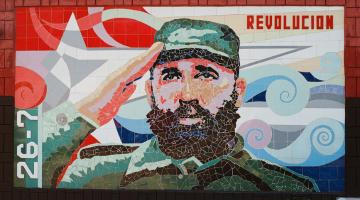 Empire taught us what to believe about the Global South. It also taught us how to move through it, and being colonized here does not exempt us from carrying those beliefs with us.
 The Bush administration had long planned a global war for U.S. hegemony, and the attacks of September 11 provided the perfect pretext to put those plans into motion.
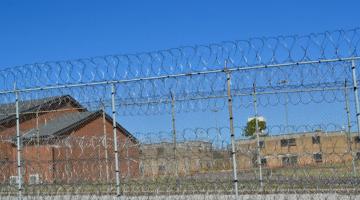 Oklahoma prison inmates were making political calls for a conservative Super PAC during the primary.
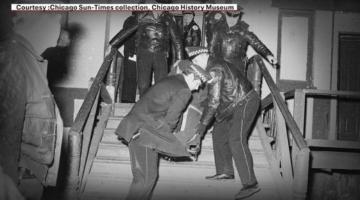 Longtime attorney Flint Taylor’s new book tells the story of the People’s Law Collective, which grew out of the radical movements of the late 1960s.
 The Trump administration has already cut off Cuba’s access to oil. Now it’s attempting to starve the Cuban people, targeting the country’s capacity to grow, process, and import food — unless it buys…


