by Harold Green
When Zimbabwe’s Robert Mugabe attended the memorial service for Nelson Mandela, he “received the loudest cheers and applause” among the dignitaries. Zimbabwe’s successful land reform stands in stark contrast to South Africa, where “barely 10% of farm land has been redistributed,” and the wealth gap – which is a race gap – “has become one of the most unequal in the world.”
South Africa and Zimbabwe: A Tale of Two Land Reforms
by Harold Green
“Zimbabwe's land reform has resulted in hundreds of thousands of Black Zimbabweans becoming new and successful farmers.”
While Nelson Mandela and the ANC are to be praised for their courageous and persistent commitment to ending the racist and brutal system of Apartheid including having taken up arms against it, the question many have begun to ask: How true did they stay to that commitment upon being released from prison and eventually coming to power. The answer to that question can be found in understanding what the specific goals and objectives were of the various South African organizations involved in the Anti-Apartheid Movement.
For Nelson Mandela and the ANC (the most prominent South African anti-apartheid group) they're goals and objectives were crystallized in the ANC's 1955 Freedom Charter. Controversial when it was created, many like Robert Sobukwe who thought it was not nationalistic, not “African” enough, left the ANC to go on to form other anti-apartheid groups. In the case of Robert Sobukwe, he and other former members of the ANC, would go on to form the Pan African Congress in 1959.
Despite the controversial multiracial aspect of the Freedom Charter, there was one important demand in it to which everyone did agree: that land ownership would be the right to all. In the section entitled, “The Land Shall be Shared Among Those Who Work It!” it states:
“Restrictions of land ownership on a racial basis shall be ended, and all the land re-divided amongst those who work it to banish famine and land hunger;
The state shall help the peasants with implements, seed, tractors and dams to save the soil and assist the tillers;
Freedom of movement shall be guaranteed to all who work on the land;
All shall have the right to occupy land wherever they choose;”
Land reform and redistribution was clearly one of the main focal points of the anti-Apartheid movement. While the issue of pass laws, housing, fair compensation for labor, human rights, etc, were important, it was the issue of land, especially among Black South Africans, that factored significantly in the fight to end Apartheid.
”White land owners began asking for far more than what the land was worth leading to inflated land values.”
When Nelson Mandela and the ANC came to power, they made sure the issue of land reform was included in the new constitution. In it, the right to have access to land was guaranteed, albeit with the problematic caveat that there would be no “arbitrary expropriation,” and that land could only be acquired on a “willing seller, willing buyer” basis.
Despite some early successes, the willing seller, willing buyer stipulation has proven to be problematic. White land owners began asking for far more than what the land was worth leading to inflated land values, and making it virtually impossible for the government to sustain funding. Encouragingly, the willing seller, willing buyer stipulation is being abandoned, and a new expropriation bill has been introduced (March 2013) in response to demands that land reform take place on a more equitable basis.
Upon coming to power in 1994 (two years before the new constitution was implemented), the ANC through it's Restitution of Land Rights Act enacted in 1994 and it's Reconstruction and Development Programme (RDP) promised agricultural and land reform. It's stated goal was to put 30% of the 90% of farm land held by whites into the hands of Black farmers, and to settle the hundreds of thousands restitution claims by those Blacks who could prove their families land had been stolen under Apartheid.
Those goals were to have been achieved by 2000. To date, barely 10% of farm land has been redistributed. Sadly, 90% of the resulting farms have failed due to insufficient funding that was promised under the Restitution of Land Rights Act. Bewilderingly, the vast majority of Black South Africans whose land was stolen and thusly had legitimate claims for restitution, have missed the poorly advertised deadline for filing restitution claims with no second chances. Many others have been forced to accept meager payments for land that was stolen, far below current market value. In a word, land reform in South Africa under ANC leadership 20 years hence, has been a “disaster.”
Understandably, Black South Africans are loosing patience with the ineffective manner in which land reform has been carried out. Many are beginning to look at the land reform process implemented by ZANU-PF under the leadership of Robert Mugabe in Zimbabwe, and are questioning whether this approach should be followed by the ANC. The leadership of the ANC, in no rush to upset the economic apple cart that has made many of them rich, are scampering to ward off the growing discontent over the slow pace of land reform and other economic justice issues.
Despite the continuous racist ad hominem attacks against Robert Mugabe, coupled with economic sanctions in an attempt to destroy Zimbabwe's land reform agenda, land reform in Zimbabwe is moving along with a considerable degree of success. As evidenced in a host of books and reports published in recent years, most notably Zimbabwe's Fast Track Land Reform by Prosper D. Matondi and Zimbabwe Takes Its Land Back by Joseph Hanlon, Zimbabwe's land reform in spite of it's tumultuous and long overdue start, has resulted in hundreds of thousands of Black Zimbabweans becoming new and successful farmers.
"To date, barely 10% of farm land has been redistributed.”
These reports dispel the racist myths about famine and food shortages due to failing Black farms. What these reports reveal is that these new Black farms are just as profitable as the white owned farms were, producing sufficient food for both Zimbabwe's export and domestic markets.
What is also proving to be successful is Zimbabwe's indigenization program administered through Zimbabwe's Youth, Indigenization and Economic Empowerment ministry. This requires that all foreign companies operating in Zimbabwe sell at least 51% of ownership of the respective companies to local Zimbabweans. Having learned their lesson from the land reform episode that saw ZANU-PF prevail, these foreign companies are offering little resistance to indigenization.
No such indigenization program exist for Black South Africans. Instead, there is the Black Economic Empowerment (BEE) program administered under South Africa's Department of Trade and Industry. It's stated purpose is to: “focus on broadening participation, equity and access to redress for all economic citizens, particularly those previously marginalized”
The BEE list a host of objectives designed to more fully integrate Black South Africans into the South African economy by encouraging Black ownership and entrepreneurship. However, instead of the masses benefiting, there has been a rush by the leadership of the ANC, and other well connected Blacks, to become minority partners and sit on boards of various white owned companies.
This grotesque scenario has prompted Moeletsi Mbeki, brother of former South African president Thabo Mbeki to comment, “it [BEE] strikes the fatal blow against the emergence of black entrepreneurship by creating a small class of unproductive but wealthy black crony capitalists made up of ANC politicians, some retired and others not, who have become strong allies of the economic oligarchy.” It is no secret that corruption amongst ANC's leadership has become pandemic, while the wealth gap between rich and poor (mostly Black) has become one of the most unequal in the world.
As frustration and anger grows among Black South Africans, particularly among Black South African youth who make up 77% of South Africa's population, and who are 70% of the unemployed, coupled with continuing intransigence on the part of white South Africans in their unwillingness to relinquish accumulated advantages, the ANC may very well be facing a Zimbabwean type scenario which they might not be able to control.
”Corruption amongst ANC's leadership has become pandemic.”
Black South African youth view Robert Mugabe as a hero for not only taking back African land from white farmers, but also for successfully standing up to the most powerful economic forces in the world as they imposed near crippling sanctions in their attempt to destroy Zimbabwe's economy and force Robert Mugabe and ZANU-PF from power. No surprise then that at the recent memorial service for Nelson Mandela in Johannesburg, he received the loudest cheers and applause, as well as a standing ovation when acknowledge as one of the attending dignitaries.
If Zimbabwean type scenarios are to break out in South Africa, while surely to be condemned by moneyed interest both inside and outside the country, they might in the long run prove to be just as successful as Zimbabweans’ forced take over of white control farms have been. Of course, the ANC in it's new role as protector of moneyed interest in South Africa will be forced to make a choice. Will they side with the Black masses or with the white minority? If the Marikana mine incident where 34 Black miners were murdered in cold blood (mainly by Black South African police) for demanding better wages is any indication, land reform in South Africa will make land reform in Zimbabwe look like a lunch in the park.
Nearly 15 years after “fast track” land reform began in Zimbabwe, we have seen the vast majority of Zimbabwe's land returned to it's rightful owners. After nearly 20 years of ANC rule in South Africa, the vast majority of South Africa's land is still in the hands of it's white minority. The controversy and criticism the ANC has sought to avoid by not pursuing a more aggressive and just land reform and economic program in the immediate post Apartheid period, will surely come back to haunt them in the post Mandela era. We shall see.
Harold Green is a Pan-African activist based in Los Angeles. He can be contacted at paclwp@msn.com.

 The following is a manifesto in the full sense of the word; a Black anarchist’s proposal for a sweeping approach to a nation and world without capitalism.
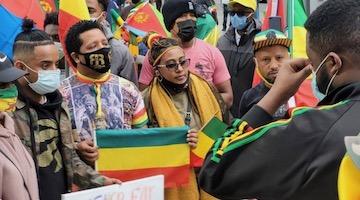 The US bid for sanctions against Eritrea was rebuked by the UN Security Council, so the imperial bloc had to settle for European sanctions against the fiercely independent African government.
 $13 billion aircraft carriers, $10 pencils and $500 hammers, renamed “portable hand-held transcribing devices” and “impact fasteners;” so war-profiteer pimps—war
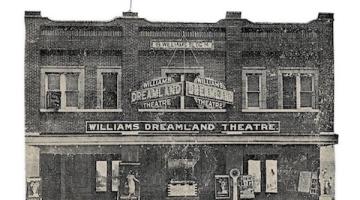 In 1921 thousands of whites attacked the Black population of Tulsa, Oklahoma with machine guns, airplanes, fire and pure hatred, killing at least 300.
 More policing rarely results in justice for anyone, and only puts Black, Indigenous, and other communities of color (BIPOC), including Asian people, at risk for more violence.



