by Dr. Marsha Coleman-Adebayo
Nelson Mandela's ANC leadership negotiated the form of the new South Africa on two tracks, the political wrangling in one set of meetings, & the decisions on the nation's economic future separately at another location, headed by Thabo Mbeki. The results were predictable, as Miriam Makeba said: "We got the flag, but they got to keep the money."
Eyewitness to America Betraying Mandela’s South Africa: The Gore – Mbeki Commission – Part I
by Dr. Marsha Coleman-Adebayo
"Soon after assuming my position I realized that something had gone terribly wrong."
At the dawn of the Nelson Mandela administration, I had the extraordinary privilege to sit at the table with the new African National Congress leadership as the Environmental Protection Agency /White House liaison to the Mandela government. My job was to work with the new ANC leadership to design and provide US technical environmental expertise to assist the majority population's recovery from the environmental and public health disaster the apartheid system imposed on it. This process took place through the flagship foreign policy vehicle, the US-South African BiNational Commission commonly called the Gore-Mbeki Commission or the BNC. All bilateral foreign policy activities between the US and South Africa took place through this Commission. A detailed account of these events can be found in my book: No FEAR: A Whistleblower’s Triumph over Corruption and Retaliation at the EPA.
As a graduate student and professor, I had been an anti-apartheid activist who marched with my colleagues in the Southern Africa Support Project (SASP) and TransAfrica in front of the South African Embassy to “Free Mandela” and to express our solidarity with the South African revolution. When I was offered the position of Executive Secretary to the BNC in 1995, I made it clear to the EPA—citing racist US foreign policy in other African countries—that I would not be a part of any diabolical scheme against the South African people. I was a supporter of the South African Freedom Charter and excited about helping the Mandela government implement environmental policies that would reverse decades of harmful and at times fatal policies towards the black majority. Soon after assuming my position I realized that something had gone terribly wrong. In a 1996 letter to my mentor, professor Noam Chomsky I wrote: "The Freedom Charter is not on the table. I’m heart broken to report that despite the blood sacrifice of so many activists, South Africa is entering a neo-colonial phase."
Vice President Al Gore said of the BNC: “I affirm that the people of the United States of America are committed to the strongest possible partnership with the citizens of South Africa." His counterpart, Thabo Mbeki, then deputy president of South Africa, proclaimed that he appreciated “this relationship of support and engagement for creating a better life for the people of this country.”
" Under a green banner, they were seeking to continue the previous relationship with Afrikaner leaders they had enjoyed while Nelson Mandela languished in prison for three decades."
CNN's description at the time of one aspect of BNC's mission was closer to the truth: a further goal of the BNC was to hold regular trade talks and cooperate in the fight against international terrorism.
There was a stark difference between the stated goals of the BNC and US political strategy. It would become evident that the functional goal of the environment committee of the BiNational Commission was to provide cover for the same US multinational corporations that had participated in the repression of South Africa during apartheid. Under a green banner, they were seeking to continue the previous relationship with Afrikaner leaders they had enjoyed while Nelson Mandela languished in prison for three decades.
I was the US official to whom the first reports of illness and death relating to vanadium mining were given by black South African union leaders and later by the new environmental leadership in the Nelson Mandela government. The US ignored these reports, choosing to protect American-owned multinational corporations that were operating in South Africa. The reports included symptomology of miners whose tongues were turning green, bronchitis, asthma, bleeding from bodily orifices, impotence in young, healthy male workers, cancers and ultimately death.
By 1996 US policy had not changed from the Reagan Administration—but the PR and public statements did—in response to growing US public outcries from the anti-apartheid movement and international human rights groups. Still, behind the scenes and in agencies like the EPA, the US role was business as usual.
As flowers adorn the front of the statue of Mandela at the South African embassy it is worth noting that the statue was paid for by the same corporate concerns that supported Mandela's incarceration including: the , The South African Mining Group, South Africa’s Synthetic Fuels, the chemicals giant Sasol, the South African Gold Coin Exchange and Standard Bank. These corporate co-conspirators think they can fool us with plaques, devotionals and crocodile tears.
Dr. Marsha Coleman-Adebayo is the author of No FEAR: A Whistleblowers Triumph over Corruption and Retaliation at the EPA is available through amazon.com and the National Whistleblower Center. Dr. Coleman-Adebayo worked at the EPA for 18 years and blew the whistle on a US multinational corporation that endangered vanadium mine workers. Marsha's successful lawsuit lead to the introduction and passage of the first civil rights and whistleblower law of the 21st century: the Notification of Federal Employees Anti-discrimination and Retaliation Act of 2002 (No FEAR Act). She is Director of Transparency and Accountability for the Green Shadow Cabinet.

 Before Colombia’s national uprising exploded in April 2021, struggles for justice in a majority Black port city set in motion a historic new wave of social protest.
 It is best to be wary when American politicians create expressions like "shining city on a hill." One of Reagan's signature phrases has been reused time and again by republicans and democrats a
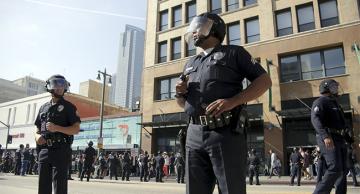 Surveillance is an integral part of policing in this country.
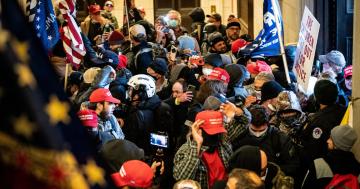 The events of January 6, 2021 at the Capitol have been discussed and written about endlessly, but without much useful analysis.
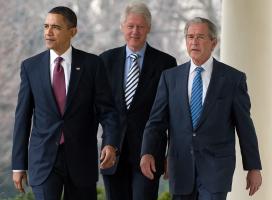 Electoral politics in this country is a cover for oligarchic rule. Democratic party victories provide very little material benefit for the people they depend upon for support.



