by BAR editor and senior columnist Margaret Kimberley
Nelson Mandela belongs to history now. We should be able to look at his whole life, his whole record in perspective. That perspective ought to include who is praising Nelson Mandela nowadays and why.
Freedom Rider: Talking About Mandela
by BAR editor and senior columnist Margaret Kimberley
Nelson Mandela’s passing provides an important and rare opportunity for discussion of some very serious issues. We should not fear principled critique of people we admire but instead we have been treated to maudlin self-indulgence, useless idol worship and wrongheaded defense of Mandela’s memory.
Everyone looms large in death, and it is especially difficult to be truthful when a person of Mandela’s stature passes away. South Africa’s apartheid system was an international pariah, reviled by most of humanity and Mandela was the icon who it was hoped would bring it down forever.
Black Americans saw themselves in images of Sharpeville and Soweto. Mandela stood in for our assassinated leaders, political prisoners and victims of COINTELPRO. The South African struggle became our struggle and our chance to achieve what we were denied here at home. Of course Mandela’s release from 27 years of imprisonment brought near universal joy but it should have also raised more questions.
Mandela was one of the signatories of the Freedom Charter, which among other things demanded the nationalization of South Africa’s resources and reparations for the theft of African land by the Europeans. He was a member of the South African communist party, as were other leaders of the African National Congress. We should have known that the South African government wasn’t letting him go free without exacting a huge price. It is difficult to look the gift horse in the mouth, but the silence created a vacuum which made it easier for the rule of international capitalists to stay in place, even as they appeared to give up political control.
Mandela’s early history is something to honor and remember but now his memory comes wrapped in the poison pill of acceptance by the corporate media and disreputable democratic and republican politicians. Now when right wingers condemn Mandela as a communist, his admirers cringe and deny what is true. Instead of examining what a communist is and why the party was supported by the movement, we see black people instead take the position of our enemies and use the word as a slur. We must remember that scorn from certain quarters is a badge of honor.
Contrast the reaction to Mandela’s death with that of the late Venezuelan president Hugo Chavez. While Chavez was equally beloved around the world, the American government gave no glowing tributes and sent no high level delegation. Chavez was every bit as deserving of praise and honor but unlike Mandela he succeeded in standing up to empire. He personally protested against George W. Bush and even called him the devil at the United Nations. Hugo Chavez prevailed when American presidents wanted him out of office. He won re-election and shamed this country when he donated Venezuelan oil to help poor Americans stay warm in the winter. Of course Barack Obama, George W. Bush, Jimmy Carter, and Bill Clinton were absent from his funeral.
Nelson Mandela had difficult choices to make. He chose to accept an IMF loan with strings attached that kept millions in poverty. He and his successors turned their backs on the Freedom Charter. No one can know his intentions but the results of those decisions were disastrous for the masses of black people in South Africa.
Mandela’s release from prison should have been seen as a new stage in the struggle and not the end of it. Those of us who came of age during the anti-apartheid movement and who truly loved the man have to admit the short comings of love when liberation is at stake.
There are many lessons to be learned during this time of mourning. Our emotions play an important role in inspiring us to take action against injustice but they can also betray us when we lack an understanding of what liberation really is.
Liberation may or may not come with a presidential inauguration. It certainly hasn’t come if the usual suspects in the corporate media, Pennsylvania Avenue and Downing Street suddenly give words of praise. The success of certain individuals is not liberation either. There are now black millionaires in South Africa but that does little good to the impoverished masses.
Liberated people don’t live in squalor. They earn more than a living wage. They need not fear loss of job or life if they protest their salaries or working conditions. They have free health care and education. They don’t fear incarceration and they don’t live in stratified societies. They live in safety and the law treats them all as equals to one another. They can protest and oppose the power structure without fear of repercussion. South Africa doesn’t fit these criteria, neither does the United States, and we who love freedom and justice shouldn’t spare anyone when we express these simple and obvious truths.
Margaret Kimberley's Freedom Rider column appears weekly in BAR, and is widely reprinted elsewhere. She maintains a frequently updated blog as well as at http://freedomrider.blogspot.com. Ms. Kimberley lives in New York City, and can be reached via e-Mail at Margaret.Kimberley(at)BlackAgendaReport.com.

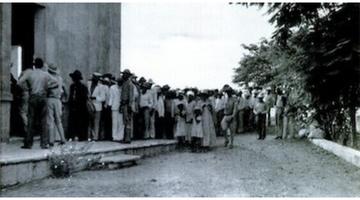 “Between October 2 and October 8, 1937, between 15,000 and 40,000 Haitians and Black Dominicans were slaughtered by Dominican troops…”
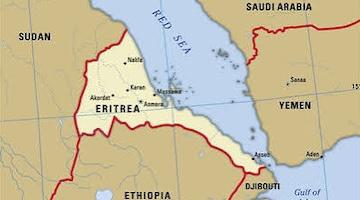 Ethiopia and Eritrea are on the brink of a war that could further destabilize the Red Sea, disrupt oil tanker traffic, and drive gas prices even higher.
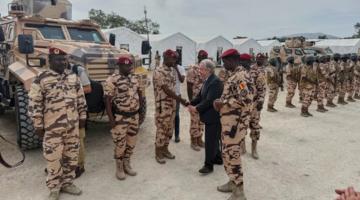 The UN's renewal of the Gang Suppression Force mandate is part of a wider hemispheric project to reassert military control across the Americas. Caribbean leaders cannot claim to support a Zone of…
 The Islamic Revolutionary Guard Corps (IRGC) has issued a letter addressed to the American people, outlining its views on recent developments and Iran-U.S. relations.
 The Trump administration's new sanctions on Cuba, are part of a dual strategy to create unendurable hardship while simultaneously making Cuba financially dependent on the United States.


