by BAR editor and senior columnist Margaret Kimberley
It’s the kind of story that brings tears to Middle America’s eyes: selfless Black person puts life on line for undeserving white. In a white man’s world, saving a redneck from a beating qualifies a Black person for sainthood, while acting in defense of Black people makes one a dangerous militant.
Freedom Rider: Saving the White Man
by BAR editor and senior columnist Margaret Kimberley
“There would have been nothing wrong with McKeel getting a bloodied nose that day in 1996.”
On June 22, 1996, a small group of Ku Klux Klan members gathered for a rally in Ann Arbor, Michigan, only to be outnumbered by a much larger group of black and white protesters. A white man in the crowd, Albert McKeel, Jr., was not wearing a KKK hood but had an SS tattoo on his arm and a shirt decorated with a Confederate flag. He was on the verge of being assaulted by the larger group when he was saved by Keshia Thomas, an 18-year old black woman.
This story was forgotten but recently came to public attention again thanks to a BBC online series about teaching kindness. The little known event gained new life and so did a standard meme which is treacherous for black people.
In a recent issue of Black Agenda Report this columnist wrote about the inexplicable determination of some black people to forgive any harm done to them by whites. Jonathan Farrell was shot to death by a white police officer in Charlotte, North Carolina yet his mother and fiancée forgave his killer. When I discovered their comments I was perplexed, but I should not have been. The reaction to the Keshia Thomas story explains it all quite well.
Michigan newspapers called her “courageous and kind.” The Huffington Post said the tale will “restore faith in humanity.” Media outlets not only in the United States and the U.K., but as far away as Australia, felt compelled to bring the story from obscurity into the bright light of day and to breathlessly extol the virtues of saving a man who didn’t deserve saving.
“No one in the media attempted to give voice to any justification for the angry crowd.”
This level of adulation isn’t ordinarily directed at black people. Usually our actions are called into question, our successes are ignored and our missteps are punished disproportionately. What does a black person have to do to be praised? Apparently, saving a redneck from a beating is the only out.
Ms. Thomas says she was motivated by her own experience as the victim of violence and that she didn’t want the man to be killed. An argument could be made for her actions but one could also be made for letting the racist get a stiff dose of comeuppance.
Black people chased by mobs of white people nearly always end up dead. History is replete with the gruesome documentation of shootings, hangings, burnings and evisceration. Women like Keshia Thomas were not spared from KKK terror either. There are at least 150 documented cases of black women being lynched. If Ms. Thomas and her compatriots had not felt compelled to help McKeel they should not have feared condemnation.
It is interesting that in their zeal to exalt Ms. Thomas that no one in the media attempted to give voice to any justification for the angry crowd. Neither the Huffington Post, nor the BBC nor the New York Daily News felt compelled to remind readers of the white supremacist terror that went on for decades in this country. One would think that the crowd in Ann Arbor harbored some mysterious animus which was beyond the capacity of trained journalists to understand or explain.
There was a time in America when the KKK paraded openly, and not only in the South at the scene of a lynching murder. In Washington DC they carried out large marches in the late 1920s, with numbers as high as 50,000 participants. The KKK initiated members in church ceremonies and ran candidates for office. Members of Congress and the Senate, governors and mayors, made no secret of KKK affiliations. Senator Robert Byrd of West Virginia had been a klansman and was still serving in office when he died in 2010.
“They see their role as protecting and upholding the privileges of the powerful and the number one power on earth is still white skin privilege.”
The media who carried this resurrected tale had an agenda, and informing the public wasn’t on the to-do list. They see their role as protecting and upholding the privileges of the powerful and the number one power on earth is still white skin privilege. One cannot give license to that privilege and also tell the truth.
The truth is that there would have been nothing wrong with McKeel getting a bloodied nose that day in 1996. The so-called mob wasn’t nearly as bloodthirsty as his compatriots had been historically. If they had been, one teenaged girl couldn’t have stopped them from doing McKeel harm.
Real reporting would have demanded at the very least a debate about the events of that day, historical background and the presentation of a dissenting view from the swooning about kindness, courage, and forgiveness. But the deal was already sealed. The black woman had to be lauded for saving the white man, no matter what he represented.
It is little wonder that black people are so forgiving. It is expected of us by the larger, more powerful group. We get messages both subtle and overt that white people’s feelings and wellbeing are very, very important and that our feelings count for nothing. We are taught that white people are to be protected and cared for and that we might get a little praise when we put their needs before our own.
The merits of Ms. Thomas’s actions can be debated. But there is no debate about the inclination to act as she did. She saved the white man and was called good and worthy because she did so.
Margaret Kimberley's Freedom Rider column appears weekly in BAR, and is widely reprinted elsewhere. She maintains a frequently updated blog as well as at http://freedomrider.blogspot.com. Ms. Kimberley lives in New York City, and can be reached via e-Mail at Margaret.Kimberley(at)BlackAgendaReport.com.

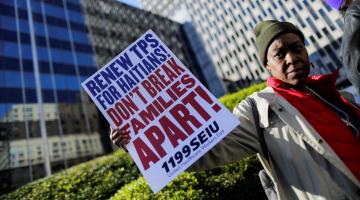 U.S. immigration policy is the domestic arm of its foreign policy. The attack on Haitian migrants is a direct consequence of Washington's ongoing war on Haiti's sovereignty, making their defense a…
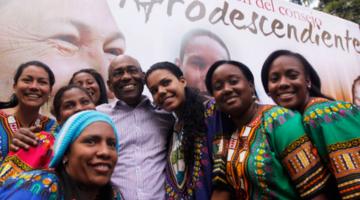 Venezuela's revolution is a project of Afro-descendant empowerment and a force against imperialism that has long exploited the African diaspora and the Global South.
 Foreign powers are responsible for Sudan's destruction. Real peace can only come when the right of self-determination for the Sudanese people is respected.
 Operation Southern Spear is not a drug war—it is the first open military strike of a new U.S. doctrine: puncture the Caribbean, penetrate the continent, and weld the Americas into a captive bloc of…
 Amidst US bombs and lies about Venezuelan drug trafficking as a pretext for regime change, the subordinated position of Caribbean states’ economies plays a role in U.S. aggression.


