by Peter Hudson
A Dominican Republic court has moved to strip as many as a quarter million Dominicans of Haitian descent of their citizenship rights. The ruling “formalizes a process of exclusion, racism, and harassment that had already construed Dominicans of Haitian descent as second-class citizens in their own country while marginalizing Haitian immigrants.”
Haiti, Antihaitianismo, and the Dominican Republic
by Peter Hudson
This article previously appeared in The Public Archive.
“Antihaitianismo sees the presence of people of Haitian descent – and of people of African descent more generally – as a threat to Dominican identity.”
On September 23, 2013, the Constitutional Court of the Dominican Republic ruled that the children of “irregular” migrants born in the Dominican Republic after June 21st, 1929 would be stripped of their Dominican citizenship. The ruling – which could render 250,000 Dominicans of Haitian descent stateless – came as a result of a challenge by Juliana Deguis Pierre against the Dominican Electoral Board. The Electoral Board refused to issue Pierre an identification card. They argued that although she was born in the “national territory,” because she was the daughter of migrants in transit she did not have the right to Dominican citizenship. They based their ruling on article 11.1 of the Dominican Constitution of November 29, 1966 which held sway when Pierre was born.
While Ms. Pierre was the subject of the Constitutional Court’s ruling, it also targets all Dominicans of Haitian descent. The decision also formalizes a process of exclusion, racism, and harassment that had already construed Dominicans of Haitian descent as second-class citizens in their own country while marginalizing Haitian immigrants. Indeed, even before the ruling, Haitian immigrants had been subject to demeaning raids and dragnets by the Dominican security forces while in the past thirteen months, since August 16, 2012, almost 47,700 undocumented Haitians were expelled from the country – more than twice the figure of 20,541 expelled during the previous year.
The actions of the Dominican Constitutional Court also have their origins in the current of antihaitianismo – of anti-Haitianism – dating from the nineteenth century. This antihaitianismo sees the presence of people of Haitian descent – and of people of African descent more generally – as a threat to Dominican identity. It relies on both an identification with Spanish roots and the valorization of an aboriginal or indio past through the national cult of Quisqueya. It contrasts the Dominican Republic’s whiteness with Haiti’s Blackness; as one scholar memorably put it, “in the Dominican Republic the cause is the consequence: you are Black because you are Haitian, you are Haitian because you are Black.”
“Between 2 October 1937 and 8 October 1937, between 14,000 and 40,000 Haitians were slaughtered by Dominican troops.”
Yet while Blackness is rejected from Dominican identity, it is necessary for the Dominican economy. The four generations of Dominicans of Haitian descent that would be denationalized by the ruling are the children of Haitian cane-cutters who toiled in Dominican sugar plantations under conditions reminiscent of slavery. Thee importance of the Haitian market to Dominican commerce should also be noted. The trade imbalance between the two countries is stark. In 2012, the Dominican Republic exported more than $1.7 billion worth of goods through formal and informal channels. Haiti sent back just $50 million in goods.
The most notorious result of anti-Haitianism came in the form of the so-called Parsley Massacre in 1937, overseen by Dominican President Rafael Trujillo with the complicity of Haitian president Elie Lescot. Between 2 October 1937 and 8 October 1937, between 14,000 and 40,000 Haitians were slaughtered by Dominican troops. The current ruling by the Dominican Constitutional Courts triggers the potential denationalization and displacement of tens of thousands of Dominicans while providing the ideological grounds for the recurrence of such dehumanizing violence against Haitians and Dominicans of Haitian descent. The massacre could happen again.
In response to the ruling, there have been protests by enlightened Dominicans in Washington Heights and San Juan, Puerto Rico while Haitian and Dominican civil society organizations have issued statements condemning the decision. One can only hope these protests spread. The late Dominican-Haitian activist Sonia Pierre once stated, “My community, the community of Haitians and Dominicans of Haitian descent, is the poorest and most vulnerable, subject to the cruelest denial of their rights.” Until the law is repealed, until Dominicans of Haitian descent have a secure and meaningful path to citizenship, and until their human rights are recognized and protected, they will remain the most vulnerable, victimized and preyed upon by a racist Dominican state.
Peter James Hudson is editor of The Public Archive, and an assistant professor of history at Vanderbilt University, He can be contacted at editor@thepublicarchive.com.
What follows is a brief dossier of articles on Haitian-Dominican relations and the history of antihaitianismo:
Edwidge Danticat interviewed by David Barsamian, The Progressive (October 2003)
Alicia Anabel Santos, “Today I’m Embarrassed to Be Dominican,” Latina (October 4, 2013)
Jemima Pierre, “The Dominican Republic Hates Black People,” Black Agenda Report (December 14, 2011)
Rachelle Charlier Doucet, “Haïti-Rép. Dominicaine : La sentence de la Cour constitutionnelle dominicaine, un devoir de solidarité,” AlterPress (October 5, 2013)
Jean Ledan fils, “L’après-1929 avec “AMIGO”, Le Nouvelliste (October 3, 2013)
Amín Pérez, “La (des)illusion de la dominicanidad,” Hoy (October 5, 2013)
Ernesto Sagás, A Case of Mistaken Identity: Antihaitianismo in Dominican Culture, [Sagás’ full dissertation is here]
LaToya Tavernier, “The Stigma of Blackness: Anti-Haitianism in the Dominican Republic,” Socialism and Democracy (May 7, 2011)
Bernardo Vega, “El antihaitianismo como instrument,” El Caribe (September 19, 2005)
Frank Moya Pons, “Antihaitianismo histórico y antihaitianismo de Estado,” Diario Libre (December 5, 2009)
Humberto García Muñiz and Jorge L. Giovannetti, “Garveysmo y racismo en el Caribe: El caso de la población cocola en la República Dominicana,” Caribbean Studies (2003) [click here for PDF via Cielonaranja]
Tribunal Constitucional Republica Dominicana. Sentencia TC/0168/13. Referencia: Expediente núm. TC-05-2012-0077, relativo al recurso de revisión constitucional en materia de amparo incoado por la señora Juliana Dequis (o Deguis) Pierre, contra la Sentencia núm. 473/2012 dictada por la Cámara Civil, Comercial y de Trabajo del Juzgado de Primera Instancia del Distrito Judicial de Monte Plata, en fecha diez (10) de julio de dos mil doce (2012).
Image: Antonio Ocaña, Fantasmas del cañaveral, (2004)

 The history and significance of Black August, presidential elections and politics in Kenya, and reflections on the anniversary of the Sandinista Revolution.
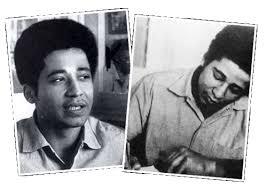 Kalonji Changa is co-founder of Black Power Media and founder of FTP Movement. He joins us from Atlanta to talk about Black August, which has been a fixture of the liberation movement for 43 years.
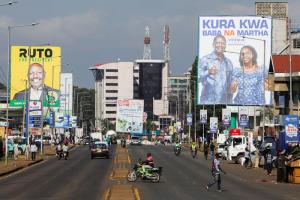 Irene Asuwa joins us from Nairobi, Kenya. She is co-convener of Ecological Justice and supports outreach at Ukombozi Library. We discuss the recent presidential election in that country.
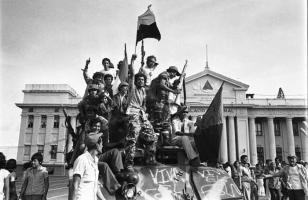 In a recent webinar hosted by the United National Antiwar Coalition (UNAC), Margaret Kimberley discussed what she witnessed during the commemoration events for the 43rd anniversary of the Sandinista…
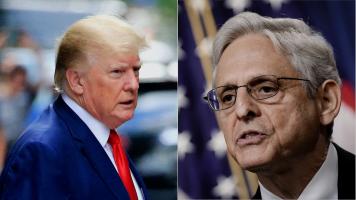 Why would Black people laud the FBI or criticize protection against self-incrimination? The FBI search of Donald Trump's home has reawakened Trump Derangement Syndrome.



