by Bill Quigley
The “new” New Orleans that developers hoped to construct when 100,000 poor Black people were purged from the city is still a place of daunting poverty. “African American households in the metro New Orleans area earned 50 percent less than white households.” By almost every measurement, only the rich and white have prospered.
Katrina Pain Index 2013: New Orleans Eight Years Later
by Bill Quigley
“Widespread pain and injustice remain.”
Eight years after Katrina, nearly a hundred thousand people never got back to New Orleans, the city remains incredibly poor, jobs and income vary dramatically by race, rents are up, public transportation is down, traditional public housing is gone, life expectancy differs dramatically by race and place, and most public education has been converted into charter schools.
Hurricane Katrina struck the Gulf Coast on August 29, 2005. The storm and the impact of the government responses are etched across New Orleans. A million people were displaced. Over a thousand died. Now, thanks to the Greater New Orleans Community Data Center (GNOCDC) and others, it is possible to illustrate the current situation in New Orleans. While some elected officials and chambers of commerce tout the positive aspects of the city post-Katrina, widespread pain and injustice remain.
New Orleans is still down about 86,000 people since Katrina according to the Census. Official population now is 369,250 residents. When Katrina hit it was 455,000.
Nearly half of the African American men in the city are not working according to the GNOCDC. Since 2004, the city’s job base has declined 29 percent. Fifty three percent of African American men in the New Orleans area are employed now. African American households in the metro New Orleans area earned 50 percent less than white households, compared to the national percentage of 40 percent.
Jobs continue to shift out from New Orleans to suburbs. In 2004, New Orleans provided 42% of metro or 247,000 jobs, now that number has dropped to 173,000 and the percentage has dropped to 34%.
Low paid tourism jobs, averaging a low $32,000 a year, continue to be the largest sector of work in New Orleans. But even this low average can be misleading as the hourly average for food preparation and serving jobs in the area is just over $10.00 an hour, according to the Bureau of Labor Statistics.
Median earnings for full-time male African American New Orleans workers are going down and are now at $31,018; for white male workers they are going up and are now at $60,075. Whites have experienced an 8 percent increase in middle and upper income households while African Americans have suffered a 4 percent decline. Only 5 percent of black households were in the top income class (over $102,000) while 29 percent of white households were.
“54% of renters in New Orleans are now paying unaffordable rent amounts, up from 43% before Katrina.”
While the percentage of minority owned businesses grew, these businesses continue to receive a below average 2 percent of all receipts.
About 60% of New Orleans rent, compared to the national norm of 35%. Rents in New Orleans have risen. According to GNOCDC, 54% of renters in New Orleans are now paying unaffordable rent amounts, up from 43% before Katrina.
Homelessness is down to 2400 people per night since it soared after Katrina to nearly 11,000 but it is still higher than pre-Katrina.
The last of the five big traditional public housing complexes was ordered demolished in May. About a third of the 5000 plus displaced residents have found other public housing according to National Public Radio.
Public transportation is still down from pre-Katrina levels. Pre-Katrina about 13 percent of workers used public transportation, now 7.8.
Public education has been completely changed since Katrina with almost 80 percent of students attending charters, far and away the highest percentage in the country reports the Tulane Cowen Institute.
The poverty rate in New Orleans is 29 percent, nearly double the national rate of 16 percent. However, GONCDC reports the majority of the poor people in the metro area now reside in the suburban parishes outside New Orleans.
One third of households in New Orleans earn less than $20,000 annually. This lowest income group makes up 44 % of the African Americans in the city and 18% of the white population.
Life expectancy varies as much as 25 years inside of New Orleans, according to analysis by the Joint Center for Political and Economic Studies. From a high of 80 years life expectancy in zipcode 70124 (Lakeview and Lakeshore which is 93% white) to a low of 54.5 in 70112 (Tulane, Gravier, Iberville, Treme which is 87% black and has 6 times the poverty of 70124), social and economic factors deeply impact health. Overall, life expectancy in New Orleans area parishes is one to six years lower than the rest of the United States.
Jail incarceration rates in New Orleans are four times higher than the national average at 912 per 100,000 reports the GNOCDC. The national rate is 236 per 100,000. This rate went up and down since Katrina and is now just about where it was when Katrina hit. About 84 percent of those incarcerated in New Orleans are African Americans. The average length of time spent waiting for trial is 69 days for African Americans and 38 days for whites. Crime in New Orleans and in the metro area surrounding the city is down from pre-Katrina levels but still remains significantly higher than national rates.
In a bewildering development, a recent poll of Republicans in Louisiana revealed that 28% thought George W. Bush was more responsible for the poor response to Hurricane Katrina and 29% thought Barack Obama was more responsible, even though he did not take office until over three years after Katrina!
The biggest crime of all? From 1932 to 2010, the New Orleans area lost 948 square miles of coastal wetlands.
Bill Quigley teaches law at Loyola University New Orleans. A version of this article with full sources is available. You can email Bill at quigley77@gmail.com

 The Biden administration pays lip service to the trade union movement but has done nothing to break the Democratic Party’s long tradition of betraying workers. Joe Biden's photo op with Christian…
 This week’s featured author is Gao Yunxiang. Gao Yunxiang is Professor of History at Ryerson University. Her book is Arise, Africa! Roar, China!: Black and Chinese Citizens of the World in the…
 Statement by John Parker, Socialist Unity Party candidate for U.S. Senate in California on the Peace and Freedom Party ticket. Parker is on a fact-finding trip observing the U.S./NATO proxy…
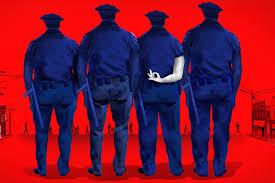 Policing in the United States is inherently racist and right wing. But individual members of right wing groups are also training police officers across the country.
 US/NATO sanctions against Russia have resulted in food shortages and price increases throughout the Global South.


