by BAR managing editor Bruce A. Dixon
A few years ago, one of my children was a federal prisoner in California, on the other side of the continent. I had a decent job, and could afford to fly out 2 or 3 times a year to visit, and we wrote. But there was no substitute for the Sunday night phone call. That weekly 15 minute call used to cost our family $90 every month. We couldn't afford it, but we paid anyway. Many families worse off than ours cannot pay at all.
FCC To Finally Rule On Cost of Prison Phone Calls This Friday
by BAR managing editor Bruce A. Dixon
Losing that human interaction with the people on the outside about whom you care and who care about you is a major contributing factor to the de-socialization of prisoners. In the absence of connections to the outside, close confinement in prison, where our society houses many of its mentally ill, is far more likely to make you crazy, or at least anti-social. Losing touch with one's family and loved ones significantly decreases a former prisoner's chances of maintaining healthy relationships and families, and contributing to stable, viable communities. For those of us in the zipcodes from which most of the prison population comes from and returns to, it's a lose-lose situation.
It doesn't have to be this way. As an information technologist I can assure you that there are absolutely no technical reasons for the absurdly high price of phone calls between prisoners and their friends and families.
The high cost of prison phone calls is entirely due to the greed of a handful of well-connected corporations like Global Tel-Link, whose well-placed campaign contributions have given them monopoly contracts on calls coming out of prisons and jails, with the freedom to set prices high enough to pay for the service, the campaign contributions, the over and under the table kickbacks, and obscene profit margins when it's all over. But it's all good, in the neoliberal prison state of 21st century America because it's not the public that pays, it's the families of prisoners. According to a 2012 Bloomberg News article,
"The market is dominated by two private equity-backed companies, Global Tel*Link Corp. and Securus Technologies Inc...
"The companies bid for exclusive contracts to provide telephone service, agreeing to pay as much as two-thirds of calling charges to government or private prison operators. Those commissions can drive fees to levels that make it difficult for prisoners to maintain contact with spouses, children and parents. "
It's OK for corporations to utilize government to extract this unfair tax from the families of prisoners. After all, in the social calculus of neoliberal America, including parts of black America, the families of prisoners are scarcely more worthy of concern than prisoners themselves.
This Friday, after more than a decade of agitation, and more than five full years into the supposedly progressive Obama administration, the FCC finally gets around to taking its first vote on whether and to what extent the FCC ought to intervene to lower the cost of phone calls from prison. There are ideologues who claim that what's needed is not price fixing but competition. They are deeply mistaken at best, liars at worst. If “competition” does not result in lower prices, it's meaningless.
State governments, which already have platoons of contract and in-house IT professionals at hand, could implement low-cost phone service out of prisons in a matter of days. Tech companies like the ones I am part of could also provide services a fraction of what Global Tel Link, the nation's biggest provider of prison phone services charges, if only we were allowed to.
For those of you on Twitter, beginning at 11AM EST this Friday, August 9, join the good people at www.phonejustice.org as they conduct a live Twitter party watching the FCC ruling, which is expected to go somewhere in the direction of lowering the cost of phone calls from prisons across the country. And let's all do we can to maintain contact with our friends and loved ones behind prison walls. Remember, they're coming out eventually. If we want them to fit in, if we want to be worthy of fitting in with them, we must put and to keep our arms around our families and loved ones behind those walls.
Maybe next, the FCC should examine the similar scams that companies like J-Pay run to extract exorbitant fees from the few dollars families are able to send online and via telephone to their loved ones on the inside. But then again, it only affects the families of prisoners, so in much of liberal America, black and white, it's all good.
Bruce A. Dixon is managing editor at Black Agenda Report, and a member of the state committee of the Georgia Green Party, living and working in Marietta GA. Contact him via this site's contact page, or at bruce.dixon(at)blackagendareport.com.

 The A.I. boom is on the verge of bursting like every other capitalist bubble. Financialization and speculation will result in another economic crisis.
 On the southern shore of Lake Maracaibo, communards sustain themselves by fishing, but just as much through practices of solidarity.
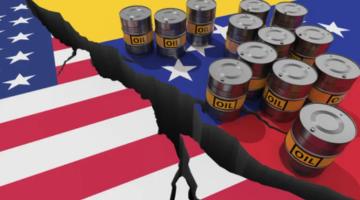 The western response to crises in Venezuela and Argentina reveals a stark double standard. One nation faces economic pressure and isolation, while the other receives financial support.
 In this week’s segment we hear analysis of the Gaza peace agreement, why it took place, and the future of Palestine. But first we hear about data centers, A.I., and their negative impact on the…
 We speak with Kali Akuno, co-founder and Director of Cooperation Jackson in Jackson, Mississippi. He joins us from Jackson to discuss the construction of an Amazon web services data center and the…


