by Mark P. Fancher
The U.S. Military Command in Africa – AFRICOM – is a highly sophisticated force for domination of the continent. AFRICOM is adept at “manipulating news and commentary on the Internet, especially social media,” portraying itself as an ally in “the fight for Africa’s liberation from the grip of terrorism.” Don’t believe the hype.
The U.S. Military’s Mind Games in Africa: No Bullets, But Lethal
by Mark P. Fancher
“The Seventh Military Information Support Battalion has the task of playing mind games with Africa’s people in particular.”
The U.S. military has long known that, when used properly, propaganda can be a lethal weapon. Under optimal conditions, propaganda can induce confusion, doubt, fear and shifting loyalties among populations that might otherwise be inclined to give aid, support and comfort to the enemy.
Before it was disbanded in 1999, the U.S. Information Agency (USIA) waged an extended, relentless global propaganda war to advance the interests of the U.S. Empire. In 1965 Kwame Nkrumah noted: “In Africa alone, the USIA transmits about thirty territorial and national radio programs whose content glorifies the U.S. while attempting to discredit countries with an independent foreign policy.” Although nearly half a century has passed since Nkrumah made his astute observation, the U.S. objectives remain essentially the same.
The military long referred to propaganda projects as “psychological operations,” a term that is both descriptive and accurate. As far as the Pentagon is concerned it is perhaps too accurate because in 2010 a high level policy decision was made to jettison the term psychological operations and to replace it with “Military Information Support Operations” (MISO). In recent years Africa has become an even higher priority for U.S. corporations, and it should come as no surprise that the Seventh Military Information Support Battalion has the task of playing mind games with Africa’s people in particular.
In decades past, psychological operations took the form of propaganda leaflets dropped from airplanes flying over enemy territory, or targeted radio broadcasts. More recently, however, these operations have become more sophisticated and they are not as easily identified as manipulative messages from the U.S. government. The Washington Post noted: “[t]oday, the military is more focused on manipulating news and commentary on the Internet, especially social media, by posting material and images without necessarily claiming ownership.”
“AFRICOM not only wants African soldiers to serve as U.S. proxies on the battlefield, but they also want them to produce U.S. propaganda.”
In many cases military projects may not even be labeled as “military information support operations” but they are nevertheless designed to have the same effect as psychological operations. This is certainly true of many projects conducted by U.S. Africa Command (AFRICOM). For example, a substantial number of AFRICOM projects involve disaster relief, disease prevention, environmental protection and infrastructure improvements. These projects are not designed to communicate a particular point of view, but they are intended to give the U.S. military a friendly face in Africa.
Other AFRICOM projects are more direct in their propaganda design. AFRICOM has Facebook pages that are in Arabic and French. This makes it possible to communicate directly with targeted populations. Also, the AFRICOM website described a special photojournalism course for Kenyan soldiers provided by a U.S. military public affairs office. The motive for this project is revealed in comments by a U.S. military spokesman who said: “Military photography, when done well, can transcend language barriers and evoke universal emotions that can reinforce or change a person’s perception of soldiers and missions.” This implies that AFRICOM not only wants African soldiers to serve as U.S. proxies on the battlefield, but they also want them to produce U.S. propaganda.
A population that is physically oppressed but retains clarity of thought and analysis is a danger to its oppressor because of the people’s nothing-to-lose desperation and their accurate identification of the source of their misery. AFRICOM confronted such a population several years ago when it first came-a-calling in Africa and almost all doors were slammed in its face. AFRICOM persisted nevertheless with a message that asserts that the U.S. mission is not to lock down the continent’s oil and other valuable natural resources for western corporate domination, but that it is instead to aid in the fight for Africa’s liberation from the grip of terrorism. Only time will tell about the success of this message, but one thing is already certain. That message cannot be regarded as propaganda, a psychological operations message, or even “military information support.” Rather, it is best described quite simply as a big lie.
Mark P. Fancher is an attorney who writes frequently about the U.S. military presence in Africa. He can be contacted at mfancher@comcast.net.

 Is cruelty Governor Woke Smoke’s superpower?
 This week’s featured author is Danielle N. Boaz. Boaz is Associate Professor in the Department of Africana Studies at the University of North Carolina at Charlotte. Her book is Banning Black Gods:…
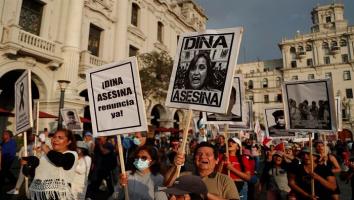 Peru's coup government and its president Dina Boluarte remain in power despite the deaths of protesters and planned mobilizations for the Third Takeover of Lima.
 The Juneteenth holiday is an opportunity to delve into Black history in a serious way. Unfortunately, the designation of a federal holiday has trivialized Juneteenth's meaning and given license to…
 Ja Morant plays basketball in Tennessee, an "open carry" state with lose firearm regulations. But the issue of Black people carrying guns is not one of strict legality. Racism is also the issue.


