by Jeffrey B. Perry
The late Sen. Frank Lautenberg’s legacy includes legislation that gave special immigration status to Jews and evangelical Christians from the former Soviet Union, including access to a range of government services. While U.S. doors are shut to millions of Black and brown would-be immigrants, the opposite was true for Lautenberg’s favored groups.
Two-Tier U.S. Immigration: The Lautenberg Amendment Legacy
by Jeffrey B. Perry
“To some Hispanic advocates, the inequity was obvious.”
Adam Clymer’s New York Times article on the death of New Jersey Senator Frank R. Lautenberg (June 4, 2013) briefly mentions a “Lautenberg measure [that] gave refugee status to people from historically persecuted groups without requiring them to show that they had been singled out” and noted that the senator “estimated that 350,000 to 400,000 Jews entered the United States under the 1990 law” and that Evangelical Christians from the former Soviet Union also benefited from the law.”
The article does not mention some of the most significant aspects of the little-known Lautenberg Amendment, Public Law 101-167, which was enacted November 21, 1989 and has been renewed annually by the U.S. Congress.
According to the Congressional Research Service (report on “Refugee Admissions and Resettlement Policy”) the Lautenberg Amendment allows those groups covered by the legislation (nationals from the former Soviet Union, Estonia, Latvia or Lithuania who are Jews, Evangelical Christians, Ukrainian Catholics or Ukrainian Orthodox; nationals of Vietnam, Laos, or Cambodia; and Jews, Christians, Baha’is and other religious minorities from Iran) to prove they are eligible for special refugee status “with a credible, but not necessarily individual, fear of persecution.” By contrast, the Immigration and Nationality Act “requires prospective refugees to establish a well-founded fear of persecution on a case-by-case basis.” Those covered by the Lautenberg Amendment are eligible for Special Cash Assistance and for Federal Public Assistance Programs including, but not limited to, Social Security, Medicaid, Food Stamps, and Temporary Assistance for Needy Families.
“Almost no one emigrating from the [former Soviet Union] was a refugee as defined by the U.N.”
CRS statistics indicate that over 370,000 refugees were admitted from the Former Soviet Union in the first ten years of the Lautenberg Amendment. In October 2002 the Jewish Telegraphic Agency reported that “The Lautenberg Amendment allowed some 350,000 to 400,000 Jews from the former Soviet Union to gain entry into the United States without having to prove they were individually persecuted." In 2010 the Hebrew Immigrant Aid Society cited Eric Rubin, Deputy Chief of Mission at the U.S. Embassy in Moscow stating that the amendment had resulted in almost 440,000 refugees from the former Soviet Union and other regions of the world.
In the year 1992, according to an article in The Christian Science Monitor, the United Nations High Commissioner for Refugees estimated that there were 16 to 17 million refugees worldwide of whom the U.S. planned to fund the admission of 122,000, half of whom were to come from the Commonwealth of Independent States (states of the former Soviet Union), with approximately eighty percent of that number being Jewish applicants. The UNHCR pointed out at that time that almost no one emigrating from the CIS was a refugee as defined by the U.N., but that “once an individual asserts that he is a member of the covered class and asserts that he has been persecuted or has a fear of persecution, that individual shall be deemed a refugee.”
Of particular interest in this regard was Senator Lautenberg’s statement in his December 17, 2011, Press Release that “I created this program to allow religious minorities to come live safely in the United States and I am proud that it helped hundred of thousands of people.” Although Lautenberg maintained that his amendment was religion-related, the UJA-Federation of New York’s Jewish Community Study of New York: 2011 Community Report indicates that “almost a fourth” of Russian-speaking Jews in New York “consider themselves belonging to no religion.”
“A brief look at the Lautenberg Amendment on immigration reveals disparities in classification and treatment between those who are covered and those not covered.”
Charles Kamasaki, Executive Vice-President of the National Council of La Raza, in an article in the American Jewish Committee publication Latinos and Jews pointed out that “the admission of former Soviet Jews” under this “special” status meant that “former Soviet Jews were eligible for eventual permanent resident status as well as access to cash assistance, language courses, and job-training programs normally provided only to bona fide refugees.” He added, “To some Hispanic advocates, the inequity was obvious.”
Michelle Alexander in The New Jim Crow describes how “Mass incarceration marginalizes large segments of the African-American community, . . . and then authorizes discrimination against them in voting, employment, housing education, public benefits, and jury service.” Here too, the contrast with the treatment afforded to those covered by the Lautenberg amendment is “obvious.”
A brief look at the Lautenberg Amendment on immigration reveals disparities in classification and treatment between those who are covered and those not covered by the amendment and related special programs and assistance. A much closer look at the disparities in classification and treatment can provide important information for those struggling for more equal and just immigration, refugee, and domestic policies.*
Dr. Jeffrey B. Perry is an independent, anti-white supremacist, working class scholar. His writing focuses on the lives and work of the anti-white supremacist, working class intellectuals and activists Hubert H. Harrison and Theodore W. Allen. His website is www.jeffreybperry.net
* For those interested in further investigation of the Lautenberg Amendment on Immigration, the following information was provided by the Public Service Division of the Law Library of Congress:
The Lautenberg Amendment on immigration is part of Pub. L. 101-167 and 8 CFR 245.7.
8 CFR 245.7 is a Federal regulation on the "Adjustment of status of certain Soviet and Indochinese parolees under the Foreign Operations Appropriations Act for Fiscal Year 1990 (Pub. L. 101-167). Federal regulations are issued by federal agencies and the issuing agency has authority to make the regulation under laws issued by Congress. This authority can be very direct as in the case of this regulation or more indirect.
Pub. L. 101-167 can be found on the Law Library of Congress' website THOMAS at < http://thomas.loc.gov >. Select the option "Public Laws" under the heading "More Legislative Information." At the next screen select the 101st Congress and then select the range that includes 167. At the following screen scroll down to 167 and click on H.R. 3743 which is the original bill number. At the following screen you will get Bill Summary & Status information with links to additional information. You can access the final text of the legislation by clicking on "Text of Legislation." The final version of the bill is the enrolled version, version 2 in this case. The legislative history of the bill can be found under "All Congressional Actions with Amendments."

 Remembering France’s odious participation in the 2004 coup d’etat in Haiti.
 Jemima Pierre’s presentation at a forum to commemorate the US-France-Canada-sponsored 2004 coup d’état in Haiti. The forum was hosted by the Center for Caribbean Studies at the University of Toronto…
 Ann Garrison spoke to Eritrean British attorney Feven Yemane regarding attacks on Eritrean diaspora festivals and gatherings and the investigations underway.
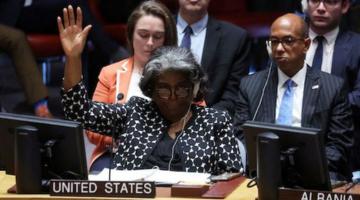 "United Nations Negroz" is the latest poem from our Poet-in-Residence, Raymond Nat Turner.
 From the moment the first colonizers arrived in the Caribbean, the West has treated the region as a treasure chest for resource extraction and labor exploitation.


