by Yvette Carnell
The Black Church’s central role in the African American Freedom Movement, is a myth. Dr. Martin Luther King Jr. “himself lamented the ‘apathy of the Negro ministers’ and their interpretation of Christianity,” writes the author. In fact, “the presence of culture crusaders, who substitute morality wars for politics, has a demobilizing impact on black movement politics.”
Why Black Liberals Need to Reclaim The Black Agenda From The Black Church
by Yvette Carnell
This article previously appeared in YourBlackWorld.
“The church never took a leadership role in the Civil Rights movement.”
Last week I wrote about how the Black Church has neutralized black politics in America and made the case for the Black Church taking a back seat to black liberals. I argued this by noting that the Black Church 1) was never central to the Civil Rights movement and 2) is not a useful 21st century model for leadership. This short critique raised some eyebrows that I intend to straighten in a longer critique of the Black Church and its detrimental impact on politics.
Firstly, it may be helpful to understand that I’m not trying to restrict the Black Church’s right to believe whatever it sees fit. The Black Church has every right to adhere to its own doctrine, but when it takes on issues like gay marriage, to the exclusion of other more pressing issues, such as income inequality and the wealth gap, it does its community a disservice. Also, when it aligns itself with right wing forces, as it did with the Chick-fil-A Appreciation Day, it engages in spectacle activism, where posing actually substitutes for politics.
Think about it: How many blacks are gay? At most 10 percent? Compare that to the number of blacks who are negatively impacted by income inequality, the non-existent economic recovery, or mass incarceration. See where I’m going?
“It engages in spectacle activism, where posing actually substitutes for politics.”
Adherence to morality politics is a dead end because it lays claim to resolving centuries old disagreements which can never be wholly resolved in the public sphere. Church doctrine casts homosexuality as a sin, while public opinion is increasingly supportive of gay marriage. There is no middle ground here since Christian literalists are not influenced by polls or rationalism. Nevertheless, the faithful are drawn to moralistic battles because, although their impact on politics is nominal, these skirmishes have an air of spiritual warfare that satisfy the psychic desire of some Christians to suffer as Jesus did, by fighting a battle that cannot be won in the material world.
This desire for spiritual warfare and reward in the afterlife, pushed by the Black Church for decades, is the main reason why the church never took a leadership role in the Civil Rights movement. King himself lamented the “apathy of the Negro ministers” and their interpretation of Christianity, going so far as to accuse the Black Church of leaving blacks “disappointed at midnight.”
But in my estimation, King was too measured in his criticism. Historically it has not only been the case that the Black Church has been unhelpful to black politics, the Black Church has actually been a hindrance to the progression of Black Politics in America. Noted sociologist E.Franklin Frazier observed that the accommodationist and nonconfrontational Black Church’s heavenly focus “offered no threat to the white man’s dominance.”
In The Jesse Jackson Phenomenon, Dr. Adolph Reed assessed the role of the Black Church in the Civil Rights movement: “Of all movement led actions between 1955 and 1960, church based groups were responsible for only 12 percent; student groups, by contrast, led in 31 percent of the total. Between 1961 and 1965, campus and church based groups together accounted for only 13 percent of movement events, steadily declining to a low 6 percent in 1965.”
“The Black Church has actually been a hindrance to the progression of Black Politics in America.”
To play on a phrase from the 2012 presidential election: You didn’t build that. Even though preachers have long laid claim to positions of authority in black politics based on their organic linkage to the Civil Rights movement, it turns out that preachers were never central to the movement.
Furthermore, even though many of our activists and pundits – including Roland Martin, Rev. Al Sharpton and Michael Eric Dyson – derive from the tradition of the Black Church, I don’t see very much that they, or anyone else in that tradition, have done to expedite the maturity of black intellectual political thought or sustain a movement which shows the capability of mobilizing popular support for programs to alter the political structure over time. The only church which even partially fits the bill would be Black Liberation theology, a strand of Christianity not practiced by the majority of black Christians. And if you’re going to make the case that the Black Church has been at all helpful to black politics, then you must make an argument that is under-girded by something more than sentimentalism.
The sad truth is that the only reason the Black Church ever had a starring role in black public life was because, before the Voting Rights Act, we had no political life. Now the presence of culture crusaders, who substitute morality wars for politics, has a demobilizing impact on black movement politics.
Prosperity gospel may’ve taken root at some black mega-churches, but such materialistic gospel is no threat to income inequality. In fact, such nonsense teaches parishioners that they do not need government at all to reach affluence. This sort of neophyte understanding of the role of government in public life helps explain why there is no class agenda in the black community and why black politics is so unfocused. It’s hard to take an active role in political life when you’re waiting for manna to fall from heaven.
Yvette Carnell is a former Capitol Hill and campaign staffer turned writer. She is currently an editor and contributor to Your Black World and Founder of BreakingBrown. You can reach Yvette via Twitter @YvetteDC or on Facebook.

 Participants in an International Working Women's Day webinar explain the importance of the day in building international solidarity.
 Donald Trump’s efforts to normalize relations with Russia, and to end the fighting in the Ukraine proxy war are logical and sensible. But years of whipped up anti-Russia hatred make logical solutions…
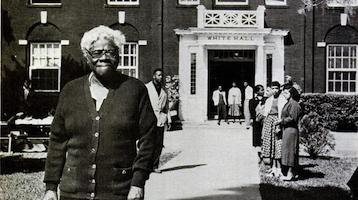 Mary McLeod Bethune’s testament to a good, ethical life.
 The Congolese Action Youth Platform (CAYP) is campaigning for the recognition of the Genocide against the people of DR Congo to be commemorated on August 2nd, the anniversary of Rwanda and Uganda’s…
 "Constructive Engagement 2.0— or Freddo frontin’ for heil-tech Hitler?" is the latest from BAR's Poet-in-Residence.


