by Pascal Robert
How does one become rated “the best writer on race today?” By telling white people what they want to hear. Ta-Nehisi Coates is “the new favorite Black cultural tour guide of the chattering class” because he “talks about racism in a way that makes White Liberals feel good.”
Ta-Nehisi Coates and the Danger of the Black Cultural Tour Guide
by Pascal Robert
This article previously appeared in Your Black World.
“He challenges the status quo about as much as Jiffy Peanut butter.”
In mainstream media, both print and televised, there are certain Black folk who serve a role that is historical – going back to Booker T. Washington – and consistent, but still profoundly damaging to the sensibilities of the Black masses, particularly the Black poor. That person is the black cultural tour guide. The name “Black cultural tour guide” is often too benign a description for this ilk. In reality they sometimes act like the zoo keeper taking the nice sub-urban White family into the exhibit of all the REAL DANGEROUS animals. The lions, tigers, bears, and gorillas. They interpret the signs and signals of these species for the White onlookers, let them know when certain movements mean danger, and also inform them when it’s safe to toss a banana or piece of fruit at the big ape with the scowl. This often is how their depictions can be translated in the worst and most racist extremes in their attempts to convey “authentic blackness.”
Ta-nehisi Coates is not of that more extreme variety – the zoo keeper. But make no mistake that he is the new favorite Black cultural tour guide of the chattering class.
In a recent piece in the New York Times entitled “Beyond the Code of the Streets,” Coates discusses how his upwardly mobile middle class college educated Black friends have this inner “code” that represents their authentic instincts as a product of growing up in the mean streets of the “hood” and how the wrong kind of interaction can bring them back to the “code” resulting in tragic if not life threatening circumstances.
“Ta-nehisi Coates has been listening to way too much hip hop music.”
“For black men like us, the feeling of having something to lose, beyond honor and face, is foreign. We grew up in communities – New York, Baltimore, Chicago – where the Code of the Streets was the first code we learned. Respect and reputation are everything there. These values are often denigrated by people who have never been punched in the face. But when you live around violence there is no opting out. A reputation for meeting violence with violence is a shield. That protection increases when you are part of a crew with that same mind-set. This is obviously not a public health solution, but within its context, the Code is logical.
As someone who grew up in Jamaica, Queens and has lived in rough urban environments from Boston to Miami, I can say emphatically that Ta-nehisi Coates has been listening to way too much hip hop music.
This phenomenon he refers to as this “code” is a product of a concept called hyper-masculinity, and there is nothing particularly “black” about it. The Italian-American, and Irish-American white kids I went to Catholic High School with in New York City often exhibit this “code.” If you ever played high school football or any physical sport as a young man you’ve experienced a similar “code,” regardless of if you’re black or white. If you spent time in the military, particularly in certain branches known to play heavily on notions of hyper-masculinity such as the Marines or Navy Seals, you know the “code,” as well. So there is nothing “black” about the code.
“He enables the most noxious forms of racial essentialism.”
The only thing Black about it is that writers like Coates essentialize this behavior as a “black thing you wouldn’t understand” – unless, of course, you read his articles in The Atlantic or The New York Times – it legitimizes the view that those Black male youth are so dangerous, don’t you see? Even one of their own, this young brilliant Ta-nehisi Coates, tells us that even their educated ones, doctors and writers, succumb to it when provoked. Now you understand why we must have policies like Stop and Frisk to target these people, don’t you see? Ta-Nehisi has shown us the way! How could you possibly call us racist? This is the perfect example of how racial essentialism – basically meaning that all Black people are essentially the same ideologically, culturally, and politically – enables thinking that leads to the most dangerous policy prescriptions. And, at the same time, Ta-Nehisi Coates will wax rhapsodic in pieces for The Atlantic highlighting the racist injustice of New York City’s Stop and Frisk Policy.
I read Ta-nehisi Coates as a good writer and limited thinker who hasn’t had the indulgence to engage in the intellectual heavy lifting to be anything but today’s favorite Chocolate boy wonder who talks about racism in a way that makes White Liberals feel good. He challenges the status quo about as much as Jiffy Peanut butter. In fact, he enables the most noxious forms of racial essentialism and repeatedly speaks in this annoying voice of “authentic blackness” that comes out of a Tribe Called Quest CD. The fact that this guy is considered the “the best writer on race today,” is only further indication on how pathetic writing on race today really is.
Pascal Robert is an Iconoclastic Haitian American Lawyer, Blogger, and Online Activist for Haiti. For years his work appeared under the Blog Thought Merchant: http://thoughtmerchant.wordpress.com/ You can also find his work on the Huffington Post here: http://www.huffingtonpost.com/pascal-robert/ He can be reached via twitter at: https://twitter.com/probert06 @probert06 or thoughtmerchant@gmail.com.

 Dr. Gerald Horne joins us to discuss the recent and very rapid collapse of the Syrian state and its international impacts, including in Africa.
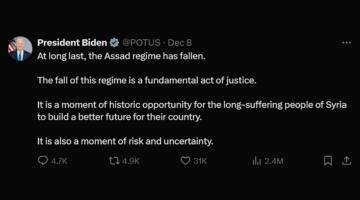 BAR continues coverage of the collapse of the Syrian state with a look back at Black Agenda Report analysis from May 27, 2019. The late Glen Ford, then Executive Editor, analyzed the history of the U…
 Margaret Kimberley recently appeared with Jamarl Thomas on his YouTube channel. They discussed the 2024 election, Joe Biden’s pardon of his son Hunter Biden, and the case of the Uhuru 3.
 A succession of U.S. presidents have been committed to regime change in Syria. That long-held goal has been achieved in part through a sustained campaign of war propaganda.
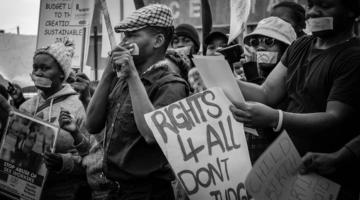 The Black Alliance for Peace just launched its North-South Project for People(s)-Centered Human Rights. Ajamu Baraka and Margaret Kimberley discussed why this project is so necessary.


