by Seema Sadanandan
The Newtown massacre generated reflexive calls for posting police in classrooms, a policy that has long been in place in inner city schools, with devastating effect. “In the matrix of policies and police ushering black and brown students out of classrooms and into courtrooms, the School-to-Prison Pipeline takes shape.”
Police Brutality in DC Classroom
by Seema Sadanandan
This article previously appeared in the American Civil Liberties Union website.
“D.C. Public Schools continues to promote policies which increase police involvement.”
When Officer David Bailey grabbed a 10-year-old student by the back of his head and slammed it into the school cafeteria table, it is safe to say that student was not free to leave. On that afternoon, Bailey decided that his routine beat on the streets of Southeast D.C. extended into the hallways of Moten Elementary School.
Although Bailey was not a trained school resource officer contracted from the Metropolitan Police Department nor one of the three contract officers assigned to Moten at the time, his presence raised no red flags. Regular visits from the police in D.C. Public Schools had become ubiquitous.
On the day of the alleged assault, the student, "T.P." had been sent to the cafeteria for the infraction of failing to adequately participate in music class. The result of his childish behavior was a full-on police encounter.
One emergency room, two weeks and countless headaches later. T.P. seemed to be back to normal. Only his mother could see that something about him had changed: T.P. was now afraid to go to school.
When the ACLU of the Nation's Capital recently filed a civil complaint for damages against a Metropolitan Police Officer on behalf of T.P., news stations clamored to hear the story of the alleged assault. Was this story of a rogue cop's brutality against a young boy, just a freak anomaly or the result of a system by design? Perhaps it was both. In the matrix of policies and police ushering black and brown students out of classrooms and into courtrooms, the School-to-Prison Pipeline takes shape.
“Children of color bear a disproportionate burden of unconstitutional police encounters in the educational context.”
Although no crimes had been reported at Moten in the two years before the incident with Bailey, D.C. Public Schools continues to promote policies which increase police involvement. Moten, which serves indigent African American children, sits atop a hill overlooking a community with staggering unemployment rates. Here, police on their beats weave a prison-like environment from T.P.'s doorstep all the way into his school cafeteria.
There was no guidance counselor or teacher present when Bailey, a crime-fighting cop, decided to take school disciplinary matters into his own hands. Criminalizing the normal behavior of black and brown children is the hallmark of the School-to-Prison Pipeline. When non-criminal behaviors in school result in interactions with the criminal justice system, suspension or expulsions, children suffer a powerful blow to their dignity and trust in the school system. Children of color bear a disproportionate burden of unconstitutional police encounters in the educational context.
On the south side of the Anacostia River where Moten sits, the police state and its culture of surveillance erodes any semblance of civil liberties for local residents. T.P. and his classmates cannot remember a time before schools began having metal detectors and roving police officers. But they will likely never forget the day they discovered that school was a place that is unfair and unsafe.
In the wake of the Newtown School Massacre, lawmakers on the north side of the Anacostia River make impassioned speeches about the need to expand police presence in schools. Amidst the feverish political debates T.P.'s mother seems startlingly clear when she says, "Police don't belong in schools with children."
Seema Sadanandan, is an organizer/filmmaker/lawyer who uses art and media as a vehicle for social transformation. She along with DC North Star Productions produced several documentary films including projects focused on indigenous peoples, public property, political prisoners in the United States and the erosion of civil liberties. She is a currently a member of the Maryland State Bar and the Organizer for the ACLU of the Nation’s Capital. Find ACLU-NCA on Twitter and Facebook.

 The AES represents a significant shift away from neo-colonial influence, with its governments prioritizing economic development, agricultural self-sufficiency, women’s empowerment, and security. The…
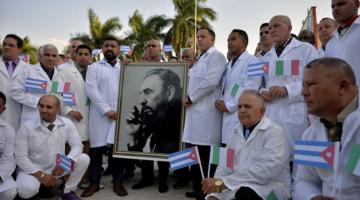 In the latest escalation of the blockade on Cuba, Marco Rubio announced an attack on Cuba's medical missions and, by extension, the healthcare of the entire region.
 It wasn't just Chicago Police operating Homan Square, the U.S. Department of Justice was equally involved in the workings of the "black site."
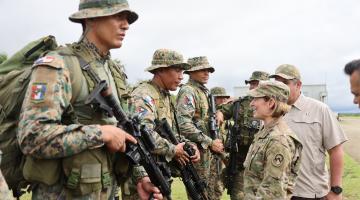 Panama's increasingly deepening military ties with the U.S. challenge the nation's constitutionally mandated demilitarization.
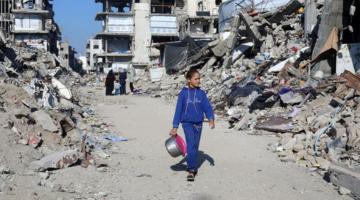 Israel has violated its ceasefire agreement with Hamas. But Israel never truly adhered to it, instead choosing to continue its genocidal policies.


