by BAR executive editor Glen Ford
The great Bolivarian is gone – which means the U.S. will soon escalate its destabilization campaign against his country. “Washington hopes that Venezuelan socialism cannot survive without Chavez.” But the U.S. cannot roll back the movement that Chavez did so much to ignite, “the dark awakening in the barrios, favelas, rural villages and native highlands of the continent.”
Hugo Chavez: New World Rising
by BAR executive editor Glen Ford
“For 14 years, they have painted the Bolivarian Republic as illegitimate, dictatorial, primitive.”
The darker majorities of Latin America mourn the passing of the people’s champion, President Hugo Rafael Chávez Frías, the man whom the racist white Venezuelan elite called ese mono – “that monkey.” Since 1998 – with a 48-hour break during the 2002, U.S.-sponsored coup – the four-fifths of Venezuela that is some variety of Indigenous-mestizo-mullato-African – like Chavez – has known power for the first time since the conquistadors of Western Europe launched their 500-year war against the rest of planet Earth.
South America’s emergence as the most promising zone of resistance to U.S. imperial savagery is inseparable from the dark awakening in the barrios, favelas, rural villages and native highlands of the continent. Chavez’s triumph, and that of the Aymara-descended Bolivian president, Evo Morales, in 2005, are the most dramatic expressions of what has been called the “Latin Spring” – a reclamation of national patrimony that is, by historical necessity, socialist. As a result, a large majority of South Americans now live under relatively progressive governments.
The Cuban Revolution of 1959 was, of course, the great hemispheric breakaway from Yankee empire in the 20th century, the seminal event in the disintegration of what later came to be called the “Washington Consensus” in Latin America. Chavez’s victory, almost 40 years later, was the other shoe dropping, a phenomenon nearly as racially-weighted, in Latin American terms, as the Haitian Revolution that culminated in 1804. Fidel, the son of a Spanish soldier, declared that “the blood of Africa runs deep in our veins” and that Cuba is an “African Spanish” nation. However, that reality was hardly visible in the Cuban hierarchy. Not so, with Chavez, the pardo whose lineage was obvious and proudly worn. "My Indian roots are from my father's side. He is mixed Indian and black, which makes me very proud," said Chavez – a circumstance of birth and pride that made the whites of affluent east Caracas neighborhoods like Altamira spitting mad, hysterical in their hatred. The racial-political color line has long been plain to see in the complexions of pro- and anti-government demonstrations in Venezuela.
“The ‘Latin Spring’ is, by historical necessity, socialist.”
The purported “ambiguity” of race in South America is largely limited to those who belong to the innumerable subgroups of the Not-White, in all their flavors. However, for the fraction of the population that believe themselves to be purely European, there is no ambiguity; they know precisely who they are (or claim to be). Color lines may be fuzzy among the mixed race majorities of much of Latin America, but white elites quickly bring these boundaries into stark relief when fundamental questions of privilege and power arise. Popular power means the rule of people like “that monkey,” Chavez – illegitimate and bestial.
U.S. corporate media speak the language of the pale denizens of Altamira. For 14 years, they have painted the Bolivarian Republic as illegitimate, dictatorial, primitive. Chavez is delegitimized as a “strongman,” rather than a remarkably popular politician and icon who has won more elections than any other head of state in the western hemisphere during the same space of time. As former U.S. president Jimmy Carter said, last year: "As a matter of fact, of the 92 elections that we've monitored, I would say that the election process in Venezuela is the best in the world."
In assessing Chavez’s “legacy,” the global bourgeois media cite the “divisions” that plague Venezuelan society and, in the words of Business Week, an economy in “shambles.” But, Chavez and his comrades would have been abject failures – and been tossed from office – had they not drawn lines between the oppressed majority and the privileged exploiters. Division is good and necessary. Consequently, the economy has succeeded in reducing the proportion of households in poverty from 44 percent in 1998 to 27 percent in 2011. Chavez has served the people.
“The racial-political color line has long been plain to see in the complexions of pro- and anti-government demonstrations in Venezuela.”
Just before Chavez’s last electoral victory, former Brazilian president Lula da Silva, a product of the post-1998 wave of leftist triumphs at the polls, said: "A victory for Chávez is not just a victory for the people of Venezuela but also a victory for all the people of Latin America … this victory will strike another blow against imperialism."
Last week, as Chavez was fading, the opposition leader, Henrique Capriles Radonski, traveled to New York, Miami and Washington – presumably, to get his marching orders. Washington hopes that Venezuelan socialism cannot survive without Chavez. In their state of desperate decay, the imperialists are willing to throw whole regions of the world into chaos rather than be eclipsed by new alignments of trade and international relations. Venezuelans have every reason to expect a renewed U.S. campaign of destabilization, in the wake of their leader’s passing.
Chavez tried to give Barack Obama the benefit of the doubt. On election night, 2008, at a rally in Caracas, Chavez spoke this way of the president-elect:
“We are not asking him to be a revolutionary, to be a socialist – no. We just want the black man who is about to be the U.S. president to have enough stature for the times the world is living through.
"I send an overture to the black man, from us here, who are of Indigenous, black, Caribbean, South American race. I am ready to sit down and talk ... I hope we can, and I hope we can enter a new stage."
But the Black man in the White House is smelling like sulphur, just like his predecessor.
BAR executive editor Glen Ford can be contacted at Glen.Ford@BlackAgendaReport.com.

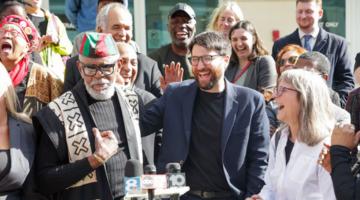 The U.S. sought to once again target Black radical forces, by charging violations of the Foreign Agent Registration Act. The Uhuru 3 were acquitted of those charges but convicted under the…
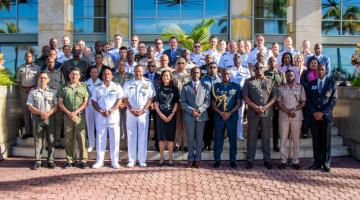 The United States seeks to buttress its power in the Caribbean by deploying troops to Trinidad and Tobago, using this geostrategic position to exert pressure on Venezuela and exploit Guyanese…
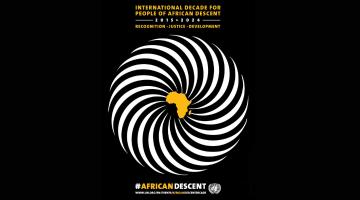 Delegates representing organizations from around the world gathered in Cuba for the conference “Cuba 2024 Decade for People of African Descent.” The following declaration was produced and approved at…
 In this week’s segment, we hear a 2019 analysis from the late Glen Ford on US support of jihadist proxies as part of regime change efforts. Also, Margaret Kimberley discusses the 2024 election, Joe…
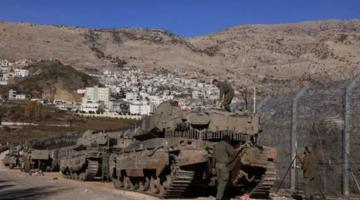 Dr. Gerald Horne joins us to discuss the recent and very rapid collapse of the Syrian state and its international impacts, including in Africa.


