by Mark P. Fancher
Whether rightists or “socialists,” all French governments believe in their inalienable right to dominate Africa. French troops are on the move in Mali and the Central African Republic, and not long ago overthrew the regime in Ivory Coast. If the colonial era has passed, somebody ought to tell Paris – and French-speaking Africans – the news.
Mali Invasion Shows That “Adieu” Does Not Always Mean “We’re Gone”
by Mark P. Fancher
“Decades of indoctrination and French cultural domination left an indelible imprint on the colonies.”
Recent military raids into Mali may seem like they came from nowhere, but France has never really been able to let go of its former colonial possessions. Like a bad case of athlete’s foot the “mother country” just keeps coming back, and Mali is now hosting a visit.
The French military presence in Mali may now raise a few eyebrows, but there was a time when the French domination of vast territories in Africa was taken for granted. Other European countries had African colonial possessions as well, but they often managed them in a clumsy, violent manner that portended the inevitability of resistance, and ultimately independence. Not so the French. For them, colonialism was handled with style and finesse. Historian Walter Rodney wrote:
“In 1935, a team of British educationalists visited French Africa, and they admitted with a mixture of jealousy and admiration that France had succeeded in creating an elite of Africans in the image of Frenchmen – an elite that was helping to perpetuate French colonial rule.”
So confident were the French in the undying loyalty of their African subjects that in 1958 as independence fever was sweeping the continent, French leader Charles De Gaulle offered France’s African colonies a referendum. They had the option of voting in favor of a “French community” made up of France and its African colonies; or they could vote for complete independence. Guinea voted to go it alone. France was shocked, and it withdrew from Guinea in a huff, destroying the country’s infrastructure in the process.
“France had succeeded in creating an elite of Africans in the image of Frenchmen.”
Mali and other French colonies were to join Guinea in independence in 1960, but decades of indoctrination and French cultural domination left an indelible imprint on the colonies, and these territories often proved to be fertile grounds for the growth of neo-colonialism. Even though the African countries had “flag independence” and France appeared to maintain an arms-length relationship, it was an arrangement that preserved France’s advantage. Hugh Schofield of BBC News characterized it as: “…a devil’s bargain: you stay tame and send us your minerals, and when we need it, under-the-counter cash. In return, from time-to-time, we will send French troops to save your presidential mightiness from the mob.”
It is ironic that although it is France that has intervened in Mali, it is also France that has nevertheless come to be regarded in some quarters as a moderating influence in the world as compared to the U.S., which has gained a reputation for reckless cowboy militarism. This is due in part to the fact that it was France that declined to become a member of the “coalition of the willing” during the invasion of Iraq, earning threats by angry U.S. politicians to re-name French fries “freedom fries.” But not much later France’s willingness to act ruthlessly was betrayed by its enthusiastic partnership with the U.S. in the kidnapping of President Jean Bertrand Aristide from Haiti because of his refusal to function as a neo-colonial stooge.
“The continuing success of the insurrection in northern Mali was apparently too much for the supposedly progressive French president.”
Notwithstanding France’s colonial and neo-colonial record, Schofield suggests that there has been a change in perspective. “And now we have [French President] Francois Hollande, who as a good socialist has drunk deeply of the anti-colonialist potion and genuinely feels embarrassed about much of France’s past involvement on the [African] continent.” Schofield goes on to say of Hollande: “…now we have a socialist leader, a man who has promised to keep downsizing the military commitment in Africa…” However, the continuing success of the insurrection in northern Mali by what are claimed to be a mix of Tuareg secessionists and purported Islamic extremists was apparently too much for the supposedly progressive French president and he responded with air strikes and more than 1,400 troops on the ground.
The debate over whether a military intervention was necessary to address the Mali crisis will continue. An even more significant question however is why France and other western countries believe that it is their duty to make these decisions for Africa. The obvious answer is that Africa’s oil and minerals are vital to western economies and the western countries will do whatever is necessary to preserve access to these resources. But in the process they are increasingly engaged in ridiculous efforts at public deception and self-delusion. France talks the talk of progressive non-intervention, but walks the walk of the paternalistic colonizer. U.S. Africa Command (AFRICOM) deploys thousands of troops to Africa, but in its efforts to claim that it is not engaged in military occupation, it locates its headquarters in Germany and bases its African “rapid reaction force” in Colorado.
For Africa’s sake, it might be best for France, the U.S. and others to abandon the charade and simply admit that they will continue their efforts to call the shots in Africa. That might at least awaken those gullible Africans who never understood that when the colonizers said goodbye more than fifty years ago, it didn’t mean they were gone.
Mark P. Fancher is an attorney who writes frequently about armed conflicts in Africa. He can be contacted at mfancher@comcast.net.

 In this week’s segment, we hear about the ongoing uprising in France against neo-liberal austerity, colonialism, and white supremacy. But first, we discuss a new report that reveals a 25% decline in…
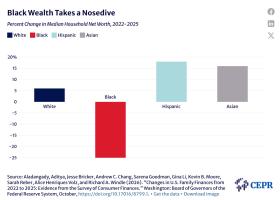 The Center for Economic and Policy Research (CEPR) recently reported on Federal Reserve data indicating that Black people in the U.S. have lost 25% of their wealth between 2022 and 2025. Whites,…
 Bouna Mbaye is an activist, writer, and a member of the Pan-African League-Umoja, the Pan-African Brigade for Palestine, and the US Out of Africa Network. He joins us from Paris to discuss the…
 As Black Agenda Report is poised to celebrate its 20th anniversary, we reprint Glen Ford's commentary on the killing of Trayvon Martin and the impunity provided to his killer in a criminal justice…
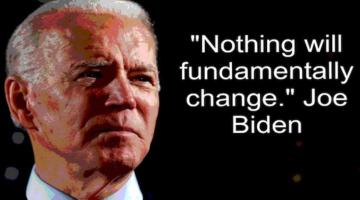 The Democratic Party is terrified of even small liberal reforms and will not abide left leaning democrats thwarting their plans for austerity and neoliberal orthodoxy.


