by BAR editor and senior columnist Margaret Kimberley
Latinos make up barely ten percent of the electorate, and have only emerged as a major national political presence in recent years. Yet, they are outclassing Blacks at every political juncture. “The victory of young Latinos and Latinas did not come about because of altruistic motives from the administration, but because of a carefully planned and very courageous public campaign.”
Freedom Rider: Latinos Lead the Way
by BAR editor and senior columnist Margaret Kimberley
“While black Americans celebrate and emote at the very site of a black president, others treat him the way politicians ought to be treated.”
How does any constituency group get a president to do what they want? This question is not a mysterious riddle and the answer is rather simple. The group in question must first assert its right to make a demand, and then make that demand in a consistent and public way and in so doing force a new political consensus that cannot be ignored.
Barack Obama’s first term in office provided tangible political gains for some groups, such as the LGBT and Latino communities. The president ended the armed forces’ ”don’t ask don’t tell” policy which prohibited openly gay men and women from serving. Republican intransigence prevented any efforts to act on immigration reform which would have given the undocumented pathways to legal residence, but Obama did issue an order, Deferred Action, which stopped the deportations of undocumented young people brought to this country as children. Therein lies a lesson for those black people willing to extricate themselves from the abyss of Obama worship.
The victory of young Latinos and Latinas did not come about because of altruistic motives from the administration, but because of a carefully planned and very courageous public campaign. By doing so, these young people risked their very freedom and their ability to stay in the United States, but such was their desire to bring about change that would help them and their families.
When the Dream Act went down to defeat they were obviously discouraged, but they were also motivated to push for what they needed. A group who not only can’t vote, but who aren’t even citizens, and who had no legal right to live in the United States at all went where the group of Americans most in need of political help fear to tread. These activists made African American inaction all the more shameful.
“Too many black people hug Obama when he does nothing for them at all.”
While black Americans celebrate and emote at the very site of a black president, others treat him the way politicians ought to be treated. They insist on quid pro quos in exchange for political support. Even though Obama brought some measure of change with the Deferred Action executive order, members of the group United We Dream are not satisfied. United We Dream national coordinator Carlos Saavedra put it this way. “People are not going to hug the president right now. They are waiting for him to take some action.”
Unfortunately, too many black people hug Obama when he does nothing for them at all. While black people suffer from loss of their homes, loss of jobs, and mass incarceration, they also confine themselves to bouts of emoting whenever they see the Obamas looking beautiful together at a state dinner.
There was a time when black America led the way in bringing about social and political change. We showed the nation and the world how to take risks, sometimes the risk of losing life itself, in order to fight for justice. The young dreamers risked arrest and deportation. When it appeared that they had failed in their goal they quite simply didn’t give up.
Their dedication was all the more astounding because Barack Obama oversaw the deportations of more than one million people, more than had been deported under any other administration. This fact could have been a reason for further discouragement, but instead the dreamers realized that the high number of deportations was Obama’s responsibility and was proof that the president had the power to stop them too.
“With an election looming and Latino votes up for grabs, lo and behold, the president issued the Deferred Action order.”
When White House advisers claimed that the president had no authority to issue an executive order, the dreamers called them out. In a public meeting Lorella Praeli told Valerie Jarrett, “With all due respect, I disagree.” With an election looming and Latino votes up for grabs, lo and behold, the president issued the Deferred Action order, and took the specter of deportation away from thousands of young people from all over the world.
The Latino community have new found political muscle and aren‘t afraid of showing it off. They know that the Republicans now rue the day they killed the Dream Act and nominated a presidential candidate who worked for “self deportation.” These same dreamers who may have once feared publicly revealing their status now hold very public conventions. The United We Dream convention recently held in Kansas City attracted some 600 participants who drafted a comprehensive platform on all aspects of immigration.
Perhaps they can inspire black people to once again hold political conventions and draft platforms of political action. At one time, it was black Americans who led the way in fighting for social justice. In the future perhaps we will have to learn from others who learned our history lesson better than we did.
Margaret Kimberley's Freedom Rider column appears weekly in BAR, and is widely reprinted elsewhere. She maintains a frequently updated blog as well as at http://freedomrider.blogspot.com. Ms. Kimberley lives in New York City, and can be reached via e-Mail at Margaret.Kimberley(at)BlackAgendaReport.com.

 Dr David Stovall, author of an article titled, “Engineered Conflict: School Closings, Public Housing, Law Enforcement and the Future of Black Life,” said “one of the ways to attrac
 Slow-witted Joe Biden appears to think that we’re still in the age of the sole superpower, when in fact that era has come and gone.
 Neither AOC nor the rest of the Squad has mounted any significant challenge to the party’s corporate leadership, despite being elected for this exact purpose.
 A pamphlet written 70 years ago by an exiled Black American communist reveals an African continent seething to break free from European colonization.
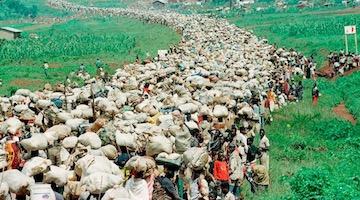 The real story of the Rwandan genocide begins in 1990, when exiled Tutsis from Uganda invaded northern Rwanda, unleashing a deadly campaign that uprooted a million Hutu peasants and set ethnic tens



