by Mark P. Fancher
The United States plans to permanently station a U.S. Army brigade on African soil, beginning next year. Is this the start of something big – and ominous – or “only a benign creeping U.S. military presence in Africa?”
Bad News for Africa: 3,000 More U.S. Soldiers are on the Way
by Mark P. Fancher
“The obvious mission is to lock down the entire continent.”
When President Obama deployed 100 U.S. troops to Uganda a year ago to conduct a mythical search for Joseph Kony, leader of the Lord’s Resistance Army, it is likely that many people shrugged. After all, how much damage could a mere 100 soldiers cause while wandering aimlessly through the bush purportedly in search of an accused terrorist? But as with the proverbial observer who can’t see the forest for the trees, a broader view reveals the deadly implications of what many incorrectly perceive as only a benign creeping U.S. military presence in Africa.
Army Times news service reported that the U.S. is expected to deploy more than 3,000 soldiers to Africa in 2013. They will be assigned to every part of the continent. Major General David R. Hogg mused: “As far as our mission goes, it’s uncharted territory.” But the presence of U.S. soldiers in Africa is nothing new, and even though Hogg is unwilling to admit it, the obvious mission is to lock down the entire continent.
The U.S. military has at least a dozen ongoing major operations in Africa that require hands-on involvement by U.S. troops. By ensuring that U.S. troops will be found in every corner of Africa, there will be little risk that any regions where U.S. interests are threatened will be left uncovered. For example, Mali has oil reserves and is strategically located, but it has been destabilized by a growing secessionist movement in the north. Conveniently, Mali has also been the site of a U.S. military exercise called “Atlas Accord 12” which provided training to Mali’s military in aerial delivery.
During this year, there have been other operations in other parts of the continent that were comparable in scale if not in substance.
*“Cutlass Express” was a U.S. naval exercise that focused on what is purported to be “piracy” in the Somali Basin region.
*“Africa Endeavor 2012” was based in Cameroon and involved coordination and training in military communications.
*“Obangame Express 2012” was a naval exercise designed to ensure a presence in the Gulf of Guinea, an area that is in the heart of West Africa’s oil operations.
*“Southern Accord 12” was based in Botswana and its objective was to establish a military working relationship between southern African military forces and the U.S.
*“Western Accord 2012” was an exercise in Senegal that involved every type of military operation from live fire exercises to intelligence gathering to combat marksmanship.
There have been a number of other comparable exercises with names like: “African Lion,” “Flintlock,” and “Phoenix Express.” In addition, U.S. National Guard units from around the country have been rotating in and out of countries that include, among others: South Africa, Morocco, Ghana, Tunisia, Nigeria and Liberia.
Press statements issued by U.S. Africa Command (AFRICOM) suggest that these operations are as beneficial to Africa as they are to the United States. AFRICOM’s central message is that the U.S. and African militaries are partners in a war against terrorism and other forms of unrest. It is, however an error for any African country to swallow the notion that Africa and the U.S. are in some way interdependent. The true nature of the relationship was explained by A.M. Babu, a central figure in the formation of the country of Tanzania. He said: “The alleged ‘interdependence’ can only be of the kind in which we (Africans) are permanently dependent on the West’s massive exploitation of our human and material resources.”
“It is an error for any African country to swallow the notion that Africa and the U.S. are in some way interdependent.”
U.S. plans for exploitation are revealed by a Congressional Research Service report made available by WikiLeaks. It says: “In spite of conflict in the Niger Delta and other oil producing areas, the potential for deep water drilling in the Gulf of Guinea is high, and analysts estimate that Africa may supply as much as 25 percent of all U.S. oil imports by 2015.” The document quotes a U.S. Defense Department official as saying: “…a key mission for U.S. forces (in Africa) would be to ensure that Nigeria’s oil fields…are secure.”
Consequently, the U.S. would be pleased if there were African military operations that target militants who sabotage foreign oil operations in West Africa. At the same time, because of plans for increased oil imports, the U.S. would vigorously oppose efforts by an African military to exclude western companies from Niger Delta oil fields even though these companies’ leaking pipelines have ruined countless acres of African farm land and fishing waters.
The true interests of Africa and the U.S. are in perpetual conflict and the relationships between the U.S. and African countries must therefore be far from interdependent. Africans are well advised to react to the presence of U.S. soldiers in their countries as they would to termites in their own homes. There might be no immediate observable harm, but over time the structure will be irreparably damaged and may even collapse.
Mark P. Fancher is an attorney who writes frequently about the U.S. military presence in Africa. He can be reached at mfancher@comcast.net.

 As the empire crumbles, the neoliberal capitalist order run by a corrupt duopoly is working to silence dissent. The Black left, of course, is always the first target.
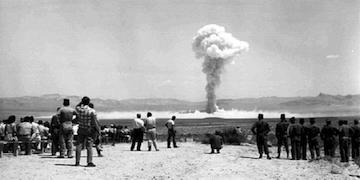 A reminder of when Accra was at the center of struggles against nuclear imperialism. African people have always been at the forefront of peace and sanity.
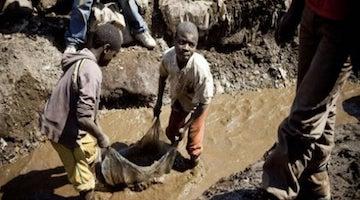 I spoke to Maurice Carney, Executive Director of Friends of the Congo, about the virtual slave labor in the cobalt mines of the Democratic Republic of the Congo’s cobalt mines.
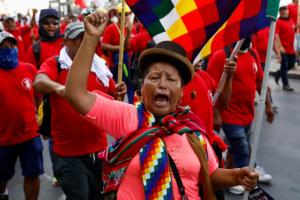 Seven months in, and in the face of brutal state repression, the people of Peru continue their struggle against the neoliberal dictatorship of the Boluarte coup regime.