by BAR editor and senior columnist Margaret Kimberley
Mass incarceration affects every aspect of Black life. “It is not mysterious that a group with large numbers of its members locked away would have higher rates of HIV or lower rates of marriage or a median net worth of only $4,955.” So great is the weight that imprisonment imposes on Black America, “every negative statistic that bedevils the black community” is tied to the phenomenon.
Freedom Rider: How Mass Incarceration Affects Everything Else
by BAR editor and senior columnist Margaret Kimberley
“Statistics about black people cannot be trusted because incarcerated men aren’t included in them.”
The United States is the imprisonment capital of the world. Just one state, Louisiana, has an incarceration rate 5 times higher than Iran and 13 times higher than China, nations which Americans are supposed to feel superior to. More than 2 million Americans are behind bars in jails and prisons, which is the highest on earth in total number and by percentage of population.
The phenomenon we now know as mass incarceration began in the early 1970s and has steadily increased since. In this country minor infractions result in prison terms and an ever increasing number of offenses are added to the list. Black people are a minority of Americans but make up fully half of the imprisoned population, and most of those were convicted of non-violent crimes.
Imprisonment was and is seen as a tool to keep black people from fully realizing their gains made in the 1960s. It was no longer legal to keep black people from living where they wanted, getting jobs they were qualified to get or preventing them from going to the polls. It was possible to put people in jail for any and every offense, however. People can’t compete for good jobs or agitate for their rights if they are in jail. Problem solved.
The toll that mass incarceration has taken on black people is enormous. A newly published book entitled Invisible Men: Mass Incarceration and the Myth of Black Progress gives the facts and figures behind the crime committed against black people. Prisoners are disappeared persons who are removed from census figures, who lose their voting rights, and who upon gaining their freedom are banned from entire categories of employment. According to author Becky Pettit, statistics about black people cannot be trusted because incarcerated men aren’t included in them.
“Black people are a minority of Americans but make up fully half of the imprisoned population.”
Every negative statistic that bedevils the black community is tied to the awful effects of imprisonment. It is not mysterious that a group with large numbers of its members locked away would have higher rates of HIV or lower rates of marriage or a median net worth of only $4,955. As Invisible Men so clearly points out, the large numbers of black men who are behind bars and who therefore disappear from productive life means that these dismal statistics would be even worse if the incarcerated were not also disappeared from the numbers.
Invisible Men is just the latest in a series of books such as The New Jim Crow and A Plague of Prisons which reveal the terrible toll that incarceration is taking on the black community. These works are seriously needed, documenting with hard data the depth of the attack on black people. Unfortunately, this plethora of books doesn’t seem to be lowering rates of incarceration. The great recession and its resultant budget constraints around the country have been the only thing forcing some states and municipalities to open up some of the prison doors.
It all may have started slowly, but the code words and race baiting were evident from the beginning. Terms like “law and order,” “war on drugs,” “dead beat dads” all meant that more and more black people would end up behind bars for infractions big and small. Yet it must be pointed out that code words exist for a reason. They speak with a nudge and a wink to the intended audience in a language that others may not understand.
There is a nagging question about these statistics, an elephant in the room as it were. America could not have become the world’s prison capital if a majority of the population didn‘t want it to happen. A recent poll regarding New Yorkers’ attitudes toward the NYPD stop and frisk policies shows a clear racial divide. Most whites polled, 55%, think that stop and frisk is acceptable while only 35% of blacks are supportive.
“America could not have become the world’s prison capital if a majority of the population didn‘t want it to happen.”
It isn’t surprising that the victims of police abuse are more likely to oppose it, but that shouldn’t stop the non-victims from opposing it too. Stop and frisk, like imprisonment, assures many white people that black people will be locked up far away from them, or at the very least will be sufficiently inconvenienced that they will not be able to compete for any benefits which society might offer. In the case of stop and frisk the victimized population may just decide to leave town for good and take themselves out of sight and out of mind.
This is the challenge of discussing not only mass incarceration but many other issues too. Black people suffer as a direct result of conscious and unconscious thinking on the part of white people. Some of those New Yorkers who will tell a pollster that stop and frisk is acceptable would not admit to harboring racist thoughts, but their reticence in owning up to those feelings doesn’t change the fact that their desires hold sway in public policy making. Stop and frisk would end immediately if enough white people wanted it to.
The wave of scholarship on incarceration is all to the good but it isn’t enough if it doesn’t address the why behind the numbers. Black people have a history of seeing political victories turn pyrrhic. The backlash against black progress is an old story that keeps repeating itself and mass incarceration is just the latest manifestation. The next steps must include ways of honestly addressing the fact that racism is at the root of almost every crisis facing black people. If this simple fact isn’t addressed, all of these excellent books and studies will in fact be irrelevant.
Margaret Kimberley's Freedom Rider column appears weekly in BAR, and is widely reprinted elsewhere. She maintains a frequently updated blog as well as at http://freedomrider.blogspot.com. Ms. Kimberley lives in New York City, and can be reached via e-Mail at Margaret.Kimberley(at)BlackAgendaReport.com.

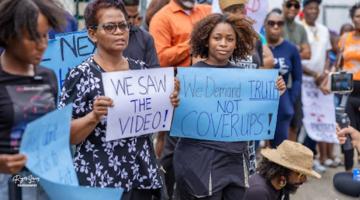 Trinidad and Tobago's Prime Minister says she backs Trump's conservatism and capitalism, and the criminal case against a hairdresser paralyzed in a police shooting shows exactly what that partnership…
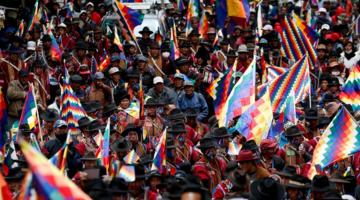 Former Bolivian president Evo Morales Ayma spoke with Black Agenda Report correspondent Clau O’Brien Moscoso.
 The World Cup is meant to be a celebration of global unity, not a propaganda shield for a superpower waging genocide abroad and running detention gulags on its own soil.
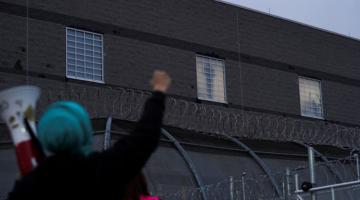 The immigrants who revolted inside the Delaney Hall immigration jail are not criminals but prisoners of war, and their actions are those of resistance against a fascist detention system.
 Since early May, the World Health Organization and the African Centers for Disease Control and Prevention have been working to contain the spread of a rare and virulent strain of Ebola virus disease.


