|
There are currently five people in custody:
-
Charles Taylor, the former Liberian president was found guilty of aiding and abetting war crimes
-
Germain Katanga, a Congolese leader of the Patriotic Resistance Force. Charges against him include murder, sexual slavery and using child soldiers
-
Mathieu Ngudjolo Chui, a colonel in the Congolese army and a commander of the Patriotic Resistance Front. He faces three counts of crimes against humanity and six counts of war crimes
-
Jean-Pierre Bemba, the former vice-president of Congo, was charged with two counts of crimes against humanity and three counts of war crimes
-
Laurent Gbagbo, the former Ivorian president, faces four charges of crimes against humanity - murder, rape and other forms of sexual violence and persecution
So far the office of the prosecutor has failed to pursue any investigations outside Africa. This criticism was put to Fatou Bensouda, the new ICC chief prosecutor, but she denied any bias against Africa.
"We are not in Africa by choice. We did not go to Africa to try cases because that's what we wanted to do. I have said and I continue to repeat that Africa is taking leadership in international criminal justice. And this has to be realised, and this has to be adjusted to," said Bensouda.
"I can cite the cases that we have in Africa and how we got there. All of the cases in fact accept the Kenya case are invitiations by the African states for ICC intervention," she added.
Inside Story asks: Can the ICC deliver impartial justice? And with only one suspect convicted so far, has the the Court fulfilled its basic mission?
To answer this question, presenter Ghida Fakhry, is joined by guests: Mark Kersten, a researcher at London School of Economics and specialist on the international criminal justice system, the ICC and conflict resolution; Kimberley Margaret, a senior columnist and editor for the website Black Agenda Report; and Hassan Omar Hassan from the Kenyan National Human Rights Commission.
|
"I will go to any place that the crimes under the jurisidiction of the court are being committed and nothing is being done to address them. Whether it is in Africa or outside of Africa. I'm not ruling out cases outside of Africa. But my mandate dictates that I go where ICC has jurisdiction, where the crimes are being committed and it is not being addressed at the national level."
Fatou Bensouda, the new ICC chief prosecutor
|
FACTS ABOUT THE INTERNATIONAL CRIMINAL COURT
-
July 1, marked the 10-year anniversary of the signing of the Rome statute
-
The Rome statute established first permanent international court - the ICC
-
The ICC has indicted 28 people including LRA chief Joseph Kony
-
ICC prosecutes war crimes, crimes against humanity and genocide
-
As of 2012, 121 states have signed statute that governs the ICC
-
Seven countries voted against statute including US and China
-
The ICC is an independent body funded mainly by member states
-
All 15 cases currently being probed by ICC are from Africa
-
Some criticise ICC for its focus on crimes committed by Africans
-
ICC is also criticised for taking too long to try and convict suspects
-
ICC took more than six years to convict Thomas Lubanga
-
The ICC says it is 'a court of last resort'
|

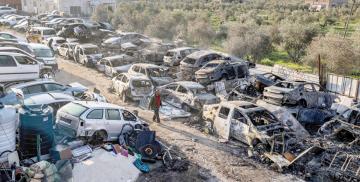 The attack by Israeli settlers on the town of Hawwara was no aberration. It was just one example of the violence inherent in an apartheid state.
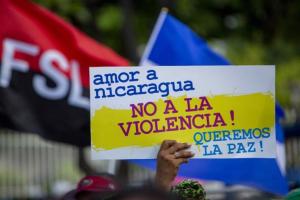 It is important to understand the truth about the 222 people recently released to the US who were convicted of treason in Nicaragua for savage acts of violence against their people.
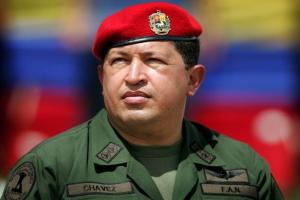 The tenth anniversary of the death of Venezuelan president Hugo Chavez reminds us of his commitment to serve the people of his country, and to fighting for sovereignty for his nation and all the…
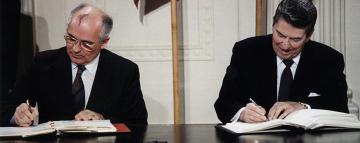 Having used arms control to gain unilateral advantage over Russia, the cost to the U.S. and NATO in getting Moscow back to the negotiating table will be high.
 The North Atlantic Treaty Organization is not the regional defensive organization that it claims to be. As far as NATO is concerned, the entire world is in its sphere of influence, and the Americas…


