by Dan Glazebrook
U.S. neo-colonialism is, in many respects, not that different from the old European colonialism. The goal of American policy in Africa is to turn African states into black Gunga-Dins, “fighting and dying for western interests in the coming colonial wars against Africa.” Already, the U.S. Africa Command exerts immense influence over African militaries. “Fourteen major joint military exercises between AFRICOM and African states are also due to take place this year.”
AFRICOM’s Imperial Agenda Marches On
by Dan Glazebrook
This article appeared in The Guardian UK.
“Western powers are resorting to the use of military power to win back the leverage once attained through financial monopoly.”
The less they see of us, the less they will dislike us." So remarked Frederick Roberts, British general during the Anglo-Afghan war of 1878-80, ushering in a policy of co-opting Afghan leaders to control their people on the empire's behalf.
"Indirect rule," as it was called, was long considered the linchpin of British imperial success, and huge swaths of that empire were conquered, not by British soldiers, but by soldiers recruited elsewhere in the empire. It was always hoped that the dirty work of imperial control could be conducted without spilling too much white man's blood.
It is a lesson that has been re-learned in recent years. The ever-rising western body counts in Iraq and Afghanistan have reminded politicians that colonial wars in which their own soldiers are killed do not win them popularity at home. The hope in both cases is that US and British soldiers can be safely extricated, leaving a proxy force of allies to kill opponents of the new regime on our behalf.
And so, too, in Africa.
To reassert its waning influence on the continent in the face of growing Chinese investment, the US established AFRICOM – the "Africa Command" of the US military – in October 2008. AFRICOM co-ordinates all US military activity in Africa and, according to its mission statement, "contributes to increasing security and stability in Africa – allowing African states and regional organizations to promote democracy, to expand development, to provide for their common defense, and to better serve their people."
“It was always hoped that the dirty work of imperial control could be conducted without spilling too much white man's blood.”
However, in more unguarded moments, officials have been more straightforward: Vice Admiral Robert Moeller declared in a conference in 2008 that AFRICOM was about preserving "the free flow of natural resources from Africa to the global market", and two years later, in a piece in Foreign policy magazine, wrote: "Let there be no mistake. AFRICOM's job is to protect American lives and promote American interests." Through this body, western powers are resorting to the use of military power to win back the leverage once attained through financial monopoly.
The small number of US personnel actually working for AFRICOM – approximately 2,000 – belies both the ambition of the project and the threat it poses to genuine African independence. The idea, once again, is that it will not be US or European forces fighting and dying for western interests in the coming colonial wars against Africa, but Africans. The US soldiers employed by Africom are not there to fight, but to direct; the great hope is that the African Union's forces can be subordinated to a chain of command headed by AFRICOM.
Libya was a test case. The first war actually commanded by Africom, it proved remarkably successful – a significant regional power was destroyed without the loss of a single US or European soldier. But the significance of this war for AFRICOM went much deeper than that for, in taking out Muammar Gaddafi, AFRICOM had actually eliminated the project's fiercest adversary.
“The great hope is that the African Union's forces can be subordinated to a chain of command headed by AFRICOM.”
Gaddafi ended his political life as a dedicated pan-Africanist and, whatever one thought of the man, it is clear that his vision for African was very different from that of the subordinate supplier of cheap labor and raw materials that AFRICOM was created to maintain. He was not only the driving force behind the creation of the African Union in 2002, but had also served as its elected head, and made Libya its biggest financial donor. To the dismay of some of his African colleagues, he used his time as leader to push for a "United States of Africa", with a single currency, single army and single passport. More concretely, Gaddafi's Libya had an estimated $150bn worth of investment in Africa – often in social infrastructure and development projects, and this largesse bought him many friends, particularly in the smaller nations. As long as Gaddafi retained this level of influence in Africa, AFRICOM was going to founder.
Since his removal, however, the organization has been rolling full steam ahead. It is no coincidence that within months of the fall of Tripoli – and in the same month as Gaddafi's execution – President Obama announced the deployment of 100 US special forces to four different African countries, including Uganda. Ostensibly to aid the "hunt for Joseph Kony", they are instead training Africans to fight the US's proxy war in Somalia – where 2,000 more Ugandan soldiers had been sent the previous month.
“Gaddafi's Libya had served not only as a bulwark against US military designs on the continent, but also as a crucial bridge between black Africa south of the Sahara and Arab Africa in the north.”
Fourteen major joint military exercises between AFRICOM and African states are also due to take place this year; and a recent press release from the Africa Partnership Station – AFRICOM's naval training programme – explained that 2013's operations will be moving "away from a training-intensive program" and into the field of "real-world operations."
This is a far cry from the Africa of 2007, which refused to allow AFRICOM a base on African soil, forcing it to establish its headquarters in Stuttgart, Germany. Gaddafi's Libya had served not only as a bulwark against US military designs on the continent, but also as a crucial bridge between black Africa south of the Sahara and Arab Africa in the north. The racism of the new NATO-installed Libyan regime, currently supporting what amounts to a nationwide pogrom against the country's black population, serves to tear down this bridge and push back the prospects for African unity still further.
With AFRICOM on the march and its strongest opponent gone, the African Union now faces the biggest choice in its history: is it to become a force for regional integration and independence, or merely a conduit for continued western military aggression against the continent?
Dan Glazebrook is a political writer and journalist. He writes regularly on international relations and the use of state violence in British domestic and foreign policy

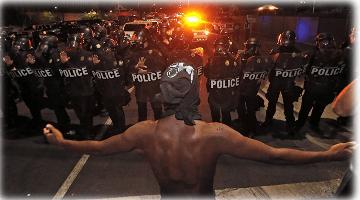 “…hear me now, five, four, three, two, one…
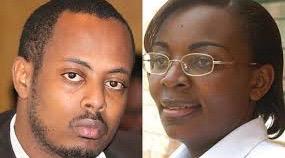 Rwandan dictator Paul Kagame has released two of his best known political prisoners: Victoire Ingabire, a Hutu political activist, and Kizito Mihigo, a Tutsi gospel singer.
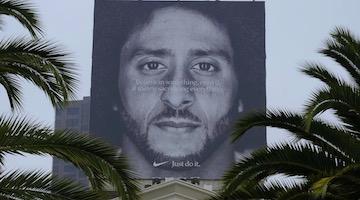 Long before the Nike deal it was clear that Kaepernick’s politics were being subsumed by other forces pushing a weak soup of “diversity” and “free speech.”
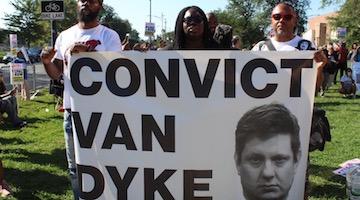 Things could get very ugly in Chicago if the cop that killed Laquan McDonald is set free by a jury that includes only one Black person.
 Rather than benevolent protector, the state enables and often perpetuates violence against marginalized communities, criminalizing them.



