New Orleans: Tranquility Lost
by Jarvis DeBerry
This article originally appeared in the New Orleans Times-Picayune.
"Katrina itself is over, the
Katrina experience is not."

Before
Hurricane Katrina, the woman explains, she'd never had "any nerve
problems." Never before had she needed pills to keep her calm, pills to
keep her from "hollering out loud in my sleep," pills to quiet
"those noises I kept hearing in my head; the screaming as people were
dying."
But that was
then. "I am frightened and worried all the time now. So, I numb myself to
try and keep myself wrapped tight. If not, all the pieces of me would fly
away."
Hers is the
first account in a book called Stories of Survival (and beyond): Collective
Healing after Hurricane Katrina. The woman isn't named. She doesn't need to
be. She's one of us. She's in her sixties. She self-identifies as having been
one of this city's "working poor." In her most despairing moments,
she wonders if the people who died during the storm weren't the lucky ones.
"They don't have to be dealing with all this."
"What New Orleanians are going through now cannot be
neatly diagnosed as post traumatic stress disorder."
Dr. Denese
Shervington, a psychiatrist who helped conduct the interviews that led to the
book, said what New Orleanians are going through now cannot be neatly diagnosed
as post traumatic stress disorder. That disorder, commonly suffered by veterans
who've seen combat or women who've been raped, Shervington explained, typically
follows a finite traumatic experience. The soldier is back home and out of
harm's way. The woman's attack is over.
But while
Katrina itself is over, the Katrina experience is not. It's an ongoing,
emotional torment that many people in the city and the diaspora suffer still.
The challenge psychiatrists have, Shervington said, is "to come up with a
new paradigm to help people in New Orleans deal with what this stress looks
like."
"I am
very respectful of not trying to pathologize people," she said. "I
find people are resisting being characterized as mentally ill, as well they
should be." Her colleagues, Shervington said, need to develop methods to
help people cope in a way that doesn't imply that those struggling to cope are
anything but normal people responding to an incredibly traumatic and disruptive
period in their lives.
The book is
a project of the Institute of
Women & Ethnic Studies, co-founded by Shervington and Dr. Billie Pace
"to improve the physical, mental and spiritual health of women of color
and their families." In keeping with its mission, the book deals chiefly
with the experience of black people who survived the storm.
"Those struggling to cope are normal people responding to
an incredibly traumatic and disruptive period."

Judging by
previous discussions regarding race and the storm, there may be some knee-jerk
resentment at the book's implication: that black storm victims are in a class
of their own. However, the point of the book isn't that black people were the
only ones who suffered; rather, it's that a black person's psychological
responses aren't necessarily the same as their white counterparts, especially
if that black person is also poor.
Take that unnamed
woman above. She says, "They say to be hopeful. What is that? None of my
hopes or dreams have ever come true." Her emotional response to her loss
cannot be said to be identical to somebody who was comfortable and cozy before
the storm.
Shervington
interviewed me for the book, and it was while reading my story that I realized
how race dictated my response. Working in New Orleans the week after the storm,
I was never as afraid of the marauders as I was of the would-be vigilantes. I
didn't think a thief would shoot me. But somebody thinking me a thief just
might.
The fear of being unfairly accused, accosted or attacked
is never-ending for black men in this country, but I manifested that fear that
week by carrying a knife in my pocket and, despite the heat, wearing long
sleeves because I thought it looked more professional.
"Working in New Orleans the week after the storm, I was
never as afraid of the marauders as I was of the would-be vigilantes."
What she
discovered while conducting the interviews, Shervington said Friday, was that
after the initial shock of the storm, "people seemed to have suspended
dealing with their emotions just to dig into survival mode."
"At
some point people wake up and say, 'Oh, my God. I haven't been dealing. Coming
back and forth between New York and New Orleans, this is what I've seen, people
waking up from the numbness."
"Stories
of Survival" will be in bookstores in coming weeks. Information about IWES
can be found at www.iwesnola.org.
Jarvis DeBerry is an editorial writer. He can be
reached at (504) 826-3355 or at jdeberry@timespicayune.com.

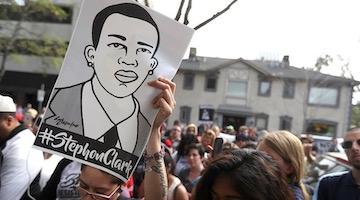 The world’s most ambitious predators -- candidates for US president, like Clinton and Biden -- are also the most likely to condemn young Black men as “predators,” and to wreak mass death, worldwide
 Whistleblower Chelsea Manning is jailed for refusing to testify against Julian Assange, whose confinement in Ecuador's London embassy puts the lie to much of the Russiagate fantasy.
 This week readers engaged with the question of reparations for slavery and Black America’s stake in environmentalism. Strong responses came for
 Slavery is everywhere banned, but the ethos of the slave trade thrives in the baby-buying business.
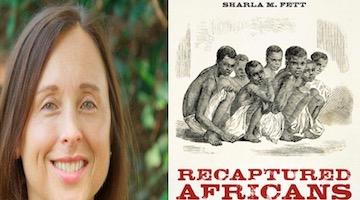 The illegal slave trade continued right up to the Civil War, requiring US authorities to “recapture” and then expel the human cargo.



