Venezuela's President Chavez: U.S. Target
for Regime Change
by John Pilger
This article originally appeared in The Guardian, UK.
I walked with Roberto Navarrete into the national stadium in
Santiago, Chile. With the southern winter's wind skating down from the Andes,
it was empty and ghostly. Little had changed, he said: the chicken wire, the
broken seats, the tunnel to the changing rooms from which the screams echoed.
We stopped at a large number 28. "This is where I was, facing the
scoreboard. This is
where I was called to be tortured."
Thousands of "the detained and the disappeared" were imprisoned in
the stadium following the Washington-backed coup by General Pinochet against
the democracy of Salvador Allende on September 11 1973. For the majority people
of Latin America, the abandonados, the infamy and historical lesson of the first "9/11" have never been forgotten.
"In the Allende years, we had a hope the human spirit would triumph,"
said Roberto. "But in Latin America those believing they are born to rule
behave with such brutality to defend their rights, their property, their hold
over society that they approach true fascism. People who are well-dressed,
whose houses are full of food, bang pots in the streets in protest as though
they don't have anything. This is what we had in Chile 36 years ago. This is
what we see in Venezuela today. It is as if Chávez is Allende. It is so
evocative for me."
In making my film The War on Democracy, I sought the help of Chileans like
Roberto and his family, and Sara de Witt, who courageously returned with me to
the torture chambers at Villa Grimaldi, which she somehow survived. Together
with other Latin Americans who knew the tyrannies, they bear witness to the
pattern and meaning of the propaganda and lies now aimed at
undermining another epic bid to renew both democracy and freedom on the
continent.
The disinformation that helped destroy Allende and give rise to Pinochet's
horrors worked the same in Nicaragua, where the Sandinistas had the temerity to
implement modest, popular reforms. In both countries, the CIA funded the
leading opposition media, although they need not have bothered. In Nicaragua,
the fake martyrdom of La Prensa became a cause for North America's leading
liberal journalists, who seriously debated whether a poverty-stricken country
of 3 million peasants posed a "threat" to the United States. Ronald
Reagan agreed and declared a state of emergency to combat the monster at the
gates. In Britain, whose Thatcher government "absolutely endorsed" US policy, the standard censorship by omission
applied. In examining 500 articles that dealt with Nicaragua in the early
1980s, the historian Mark Curtis found an almost universal suppression of the
achievements of the Sandinista government - "remarkable by any
standards" - in favour of the falsehood of "the threat of a communist
takeover".
The similarities in the campaign against the phenomenal rise of popular
democratic movements today are striking. Aimed principally at Venezuela,
especially Chávez, the virulence of the attacks suggests that something
exciting is taking place; and it is. Thousands of poor Venezuelans are seeing a
doctor for the first time in their lives, having their children immunised and
drinking clean water. New universities have opened their doors to the poor,
breaking the privilege of competitive institutions effectively controlled by a
"middle class" in a country where there is no middle. In barrio La LÃnea,
Beatrice Balazo told me her children were the first generation of the poor to
attend a full day's school. "I have seen their confidence blossom like flowers," she said. One night in barrio La Vega, in a bare room beneath a
single light bulb, I watched Mavis Mendez, aged 94, learn to write her own name
for the first time.
More than 25,000 communal councils have been set up in parallel to the old,
corrupt local bureaucracies. Many are spectacles of raw grassroots democracy.
Spokespeople are elected, yet all decisions, ideas and spending have to be
approved by a community assembly. In towns long
controlled by oligarchs and their servile media, this explosion of popular
power has begun to change lives in the way Beatrice described.
It is this new confidence of Venezuela's "invisible people" that has
so inflamed those who live in suburbs called country club. Behind their walls
and dogs, they remind me of white South Africans. Venezuela's wild west media
is mostly theirs; 80% of broadcasting and almost all the 118 newspaper
companies are privately owned. Until recently one television shock jock liked
to call Chávez, who is mixed race, a "monkey". Front pages depict the
president as Hitler, or as Stalin (the connection being that both like babies).
Among broadcasters crying censorship loudest are those bankrolled by the
National Endowment for Democracy, the CIA in spirit if not name. "We had a
deadly weapon, the media," said an admiral who was one of the coup
plotters in 2002. The TV station, RCTV, never prosecuted for its part in the
attempt to overthrow the elected government, lost only its terrestrial licence
and is still broadcasting on satellite and cable.
Yet, as in Nicaragua, the "treatment" of RCTV is a cause celebre for
those in Britain and the US affronted by the sheer audacity and popularity of
Chávez, whom they smear as "power crazed" and a "tyrant".
That he is the authentic product of a popular awakening is suppressed. Even the
description of him as a "radical socialist", usually in the
pejorative, wilfully ignores the fact that he is a nationalist and social
democrat, a label many in Britain's Labour party were once proud to wear.
In Washington, the old Iran-Contra death squad gang, back in power under Bush,
fear the economic bridges Chávez is building in the region, such as the use of
Venezuela's oil revenue to end IMF slavery. That he maintains a neoliberal
economy, described by the American Banker as "the envy of the
banking world" is seldom raised as valid criticism of his limited reforms.
These days, of course, any true reforms are exotic. And as liberal elites under
Blair and Bush fail to defend their own basic liberties, they watch the very
concept of democracy as a liberal preserve challenged on a continent about
which Richard Nixon once said "people don't give a shit."However much
they play the man, Chávez, their arrogance cannot accept that the seed of Rousseau's idea of direct popular sovereignty may have been planted among the
poorest, yet again, and "the hope of the human spirit", of which
Roberto spoke in the stadium, has returned.
John Pilger can be contacted through his web
site, www.johnpilger.com
Guardian Unlimited © Guardian News and Media
Limited
2007

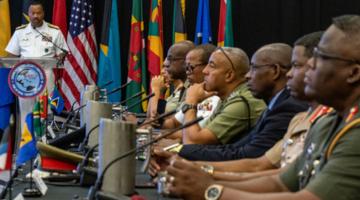 The U.S. is a purveyor of global violence, as illustrated by the intensifying militarism in the Caribbean and targeting of Venezuela. The struggle to establish a Zone of Peace directly challenges…
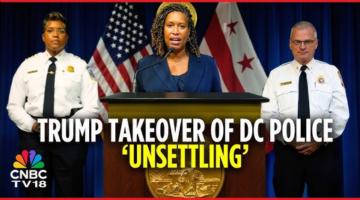 Mayor Bowser going along to get along with Donald Trump is unsurprising to anyone who has followed her political career. She is the Black misleader par excellence.
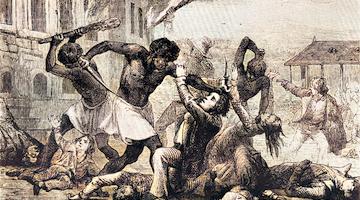 “To understand the history of the Americas we must pay tribute to…Haiti.”
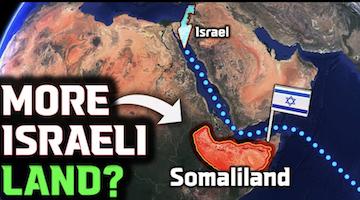 Senator Ted Cruz has written an open letter urging Trump to recognize Somaliland, causing jubilation among Somaliland secessionists.
 The latest liberal discourse on crime offers useless panaceas to analyze the causes of violence and pathologizes communities while absolving the state of its role in creating these conditions.


