Don't Blame Blacks for the Crisis of Capital
A Black Agenda Radio commentary by Glen Ford
"Trading in speculative
derivatives amounted to more than ten times the yearly value of all goods and
services on Earth!"
The crisis in sub-prime housing lending is bad enough - it
threatens to utterly derail the hopes and dreams of a huge chunk of what passes
for the Black "middle class" in the United States. More than half of all Blacks
that refinanced their homes last year were given high-cost loans, and African Americans
are three times
as likely as whites to have been sucked into the sub-prime, predatory loan
zone. The racial aspect of the current crisis is quite clear - just as it has
long been evident to any objective observer that much of today's - or should we
call it, yesterday's - vaunted Black upward mobility is built on shifting sands
of unsecured borrowing. But of course, to say so made one a party-pooper, a
gloom-and-doom monger - and few people wanted to spoil the party even if they
knew it would soon be unhappily over.
As the huge scope of the housing debacle began to emerge,
it was not long before familiar Black voices were heard, blaming something or
other in African American "culture" for bringing the catastrophe down upon our
own heads. Blacks don't pay enough attention to their finances; Blacks are too
caught up in the cosmetic aspects of wealth; Blacks just can't seem to hold on
to money and real property, etc., etc., etc. As if such dubious assumptions
somehow explained why African Americans were disproportionate victims of the
bursting sub-prime bubble.
But wait! Soon we learned that the financial giant,
Citigroup - the country's biggest bank -
was on the rocks, and ultimately had to be bailed
out by the Persian Gulf nation of Abu Dhabi. Investment markets all over
the planet were roiling, all supposedly because of the U.S. sub-prime lending
crisis. But how could that be? Sub-prime lending is a significant chunk of U.S.
housing transactions, but on a world scale U.S. sub-prime troubles should only
register as a large blip - not a global crisis. Clearly, something much larger
was afoot - a threat to global capitalism as a whole. Something HUGE.
"Something much larger
was afoot - a threat to global capitalism as a whole."
 An article on the Bloomberg
website shows where the real speculative action - and global danger -
resides. The headline read, "Global Derivatives Market Expands to $516
Trillion." Derivatives are weird and mysterious financial instruments, for
buying and bundling debt, speculation on the value of debt, and betting on the
future of debt. Understand that the gross
domestic product of the United States is only about $13 trillion, and the
annual gross economic product of the entire planet is less than $50 trillion.
Yet trading in speculative derivatives amounted to more than ten times that
much - ten times the yearly value of all goods and services on Earth! This is
like playing monopoly with endless stacks of play money - there is little
connection between global speculation and what the world actually produces.
The U.S. sub-prime lending crisis got some big banks in
trouble. They then had to look elsewhere for someone to pump actual cash into
their portfolios, but in the process were compelled to at least attempt to
explain how much their financial institutions, the paper they were holding,
were really worth. They can't, because it is largely speculative capital, which
is not real money. The same holds for who knows how much of the world banking
"system," especially its Wild West derivatives sector.
So let's stop talking about the financial irresponsibility
of African American sub-prime borrowers. There is a much bigger bubble out
there, and it is unsustainable.
For Black Agenda Radio, I'm Glen Ford.
BAR executive editor Glen Ford can be contacted at Glen.Ford@BlackAgendaReport.com.

 This week’s featured author is Rima Vesely-Flad.
![How Joe Biden and The Democratic Party’s Climate Agenda Increases Environmental Racism More Than It Reduces Emissions [A Three Part Series]](/sites/default/files/styles/nc_thumb/public/2023-09/cancer%20alley%20protest.jpg.jpeg?itok=kOK48inx) The environmental benefits of Biden's Inflation Reduction Act are non-existent for Black and other marginalized communities.
The environmental benefits of Biden's Inflation Reduction Act are non-existent for Black and other marginalized communities. There are Arab governments going along with the U.S. push to normalize relations with Israel. But people throughout the region are adamantly opposed to such treachery, as the now suspended Foreign…
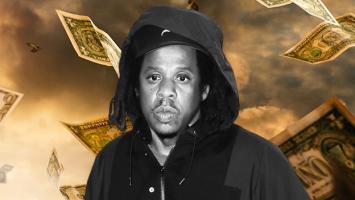 Nothing is sacred under capitalism. Even hip hop, the genre which spoke to Black politics and culture is now just another commodity.
 Any celebration of the 50th anniversary of hip hop must reference its worldwide political appeal.


