The Idea of a Black President
by Mumia Abu-Jamal
This article originally appeared in Prison Radio.
"Mexico had a Black
president some 173 years ago."

For much of the U.S. populace, the very idea of
a Black president is one so new, so novel, that it forces many people to think
of it as if it is barely possible - as if it is the stuff of fiction, not fact.
Fiction has indeed been the realm of this idea, as in movies and television
series, actors have played the part; but that, of course, is on TV.
Of course, time will tell if that is more than imagination,
but for millions of people who share this vast land space we call North
America, the idea is neither new nor ground-breaking. That's because there are
some 100 million people living in Mexico, and that country had a Black
president, albeit briefly, some 173 years ago.
It was during their war for independence from Spain when a
warrior emerged, a Black Indian named Vicente Guerrero. In
his first battle, he was commissioned a captain. As the independence war raged
on, many of the leading revolutionaries were either killed or captured.
Guerrero fought on, leading some 2,000 men into the Sierra Madre mountains to
continue the fight.
By 1821, the Mexicans were prevailing over the Spanish, and
Guerrero was hailed as an incorruptible independence fighter. In 1829 he became
president of Mexico, and as scholar William Loren Katz writes in his 1986 book,
"Black Indians":
"He began a program of far-reaching reforms, abolishing
the death penalty and starting construction of schools and libraries for the
poor. He ended slavery in Mexico. Yet, because of his skin color, lack of
education and country manner, he was held in contempt by the upper classes in
Mexico City."
This president, who had, according to U.S. historian M.H.
Bancroft, "a gentleness and magnetism that inspired love among his
adherents," was still "a triple-blooded outsider."
"Because of his skin color, lack of education and country
manner, Guerrero was held in contempt by the upper classes."
Black historian J.A. Rogers summarized Guerrero's striking
accomplishments by calling him "the George Washington and Abraham Lincoln
of Mexico" (page 48).
Guerrero, who in his youth was an illiterate mule driver,
once bitten by the bug of Mexican independence, rose to the highest office in
the land. He learned to read when he was about 40 and helped craft the Mexican
Constitution, of which he wrote the following provision: "All inhabitants
whether white, African or Indian, are qualified to hold office." He wrote
this in 1824, over 30 years before the U.S. Supreme Court's infamous Dred Scott
decision, which announced, emphatically, that "a Black man has no rights
that a white man is bound to respect," and that Black people weren't, and
could never be, citizens of the United States.

In that era of revolution and social transformation, a Black
man became president of the second largest country in North America. Today, 178
years later, we still wonder if such a thing is possible.
What does that say about the United States?
© Copyright 2007 Mumia Abu-Jamal.
Read Mumia's
latest book, "We Want Freedom: A Life in the Black Panther Party,"
winner of the 2005 People's Choice Award, available from South End Press,
www.southendpress.org or (800) 533-8478. Keep updated by reading Action Alerts
at www.mumia.org and www.moveorg.net. To download Mp3s of Mumia's commentaries,
visit www.prisonradio.org or www.fsrn.org. Encourage the media to publish and
broadcast Mumia's commentaries to inspire progressive movement and help call
attention to his case. Send our brotha some love and light at: Mumia Abu-Jamal,
AM 8335, SCI-Greene, 175 Progress Dr., Waynesburg PA 15370.

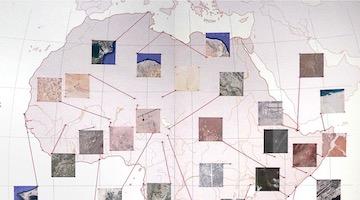 Neither the Organization of African Unity nor the African Union have been able to realize the two most important principles of pan-Africanism: political unity and territorial sovereignty.
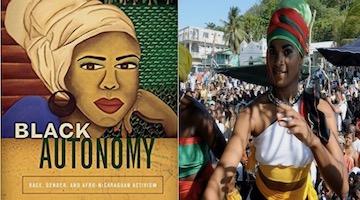 The author examines postwar violence through the activism of Afro-Nicaraguan women and men from the Caribbean coast of the country.
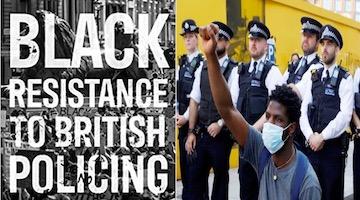 Historically, most of Britain’s policing hasn’t taken place on the British mainland – it has taken place in its colonies.
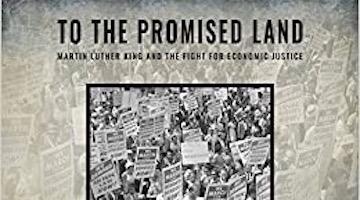 King said the best anti-poverty program is a union, where you can fight for your own agenda — somebody doesn’t have to hand it to you.
 Motherhood often served as a catalyst for attempted escape during the American Revolution.



