“Humanitarian
Aid” at Gunpoint Isn't Humanitarian
By
Mel Reeves
The
esteemed newspaper of record The New York Times ran an editorial last
week, written by Robert D. Kaplan, entitled “Aid
at the point of a gun.” It recommended a “humanitarian
invasion” of Myanmar (Burma) by US military forces “...as part of
a coalition including France, Australia and other Western powers...”
The invasion's pretext would be to deliver badly needed aid to the
victims of Cyclone Nargis, aid which that country's government has
been reluctant to accept on the terms favored by its donors.
With
the folks who say they want to help Myanmar declaring their
willingness to use force to get it done, that country's government
appears somewhat justified in its caution. Without a hint of
conscious irony, the NY times editorial calls the Myanmar government
“the most morally bankrupt on earth.”
The
French initially proposed this idea, testing the waters. But Mr.
Kaplan is quite serious and takes it a step further, insisting that a
humanitarian invasion is “militarily doable” and that “...the
challenge would be politics both inside Myanmar and
internationally.” Kaplan suggests the deed be executed in
coalition with France and others, with UN if possible. So while he
should be given credit for checking with others, he left out the most
important consideration: national sovereignty, the right of Myanmar's
people to determine their own destiny.
 Kaplan
explains that “...a humanitarian invasion could ultimately lead to
the regimes collapse and we would have to accept responsibility for
the regimes collapse...” In plain language this spokesman for
empire, this right wing ideologue is talking about invading a
sovereign country and dividing up the spoils. The remainder of the
editorial is spent wondering how this can be done cleanly, without
repeating the historic disaster of Iraq.
The
US humanitarian mission to bring democracy to that unhappy country
has them living in the dark; literally, since the US bombed most of
the electrical grids and other sources of power and has yet to fully
repair them. The humanitarian mission in Iraq has resulted in the
deaths of hundreds of thousands of Iraqis and displaced hundreds of
thousands more. Most Americans, who depend on the nightly News and
Big Business media to keep them informed, don't know that two million
Iraqis are homeless, a million inside the country's borders and
another million in exile abroad.
Perhaps
this is the same humanitarian impulse US commanders manifested toward
troops of the Iraqi Republican Guard after they had conceded defeat,
hoisted white flags and assumed nonthreatening postures while they
withdrew homeward in February of 1991. Instead tens
of thousands of Iraqis were massacred on a 60 mile stretch of
what is now called the “Highway of Death”. US forces employed a
combination of cluster bombs and other incendiary weapons to kill
tens of thousands of non-resisting Iraqi soldiers in what some pilots
at the time called a “turkey shoot.”
In
Afghanistan US “humanitarianism” led to the restoration of the
opium poppy crop as the mainstay of that country's economy, after the
Taliban had successfully suppressed the growing and export of opium.
Now there are reports of US invaders using the poppy crop to pay off
the gangsters who side with them against the Taliban.
The
embattled Rev. Jeremiah Wright was roundly criticized for one of his
sermons in which he condemned the so-called humanitarian invasion of
Panama to rid it of the Pentagon's business partner Manuel Noriega. The
invasion resulted of in the deaths of hundreds
of innocent Panamanians.
The
make believe moral high ground on which the US government stands has
never existed.
Some
influential establishment forces, publicists and politicians feel
that Darfur could use a little
bit of that same aggressive humanitarianism. But this
government’s humanitarianism is determined by what’s in it for
them. An invasion is an invasion, regardless of “humanitarian”
pretenses. An intervention in Darfur because it could possibly
double the Darfur’s trouble.
If
there is any real humanitarianism in the US, we could use it on the
Gulf Coast, where victims of Hurricane Katrina are re-victimized as
the government refuses to rebuild the poorer sections of the city, as
well as the needed infrastructure, including public schools and
hospitals, while allowing corporate profiteers to take advantage of
the disaster. We could use it too, in other inner cities, where
people are sleeping on the streets and living in substandard housing
and sending children to substandard public schools. A real
humanitarian deployment, if there is such a thing, would be more than
welcome at home, where we are militarizing and extending the border
to every city, town and workplace, chasing after so-called illegals
like they are animals, hunting them down on the job, breaking into
their houses because they seek economic prosperity in this country.
It would be nice. But nobody's holding breath waiting for any of
this.
And
now we are supposed to believe that these same folks want to go to
war to help someone.
Mel Reeves is an activist living in Miami. He
can be contacted at mellaneous19@yahoo.com

 John Parker is coordinator of the Harriet Tubman Center for Social Justice in Los Angeles and a leading member of the Socialist Unity Party. He is also a member of the Black Alliance for Peace who…
 The latest in Mumia Abu Jamal's defense, the UN Permanent Forum on People of African Descent and its connection to the Durban conference, and a new book “Sanctions: A Wrecking Ball in a Global…
 Johanna Fernandez is an Associate Professor of history at Baruch College, and a longtime advocate for political prisoner Mumia Abu Jamal. She joins us from New York City to discuss the loss of his…
 Efia Nwangaza discusses her participation in the first session of the UN Permanent Forum on People of African Descent, a mechanism that emerged from the 2001 Durban world conference against racism.
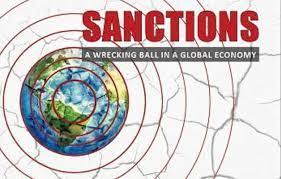 Sara Flounders joins us to discuss her work as editor of the newly published anthology, 'Sanctions: A Wrecking Ball in a Global Economy.' The book is an analysis of U.S. unilateral coercive measures…


