Some of white America's political elite are finally ready to speak openly of the failed and malevolent policies of Black mass incarceration. That's good news. But who speaks for the young, the black and the poor in this discussion? Presidential candidates? Democratic or Republican politicians? The Congressional Black Caucus and our Black leadership class? And without relentless pressure from a Black mass movement, can any of these actors be trusted to lead us anyplace different, to change much of anything?
Black Mass Incarceration is Now a Political Issue
by BAR managing editor Bruce Dixon
"The increase in the U.S. prison population wasn't really about crime. It was about how we chose to respond to crime."
On the issue of America's universal but seldom acknowledged policies of racially selective policing, racially selective prosecution and racially selective mass imprisonment, there's good news and there's bad news.
The good news is that members of America's political elite from both parties are finally admitting that mass imprisonment of the Black poor is bad public policy, is inherently unjust, and ought to be some kind of political issue. Many also concede that the remarkable expansion of and the alarming racial imbalance within America's prison population have nothing at all to do with rates of drug use or violent crime.
In a one-of-a-kind October 4 House and Senate Joint Committee hearing on the subject of mass incarceration, Virginia Senator Jim Webb (D) observed that the sevenfold growth of America's prison population over the last generation was, “only nominally related” to crime rates. It was a point so important he repeated it in his very next sentence, quoting a high Justice Department official as saying that the increase in US prison population since 1975 “...wasn't really about crime. It was about how we chose to respond to crime.”
It's good news that politicians are willing at last to discuss the costs to Black families and communities of mass imprisonment of the Black poor.
"For every 1,000 crimes America now locks up five times as many people as it did in 1975."
The bad news is that many are inclined to blame the black poor themselves, directing attention away from the corporations who profit from the growth of the prison state, the politicians who built careers selling it to us, and the edifice of white American culture which fundamentally defines itself as the opposite in every way of its poor, unworthy, and now dangerous Black citizens.
As Berkeley's Loïc Wacquant observed at Stanford University’s Tanner Lectures earlier this year, (Audio available free at itunes.stanford.edu) it's not unequal educational opportunities in Black communities that are feeding the prisons, joblessness, or the absence of two parent or the lack of suitable peer networks. Most of those indicators have been relatively stable for generations. In the mid 1960s, white men were the majority of American prisoners, and crime has remained relatively stable since then. But for every 1,000 crimes America now locks up five times as many people as it did in 1975. Most of that increase, as we all know, has been Black and poor.
In every era, Blacks have been viewed as apart, inferior and unworthy, as fringe players in the American narrative. But in the last 35 years the Black communities have been stripped of jobs, seen their poor isolated, resegregated, and redefined as unworthy and inherently dangerous. Government, the state itself has been refashioned into a punitive and carceral machine whose main function is to contain and control this unworthy, dishonored and dangerous poor and black population.
Physical isolation of the Black poor enables racially selective policing, prosecution and imprisonment without the need of special laws explicitly targeting blacks. And white America’s sense of itself as profoundly unlike and distinct from the Black and unworthy poor, along with the silence of our Black leadership class, make it politically possible.
It’s high time mass incarceration of the young Black poor is put on the political front burner and kept there till something changes. That's what Jena was about. It’s time for a new mass movement in our Black communities that will expose the complicit silence of Black leadership on mass Black imprisonment, one that will begin to make continuation of these unjust public policies impossible.
For Black Agenda Radio, I'm Bruce Dixon.
Bruce Dixon can be contacted at Bruce.Dixon@BlackAgendaReport.com.
To listen to or download this Black Agenda Radio commentary, click on the mic at right.

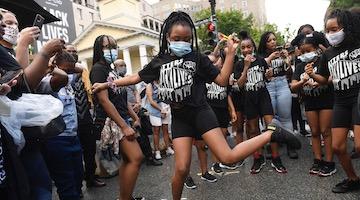 The People earned a dancing in the streets day, horn honking, slogan shouting day—collective sigh/exhale of relief day…Yes, The People deserve
 In the season finale, the liberal mask comes off and the program morphs into a screed for the U.S.’s New Cold War on China.
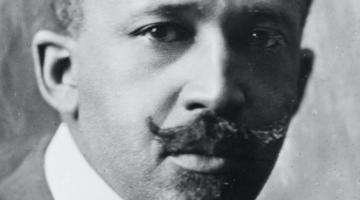 This week the ideological education of the working class, the need for socialism, and the aims of a Biden administration were on your minds.
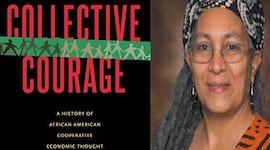 Many of the great African American thinkers, movers, and shakers were also leaders in the Black cooperative movement.
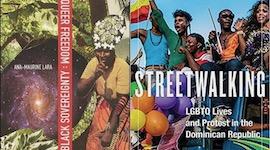 The author wants us to deepen our analysis of how power moves through the world to constrain Black life, and how queer Black people resist these constraints.


