Veteran activist, intellect and writer Jean Carey Bond was a presenter at a recent symposium on James and Esther Jackson, The American Left, and the Origins of the Modern Civil Rights Movement at New York University. Dr. Bond's remarks explored the history of Freedomways and Esther Jackson's role in establishing the groundbreaking magazine.
Roots of the Fight for Rights:
Esther Jackson and Freedomways magazine
by Jean Carey Bond
"Freedomways was unique and outstanding for the breadth and depth of its coverage."
Good afternoon. Before I make my presentation, I'd like to say that since this is both an academic symposium and a celebration of the lives and accomplishments of Esther and James Jackson, naturally many longtime friends and former colleagues of the Jacksons have turned out to honor them. But I do hope there are some among you - young or otherwise - who are unfamiliar with the Jacksons, their work, and the history that's being reviewed here today. Hopefully, for some of you a light will be turned on that wasn't on before. Much of the history being spotlighted today has been suppressed and buried under layers of myth and spin. That deprives and leaves in the dark people who, if they were exposed to this information, would perhaps be inspired to emulate the Jacksons' commitment to changing the world.
Before Freedomways
First, let me cite a few historical highlights that contextualize the birth of Freedomways in 1961.
In 1827, John Russworm and Sam Cornish founded the nation's first African American newspaper. It was called Freedom's Journal. Although their project lasted only two years, by the time the Civil War had begun, there were 24 black papers in circulation, including Frederick Douglass's North Star. Douglass published several papers, but North Star is perhaps the best known. From Freedom's Journal onward, the voices of black Americans could be heard in print.
"Much of history has been suppressed and buried under layers of myth and spin. "
The period of World War II was a particularly militant one for the black press, given the contradiction of black soldiers having to fight against fascism abroad in segregated units and come home to Jim Crow laws, lynching and all the other indignities of racial discrimination. Shortly after the United States entered the war in 1941, the Pittsburgh Courier newspaper launched what it called the "Double V" campaign. The two V's stood for victory over "our enemies from without and our enemies from within": Black soldiers shedding their blood on foreign soil required that they be able to come home to freedom and equality in the United States. The campaign was joined by other black papers and caught on in black communities nationwide. In 1942, James Farmer, with others, founded the Congress of Racial Equality. And immediately after the war, several organizations petitioned the United Nations on behalf of African Americans, including the National Negro Congress and the Civil Rights Congress - whose We Charge Genocide (1951) is well known. Meanwhile, black veterans demonstrated in the South against lynching and for voting rights.
In the 1950s and early ‘60s, of course, we had the Montgomery bus boycott, as well as similar actions in Florida, Alabama and South Carolina during 1955 and ‘56. Dr. Martin Luther King, Jr. emerged as an extraordinary leader who could help focus people's energies in this new moment in the continuum of African American struggle against institutionalized racism. Brown v. Board of Education struck down school segregation. The Southern Christian Leadership Conference was established. In February 1960, some North Carolina A&T students refused to leave a Woolworth lunch counter where they had been denied service, prompting a wave of lunch counter sit-ins that, in turn, spurred the founding of the Student Non-Violent Coordinating Committee on the campus of Shaw University in Raleigh. It was also during this time that Louis Burnham, an activist, writer, brilliant thinker, and a key figure in the gathering civil rights movement of the forties and fifties, joined with Paul Robeson in founding the newspaper, Freedom. (Most unfortunately, Burnham died in 1960.) As well, during this period, the Nation of Islam and other nationalist groups were in motion, promoting separatism instead of integration. These groups were emboldened by the anti-colonialist and revolutionary movements that were gaining traction in Africa, Asia, Latin America and the Caribbean. The latter region saw the revolutionary transformation of Cuba, under the leadership of Fidel Castro and Che Guevara.
Freedomways
So this was the maelstrom of political, social and economic forces out of which Freedomways arose - one might say, organically. As Ernest Kaiser, the librarian and bibliographer, a longtime stalwart of the Freedomways collective, once wrote: Freedomways was "the African American magazine that had to come." In other words, this publication was not the offspring of niche marketers looking to tap into consumer pocketbooks. For its 25 years of life, Freedomways was inextricable from what people were creating and struggling to achieve on the ground.
Starting in the late ‘50s and through1960, a group that included Esther Jackson, Shirley Graham DuBois (former teacher, writer, activist), John Henrik Clarke, Dorothy Burnham (an activist and the wife of Louis Burnham), Margaret Burroughs (the Chicago-based artist and teacher), W. Alphaeus Hunton (leading Pan-Africanist, writer, close associate of Dr. DuBois), among others, planned the launching of a new journal whose mission would be to reflect and hopefully influence the rising tide of activism in the U.S., political and cultural. It would be international in the scope of its subject matter and internationalist in orientation. Dr. DuBois consulted extensively with the group, stressing that the journal should combine serious scholarship and analysis with a popular and accessible style.
"Freedomways would be international in the scope of its subject matter and internationalist in orientation.
The name echoed the Russworm/Cornish venture of the 1800s and, I believe, deliberately incorporated the word "Freedom" from the Burnham/Robeson effort. Its subtitle was "A quarterly journal of the Negro freedom movement." "Negro" was dropped in late 1968 or early '69.
As it evolved from its debut in 1961, Freedomways presented articles, poetry, commentary, short stories, book reviews, a readers' forum and artwork by such as John Lewis (now a Congressman), Diane Nash Bevel (who wrote about her trip to North Vietnam), Julian Bond, Mae Mallory, Angela Davis, Martin Luther King, Jr., James Baldwin, Julian Mayfield, the brilliant Jack O'Dell, Ossie Davis, Harry Belafonte, Pablo Neruda (the great Latin American poet), Derek Walcott, Kwame Nkrumah of Ghana, Julius Nyerere of Tanzania, Cheddi Jagan of Guyana; Alice Walker (whose first published words were in Freedomways); Abbey Lincoln (today a renowned jazz vocalist and composer), Alice Childress, Paule Marshall, June Jordan, Gwendolyn Brooks, Tom Dent, Haki Madhabuti (when he was Don L. Lee); Tom Feelings, Elizabeth Catlett, Jacob Lawrence, Charles White, Elton Fax, Ollie Harrington, Brumsic Brandon, Jr. and far too many others to mention.
"Freedomways was a platform for the views of leading actors in significant events that spanned two decades and half of a third."
Special issues were published on locations of struggle and change: Harlem, the Caribbean, Mississippi, Africa; on population groups such as Native Americans and Mexican Americans (Cesar Chavez appeared on one cover); on individuals - Dr. DuBois, Lorraine Hansberry, artist Charles White and others.
While other worthy African American publications circulated in this period, Freedomways was unique and outstanding for the breadth and depth of its coverage, and as a platform for the views of leading actors in significant events that spanned two decades and half of a third.
Last, I have to say that I'm deeply grateful and honored for having had the opportunity to work so closely with such an extraordinary person and leader as Esther Jackson is. I'm grateful to have worked with someone who, from an early age, lived her life so consciously and with such clarity. It's said about Dr. DuBois that he saved every piece of his correspondence from the age of 12. As the saying goes, "even then he knew" that he would work hard to construct a life of purpose and consequence. Esther Jackson is that kind of person, and to have shared the Freedomways office with her and been exposed to her values and thought was truly a gift.

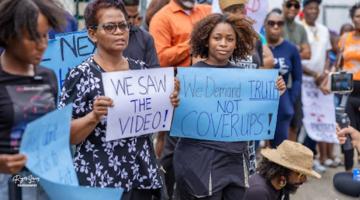 Trinidad and Tobago's Prime Minister says she backs Trump's conservatism and capitalism, and the criminal case against a hairdresser paralyzed in a police shooting shows exactly what that partnership…
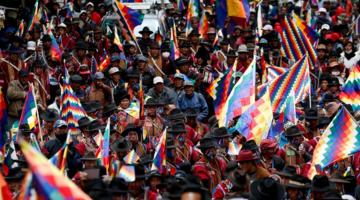 Former Bolivian president Evo Morales Ayma spoke with Black Agenda Report correspondent Clau O’Brien Moscoso.
 The World Cup is meant to be a celebration of global unity, not a propaganda shield for a superpower waging genocide abroad and running detention gulags on its own soil.
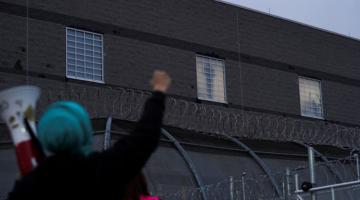 The immigrants who revolted inside the Delaney Hall immigration jail are not criminals but prisoners of war, and their actions are those of resistance against a fascist detention system.
 Since early May, the World Health Organization and the African Centers for Disease Control and Prevention have been working to contain the spread of a rare and virulent strain of Ebola virus disease.


