Subprime Obama
by Max Fraser
This article originally appeared in The Nation.
"Obama is staking out a position to the right of not onlypopulist Edwards but Clinton as well."
 Last year, forty-three states reported increased homeforeclosure rates. Nevada led the way for eleven consecutive months; in ClarkCounty, which includes Las Vegas, nearly one in twenty homes is in foreclosure.Whole blocks have been foreclosed in Chicago. Nationwide, rates are nearing Depression-erahighs - ravaging working- and middle-class neighborhoods that fell prey to thesoft sell and outright chicanery of predatory lenders in the heyday of thehousing boom. These lenders have targeted the most vulnerable - black andLatino borrowers have been twice as likely to receive subprime loans as whites;female homeowners, 30 percent more likely than male; black women, five timesmore likely than white men.
As the subprime mortgage debacle drives a recession thatthreatens financial markets around the world, the Democratic presidentialcandidates are pushing plans to address the crisis. John Edwards and HillaryClinton are pledging substantial federal resources to stabilize the mortgagemarket and intervene on behalf of borrowers. Barack Obama's proposal is tepidby comparison, short on aggressive government involvement and infused withconservative rhetoric about fiscal responsibility. As he has done on domesticissues like healthcare, job creation and energy policy, Obama is staking out a positionto the right of not only populist Edwards but Clinton as well.
"Obama's foreclosure plan mostly avoids direct governmentspending in favor of a tax credit for homeowners, which amounts to about $500on average."
Edwards's plan includes a mandatory moratorium onforeclosures, a freeze on rising interest rates for at least seven years,federal subsidies to help homeowners keep up with payments and restructureloans, and explicit measures to rein in predatory lenders and regulate thefinancial sector. Clinton's plan is weaker - a voluntary moratorium, a shorterfreeze, less commitment to new regulations - but she has promised $30 billionin federal aid to help reeling homeowners and communities.
Only Obama has not called for a moratorium and interest-ratefreeze. Though he has been a proponent of mortgage fraud legislation in theSenate, he has remained silent on further financial regulations. And much likehis broader economic stimulus package, Obama's foreclosure plan mostly avoidsdirect government spending in favor of a tax credit for homeowners, whichamounts to about $500 on average, beyond which only certain borrowers would beeligible for help from an additional fund.
"One advantage to the tax credit is that there's nomoral hazard involved," one of Obama's economic advisers explains."There's no sense in which you're rewarding someone for taking too big arisk. If you lied about your income in order to get a bigger mortgage, thenyou're not qualified. Do you really want to give a subsidy to the guy whowasn't prudent?" Obama has used similar language on the campaign trail."Innocent homeowners," he has promised, those "responsible"borrowers "facing foreclosure through no fault of their own," wouldget help restructuring their loans. But no such luck for those "claimingincome they didn't have" or "lying to get mortgages."
"There's been less emphasis from the Obama campaign onthe really dysfunctional role of the financial industry in the subprimemess," says Josh Bivens of the Economic Policy Institute. "Edwardsand Clinton talk much more about regulation of the financial industry goingforward, and to the extent that blame is placed, they tend to place it on thelenders for steering people into loans they couldn't afford."
"These three advisers generally reflect Obama's verymoderate economic program, similar to Clintonism."
Obama's disappointing foreclosure plan stems from thecentrist politics of his three chief economic advisers and his campaign's tiesto Wall Street institutions opposed to increased financial regulation. DavidCutler and Jeffrey Liebman are both Harvard economists who served in theClinton Administration, and they work on market-oriented solutions to socialwelfare issues. Cutler advocates improving healthcare through financialincentives; Liebman, the partial privatization of Social Security.
Austan Goolsbee, an economist at the University of Chicagowho calls himself a "centrist market economist," has been mostdirectly involved with crafting Obama's subprime agenda. In a column last Marchin the New York Times, Goolsbee disputed whether "subprime lendingwas the leading cause of foreclosure problems," touted its benefits forcredit-poor minority borrowers and warned that "regulators should bemindful of the potential downside in tightening [the mortgage market] toomuch." In October, no less a conservative luminary than George Willdevoted a whole column in the Washington Post to saluting Goolsbee's"nuanced understanding" of traditional Democratic issues like globalizationand income inequality and concluded that he "seems to be the sort offellow--amiable, empirical, and reasonable--you would want at the elbow of aDemocratic president, if such there must be."
Robert Pollin, an economist at the University of Massachussets,believes "these three advisers generally reflect Obama's very moderateeconomic program, similar to Clintonism." Wall Street apparently has cometo a similar conclusion. Obama had received nearly $10 million in contributionsfrom the finance, insurance and real estate sector through October, and he'ssecond among presidential candidates of either party in money raised fromcommercial banks, trailing only Clinton. Goldman Sachs, which made $6 billionfrom devalued mortgage securities in the first nine months of 2007, is Obama'stop contributor. When asked if Obama would hold these financial institutionsaccountable for losses incurred by homeowners and investors, his campaignrefused to comment.
"Obama would do well to take a lesson from groups like theRainbow/PUSH Coalition and ACORN."
But tax credits and continued deregulation won't solve themortgage crisis, which threatens to dispossess more than 2 million homeownersthis year. "There's no evidence that an unregulated market is going to bea stable market," Pollin says. "The unstable mortgage market is oneindication of that. This is not anything new. What is new is that you have aserious presidential candidate who isn't really talking about it and doesn'thave advisers that are prepared to deal with it."
If Obama is serious about his communityorganizing roots, then he would do well to take a lesson from groups like theRainbow/PUSH Coalition and ACORN, which are calling for a moratorium onforeclosures of a year or longer and for the creation of a massive governmentloan agency on the scale of the Reconstruction Finance Corporation of the1930s. "We need some serious federal government intervention torestructure loans, not repossess homes," says the Rev. Jesse Jackson."Because it's not just the borrowers anymore, it's the economy itself.We're in for a very difficult economic season."

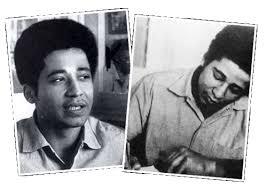 Kalonji Changa is co-founder of Black Power Media and founder of FTP Movement. He joins us from Atlanta to talk about Black August, which has been a fixture of the liberation movement for 43 years.
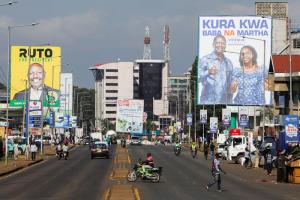 Irene Asuwa joins us from Nairobi, Kenya. She is co-convener of Ecological Justice and supports outreach at Ukombozi Library. We discuss the recent presidential election in that country.
 In a recent webinar hosted by the United National Antiwar Coalition (UNAC), Margaret Kimberley discussed what she witnessed during the commemoration events for the 43rd anniversary of the Sandinista…
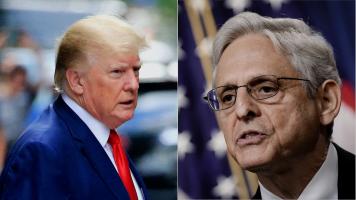 Why would Black people laud the FBI or criticize protection against self-incrimination? The FBI search of Donald Trump's home has reawakened Trump Derangement Syndrome.
 To commemorate Black August and in memory of the forty-two men massacred during the September 13, 1971 Attica Prison uprising we reproduce below an essay and petition from The Black Panther…



