Alicia Keys Hits a Not So Strange Note
by Mel Reeves
"Artists don't really
lead movements but respond and reflect them."

Singer Alicia Keys got herself in a little hot water last
week when she said in a magazine
interview that Gangsta Rap was a ploy to "convince black people to kill
each other," and that the initiator of the plot was the US government. While
many folks have had knee-jerk reactions about what they think she said,it is
important to look at the feelings she provoked, as well as to take a longer
look at what Gangster Rap exposed and what the government did or not do to
eliminate the conditions from which the genre arose.
Most black folks as well as astute outside observers will
probably point out that you don't have to have a ploy to get black people to
kill one another, or to hate on one another.
That was neatly taken care of by the large reservoir of self hate,
accumulated through a history of chattel slavery, unofficial (wage) slavery,
legal segregation, officially ignored and unofficially sanctioned terrorism,
rape of our lands and our bodies and a constant sense of second-placeness and
inferiority that would have made a lesser people fold their tents.
Nevertheless, the larger society has had enough of us complaining about racism
and the impact it has on our daily lives.
Keys' critics demand that she shut up and sing. I find it
interesting that a vast assortment of stars can express their opinions, but
when a young black singer with an anti-government position practices one of her
guaranteed rights she is told to stifle herself.
"You don't have to have a
ploy to get black people to kill one another."
While the government didn't conspire to create Gangsta Rap,
it played a monstrous role in creating the conditions that produced the genre.
Young people were rapping about their experiences, or their
imagined experiences, which is at bottom what most art depicts. So, young
people in the poorest and most rundown sections of urban America turned to the
negative yet nurturing influence of gangs. They witnessed those who played by
the rules and who were making the best of a bad situation having their burdens
increased by low wages, discriminatory hiring practices, discriminatory loan
practices, redlining and glass ceilings. Having found legitimacy wanting, they
said, "no thanks."
This was not the result of a direct government conspiracy,
but the causes and effects are rather clear.
Who among us can argue that the violence, misogyny,
blatant materialism and narcissism that is manifested in much of Hip Hop is not
vexing to our spirits? It has popularized gangs and gang culture, drugs and
drug dealing, pimps and pimp culture and even prison life and prison culture.
It has glorified whores and whoring, with its fascination with strippers and
strip clubs and has pornified and objectified women. It reduces relationships
to a soulless effort to obtain sex and money. It has exacerbated homophobia. It
has taken playing the dozens and put downs, to a completely different and self
defeating level. It has made revenge and revenge killing a matter of honor,
rather than what it really is, a demonstration of weakness.
"Gangsta Rap reduces
relationships to a soulless effort to obtain sex and money."
In another interview, Keys expanded on her Gangsta Rap
thoughts:
"The point that I was trying to make was that the term was
oversloganized by some of the media causing reactions that were not always
positive. Many of the 'gangsta rap' lyrics articulate the problems of the
artists' experiences and I think all of us, including our leaders, could be
doing more to address these problems including drugs, gang violence, crime, and
other related social issues."
If we are honest we know that she has a valid point. What
else were the kids going to rap about, the experiences of suburban whites? They
sounded a warning and we responded by trying to get rid of the symptom rather
than the cause. There were groups that sprang up (remember C. Delores Tucker)
and Congressional Hearings insisting that the music be banned rather than
ameliorating the causes and conditions that produced the music. Our pain and
public humiliation was good entertainment.
Hip Hop didn't start out as a negative cultural and
political force. Cool Herc, Kurtis Blow, Melle Mel, Run DMC, were putting our
story to music and rhymes. Grandmaster Flash and the Furious Five wrapped our
plight neatly in "The Message." And then came the more serious KRS-One, Chuck
D, NWA, Public Enemy who followed in the footsteps of the earlier musical
prophets Gil Scott Heron, the Last Poets and the Watts Prophets.
"Our pain and public
humiliation was good entertainment."
But Keys' attempt to speak out is a reminder that artists
don't really lead movements but respond and reflect them, much as Gangster Rap
reflects the environment from which it springs. Our having to rely on the young
songstress to speak a truth that should have long been spoken is definitely not
a good indicator of black political progress. But our collective hats should be
tipped to her for trying to bring clarity and remind us of our (correctable)
failures.
Mel Reeves is an activist living in Miami. He
can be contacted at mellaneous19@yahoo.com.

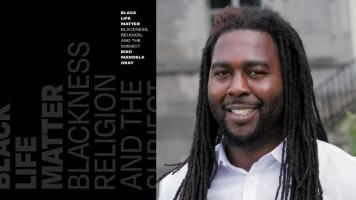 This week’s featured author is Biko Mandela Gray. Gray is Assistant Professor of Religion at Syracuse University. His book is Black Life Matter: Blackness, Religion, and the Subject.
 China laid out 12 principles which could be a means of ending the conflict in Ukraine. The principles are based in international law and the belief in peaceful co-existence among nations,…
 The people of Peru continue to protest the coup which ousted President Pedro Castillo Terrones. Clau O'Brien Moscoso reports from Peru.
 The U.S. and Canada are using Caribbean and Latin nations to act as fronts, willing dupes, in their plans for the next occupation of Haiti. Travis Ross explains in the second of a three-part report.
 The attack by Israeli settlers on the town of Hawwara was no aberration. It was just one example of the violence inherent in an apartheid state.


