by Margaret Kimberley
Injustice is the law of the land for Black people in America. Life cannot be lived safely, when one belongs to the prey population. Even safety devices can get a Black man killed, if they are wired to local law enforcement. The post-mortem might read: “Police say that the dead man wielded a knife, the officer who fired the bullets hasn’t even been named, a recording shows evidence of racial slurs and the family doesn’t believe the police account.”
Freedom Rider: Being Black is Deadly
by Margaret Kimberley
“Trayvon Martin, Kenneth Chamberlain, Anna Brown and nameless others are dead because they showed the world a black face.”
It is very, very dangerous to be a black person. Outrageous and inexplicable things happen to people because they are black, and neither the passage of time nor supposed economic or political advances have changed that fact.
The killing of Trayvon Martin has sparked righteous indignation around the country. The story of a teenager who was doing what the law said he had the right to do, walk down the street, but who nevertheless met death at the hands of a racist vigilante has galvanized the public.
As his family and attorneys worked to bring this case to national recognition, similar stories have emerged on a daily basis with no end in sight. That is because there is no end to the injustices done to black people.
In White Plains, New York last year, 68 year old Kenneth Chamberlain, Sr. accidentally set off his medical alert alarm. These alarms are marketed as life savers to senior citizens. Everyone has seen the commercial, “I’ve fallen and I can’t get up.” Well, Mr. Chamberlain lived to regret doing something ordinary which was supposed to protect him, because he ended up dead, shot by police who responded to what was supposed to be a call for emergency assistance.
The story is fairly typical. Police say that the dead man wielded a knife, the officer who fired the bullets hasn’t even been named, a recording shows evidence of racial slurs and the family doesn’t believe the police account. A retiree and marine veteran is dead under circumstances which rarely befall people of other races.
“They are dead because they were black.”
It is not only black men who die at the hands of authorities. Twenty-nine year old Anna Brown was arrested when she refused to leave a hospital emergency room in St. Louis, Missouri. The mother of two young children died when she did what everyone is told to do. She went to several hospital emergency rooms to seek treatment for pain in her legs.
We are usually advised to seek medical treatment for unexplained pain, but no matter, Brown ended up dead anyway. She was arrested when she refused to leave a hospital and died within minutes of being placed in a jail cell when blood clots traveled from her legs to her lungs.
There is no logic which explains why Chamberlain and Brown are dead. They are dead because they were black. Black people are seen as dangerous and as people who may not really be people after all. Not being viewed as fully human in a society which is built to put and keep black people at the bottom makes life very risky. Add the element of aggressive policing and a system of mass incarceration of black people, and the result is injury and death for the innocent.
Anna Brown was either arrested or escorted out of hospitals by the police every time she sought treatment in the week before her death. She was assumed to be “drug seeking”, lying about being in pain in order to obtain narcotics.
We are all Anna Brown. Studies have shown that black people are likely to be dismissed, ignored, or denied the best medical treatment. The disparities occur whether they have insurance or not and even when class and income are factored into the equation.
“She was assumed to be ‘drug seeking,’ lying about being in pain in order to obtain narcotics.”
The latest outrage and proof that our civil rights and civil liberties may soon be things of the past is exhibited in the case of one Albert Florence. Florence is a black man who was jailed in New Jersey in 2005 because of an erroneous report of an unpaid bench warrant. Florence spent six days in two different jails and was subjected to strip searches in both facilities.
Florence sued and the United States Supreme Court decided to take up this case because lower courts were rendering different verdicts on the issue. Unfortunately, it was the wrong time in history to bring such a case to the highest court in the land, and it ruled in a 5-4 decision that it is constitutional to strip search anyone arrested for any offense, no matter how minor.
To add insult to injury, the first black president’s Justice Department urged the Supreme Court to reach this decision. In words worthy only of bad comedy, an Obama Justice Department attorney argued as follows:
"protesters...who decide deliberately to get arrested...might be stopped by the police they see the squad car behind them. They might have a gun or contraband in their car and think hey, I'm going to put that on my person I just need to get it somewhere that is not going to be found during a patdown search, and then potentially they have the contraband with them."
It is interesting that the Justice Department lawyer would use the hypothetical case of a protester in his bizarre attempt to justify the unjustifiable. Those words should be remembered when progressives try in vain to defend Obama as their friend.
Trayvon Martin, Kenneth Chamberlain, Anna Brown and nameless others are dead because they showed the world a black face. It didn’t matter that they lived in the 21st century, or that the president is a black man. Albert Florence’s quest for justice was squashed in part because of the efforts of the first black president.
Their stories resonate because their fate could be ours and because we clearly see and name the elephant in the room. The elephant is racism, and it won’t go away. The struggles against slavery and the old Jim Crow and the New Jim Crow were all worth fighting, but justice seems to always be out of reach. That fact is sobering but ignoring it is deadly too. The only thing worse than the senseless and endless injustice would be pretending that it didn’t exist.
Margaret Kimberley's Freedom Rider column appears weekly in BAR, and is widely reprinted elsewhere. She maintains a frequently updated blog as well as at http://freedomrider.blogspot.com. Ms. Kimberley lives in New York City, and can be reached via e-Mail at Margaret.Kimberley(at)BlackAgendaReport.com.

 Expect the Biden Administration to provide ongoing funding for Haiti’s brutal security forces.
 Embarrassed by revelations, the Biden administration has now offered several “assurances” they would allow Assange to apply for transfer to a prison in his home country of Australia to serve out hi
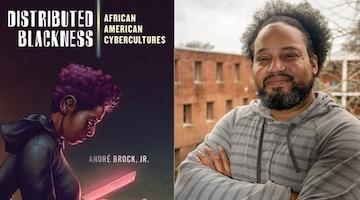 The online aggregation and coherence of Blackness online, absent Black bodies, is what inspired the author’s book.
 The very physical category of femaleness was articulated by feminists and non-feminists alike as the sole property of whiteness in the 19th century,
 Seventy years after the civil preparedness film Duck and Cover, it is long past time to reckon with the way white supremacy shaped U.S.



